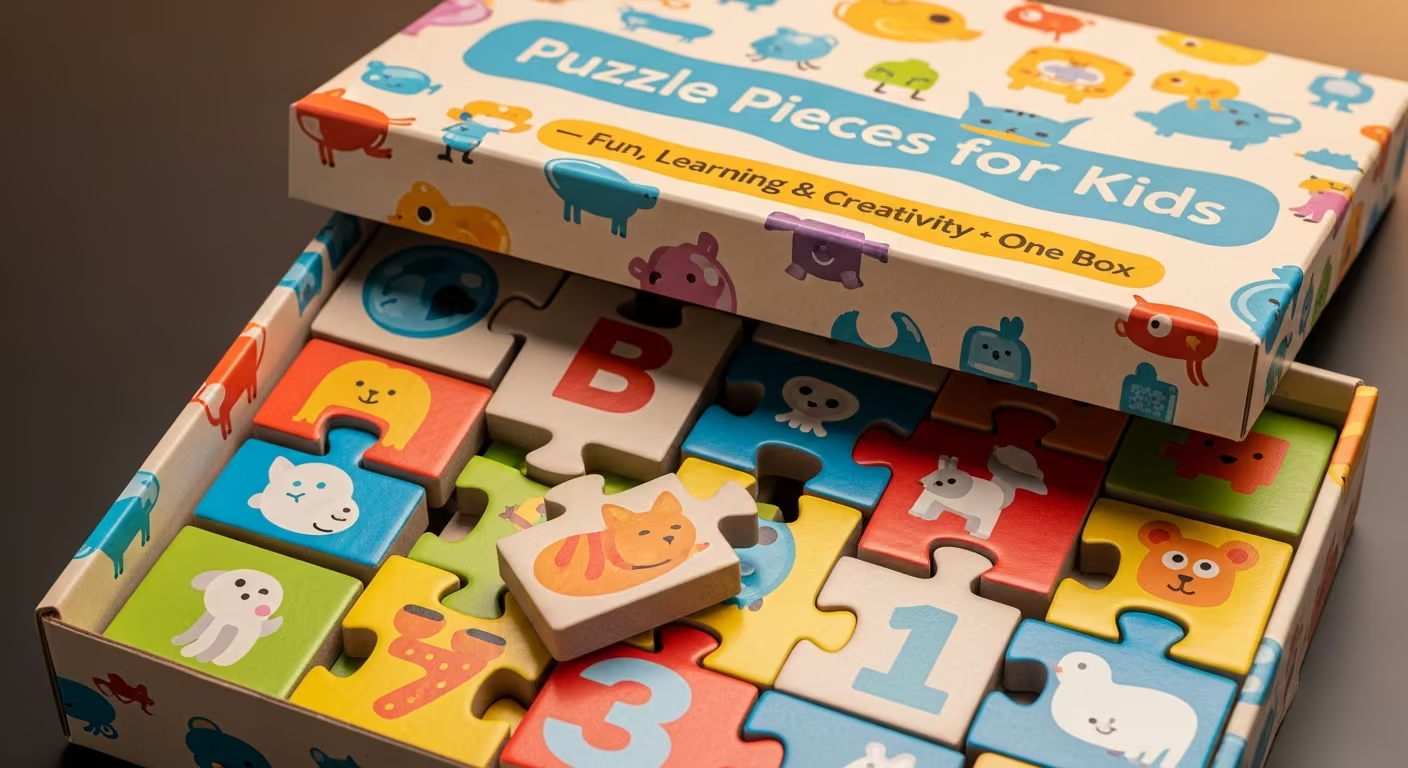
Introduction: Why Puzzle Pieces Are More Than a Toy
Have you ever watched a child place the last piece into a jigsaw and seen their face light up? That tiny snap is more than satisfaction — it’s the product of dozens of cognitive micro-skills working together. Puzzle pieces are simple, tactile, and endlessly adaptable. For parents and educators who want play that quietly teaches, puzzles are the Swiss Army knife of early learning.
From wooden knob puzzles for toddlers to complex 500-piece illustrated maps, each puzzle type offers a different set of learning opportunities. In our connected, screen-heavy lives, puzzle pieces give kids a calm, active way to build foundational skills that power academic and emotional success.
Historical glance: puzzles through the ages
Puzzles began as educational tools, not just pastimes. Originally cut from wood and used by mapmakers to teach geography, puzzles have evolved into the colorful, mass-produced learning tools we see today. What hasn’t changed is their core purpose: turning curiosity into a problem to be solved — a perfect way to learn by doing.
Puzzle types: jigsaw, knobbed, inset, 3D, and tactile
Not all puzzle pieces are created equal. Common types include:
-
Knobbed/Chunky puzzles: Great for very young children; pieces are large and easy to grasp.
-
Inset puzzles: Picture-first puzzles with frames — perfect for matching skills.
-
Jigsaw puzzles: Traditional interlocking pieces that vary widely in difficulty.
-
3D puzzles: Build spatial reasoning through construction.
-
Tactile puzzles: Often made for sensory play, good for kids with sensory processing needs.
Each format targets different muscle groups and thinking processes, so rotate types to broaden learning.
What Kids Learn From Puzzle Pieces (Skills & Development)
Puzzle play isn’t passive; it’s a lab for developing the mind and body.
Cognitive skills: problem-solving & memory
Puzzles teach sequencing, pattern recognition, and planning. Kids learn to form hypotheses (“this red bit fits there”), test them, and revise — the essence of critical thinking.
Motor skills: hand-eye coordination & dexterity
Picking up, rotating, and slotting pieces strengthens fine motor control — the same skills needed for writing, tying shoelaces, and using utensils.
Social-emotional: patience, frustration tolerance, teamwork
Completing a puzzle demands persistence. When children work together, they practice communication, negotiation, and leadership — invaluable life skills.
Designing Play: Age-Appropriate Puzzle Selection
Choosing the right puzzle is like choosing the right book: match complexity to the reader.
0–2 years: chunky & knobbed puzzles
Look for big pieces with pictures of familiar objects. These help build grip strength and early object recognition.
3–5 years: larger jigsaws, picture matching
Introduce 12–48 piece jigsaws with themes (animals, vehicles) to reinforce vocabulary and sequencing.
6+ years: complex 100–500 piece puzzles & thematic sets
Older kids benefit from puzzles that connect to school topics — maps, timelines, or science themes — boosting content knowledge while training persistence.
Special needs & inclusive puzzle choices
For children with motor delays or sensory sensitivities, choose puzzles with larger knobs, textured pieces, or high-contrast imagery. Always consider inclusive design: puzzles that allow multiple solution paths or offer adjustable difficulty.
Puzzle Play Modes & Learning Activities
Puzzle time can be structured or spontaneous — both are educational.
Solo play: focus and flow
Alone time with a puzzle helps children enter “flow” — deep concentration that supports sustained attention and self-regulation.
Guided play: parents and teachers as coaches
Ask scaffolded questions: “What edge pieces do you see?” or “Which color would make sense next?” Coaching increases vocabulary and metacognition.
Group play: cooperative puzzle challenges
Set team goals (“let’s finish the border in 10 minutes”). Team roles (finder, sorter, placer) teach collaboration.
Cross-curricular activities (math, literacy, STEAM)
-
Use alphabet puzzles for letter-sound games.
-
Convert a 100-piece puzzle into a math lesson on fractions (¼, ½).
-
Build a puzzle-themed storytelling session: each completed piece reveals the next sentence of a story.
Materials, Safety & Sustainability
Not all puzzle materials are equal.
Wood vs cardboard vs foam: pros & cons
-
Wood: Durable, tactile, and often eco-friendly — ideal for toddler sets.
-
Cardboard: Lightweight and affordable; great for larger, colorful images.
-
Foam: Soft and safe for younger kids or water play.
Non-toxic finishes & choking hazard guidelines
Always check age labels and look for non-toxic paints and finishes. For under-3s, ensure pieces are too large to be a choking hazard and avoid small magnets unless supervised.
Creative Ways to Use Puzzle Pieces Beyond the Box
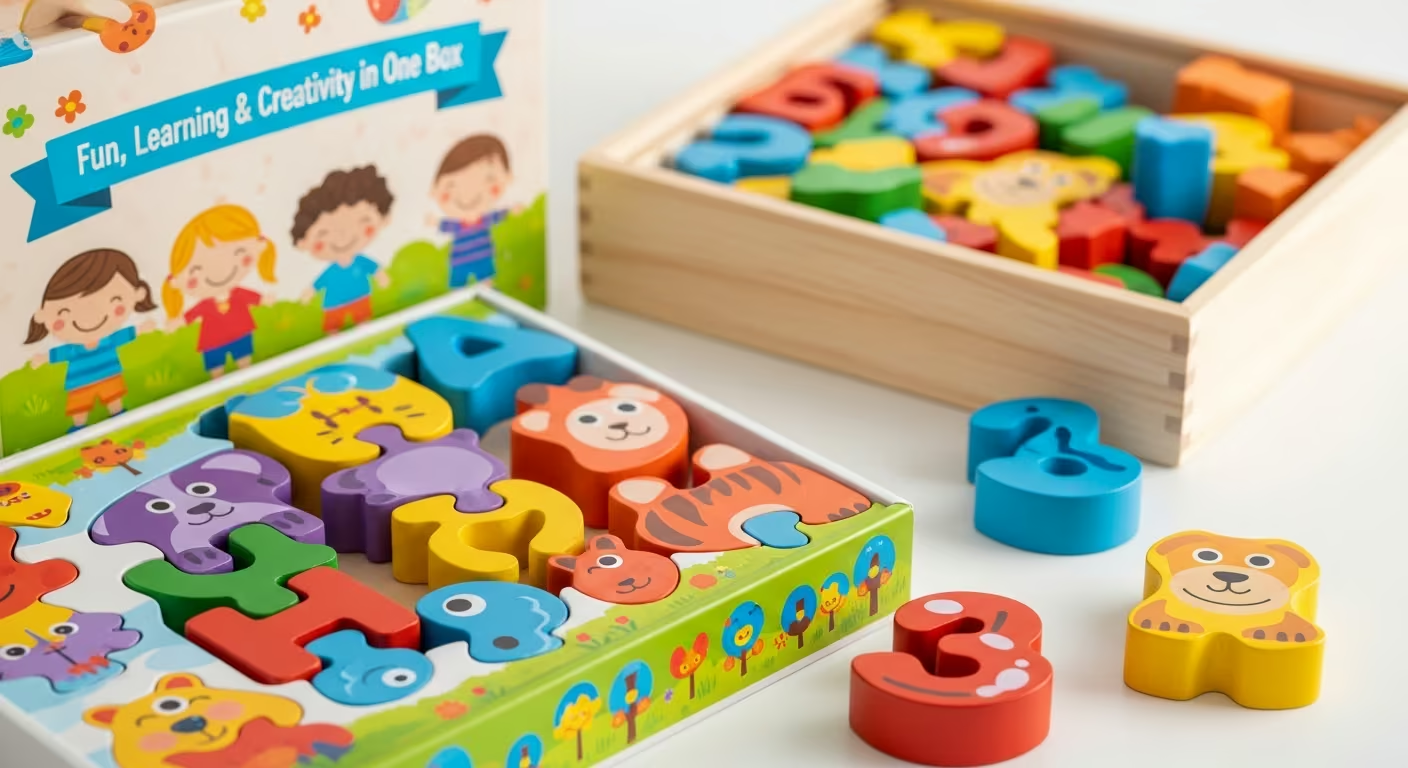
Puzzle sets are versatile — repurpose and amplify learning:
DIY crafts & repurposing
Turn old puzzle pieces into magnets, necklaces, or wall mosaics (with adult help). Painted puzzle pieces make memorable gift tags or classroom badges.
Storytelling & imaginative play
Use puzzle scenes to spark narratives. Ask kids: “What happens next?” and build storytelling skills and sequence memory.
Classroom stations and centers
Rotate puzzles through stations: timed builds, blindfolded assembly (with partner instruction), and vocabulary labeling.
Technology + Puzzle Pieces: Hybrid Play Ideas
Technology doesn’t have to replace tactile play — it can enhance it.
AR-assisted puzzles & companion apps
Augmented reality (AR) companion apps can animate completed puzzles, adding an extra layer of discovery — perfect for themed puzzles like dinosaurs or space.
Screen-free digital affordances (printables & trackers)
Use printable puzzle trackers (sticker charts) to celebrate progress. Keep digital timers for optional timed challenges.
Choosing the Best Puzzle Set: Checklist for Parents & Educators
Before you buy, run through this checklist:
Durability, complexity, theme, portability
-
Is the material toddler-proof?
-
Does complexity match the child’s current ability?
-
Does the theme match interests or curriculum?
-
Is it easy to transport for travel or daycare?
Price vs value: what to expect at different budgets
A higher price often buys durability and better artwork; budget picks can still be great for experimenting with new themes.
Sample Play Session (30–45 minutes plan)
A structured session that balances learning and fun.
Warm-up activities (5–10 minutes)
Quick sorting game by color/shape to prime categorization skills.
Main puzzle time (20–25 minutes)
Use edge-first strategy. Encourage thinking aloud: naming colors, shapes, and small strategies.
Extension games & reflection (5–10 minutes)
-
Ask the child to draw the finished picture.
-
Play “find the piece” where you describe a piece, and the child finds it.
Measuring Impact: How to Track Growth
You don’t need tests to see improvement.
Simple observational metrics for parents & teachers
Track time to completion, ability to start without help, and use of strategies (edge-first, color grouping).
Recording progress without tests
Keep a simple log with dates and notes — “May 3: needed help sorting; May 17: completed 20-piece with no hints.” Small wins add up!
Popular Brands & Where to Buy (Buying Tips)
Look for trustworthy brands that highlight safety, warranty, or replaceable pieces. Local toy shops often carry durable, educational sets. When shopping online, read reviews focused on durability and picture quality.
How to read labels and product pages
Check for age recommendations, material descriptions, and replacement policies. Photos that show pieces close-up help judge thickness and finish.
Conclusion
Puzzle pieces are small, low-tech tools with massive developmental payoff. They teach cognitive strategies, strengthen tiny muscles, and open the door to storytelling and creativity — all while being affordable, portable, and delightfully hands-on. Whether you’re a parent, teacher, or caregiver, adding a variety of puzzle types to your rotation is one of the best investments you can make in a child’s early learning toolkit.
Want more ideas? Join our community for monthly activity plans, printable trackers, and curated puzzle bundles — perfect for classroom centers and rainy-day fun. Subscribe to get patch updates, new activity sheets, and hands-on guides.
FAQs
Q1: What age are puzzle pieces appropriate for?
A1: Puzzles exist for every age. Chunky knobbed puzzles are ideal for 0–2, 12–48 piece jigsaws for preschoolers (3–5), and 100+ piece puzzles for school-age children. Always follow the manufacturer’s age guidance.
Q2: Are wooden puzzles better than cardboard puzzles?
A2: Wooden puzzles tend to be more durable and tactile—great for younger children and repeated classroom use. Cardboard puzzles are typically more affordable and offer more complex images for older kids.
Q3: How often should a child play with puzzles to see benefits?
A3: Short daily play sessions (15–30 minutes) or several longer sessions a week are excellent. Consistency matters more than length.
Q4: Can puzzles help with language and literacy?
A4: Absolutely. Use themed puzzles (alphabet, animals, story scenes) to prompt naming, narrative skills, and vocabulary building.
Q5: What if a child gets frustrated easily with puzzles?
A5: Lower the difficulty, offer guided hints, or turn it into a cooperative task. Praise effort, not speed, and break the task into smaller steps (edges first, sort colors).