
6 Reasons ConnectionCafe Is the App Introverts Actually Love
Introduction
57% of adults report feeling lonely — and for introverts, that number carries a bitter irony. The problem isn’t a lack of social apps. It’s that nearly every platform on the market was designed for extroverts, by extroverts, and rewards the loudest voice in the room.
Introverts are not antisocial. They are selectively social — and that distinction matters enormously. What they need isn’t more connections. They need better ones, built on the right terms.
That’s where ConnectionCafe enters the conversation. This article breaks down exactly six reasons why introverts don’t just tolerate this platform — they actually prefer it.
Reason 1: No Small Talk Required — and That’s the Feature
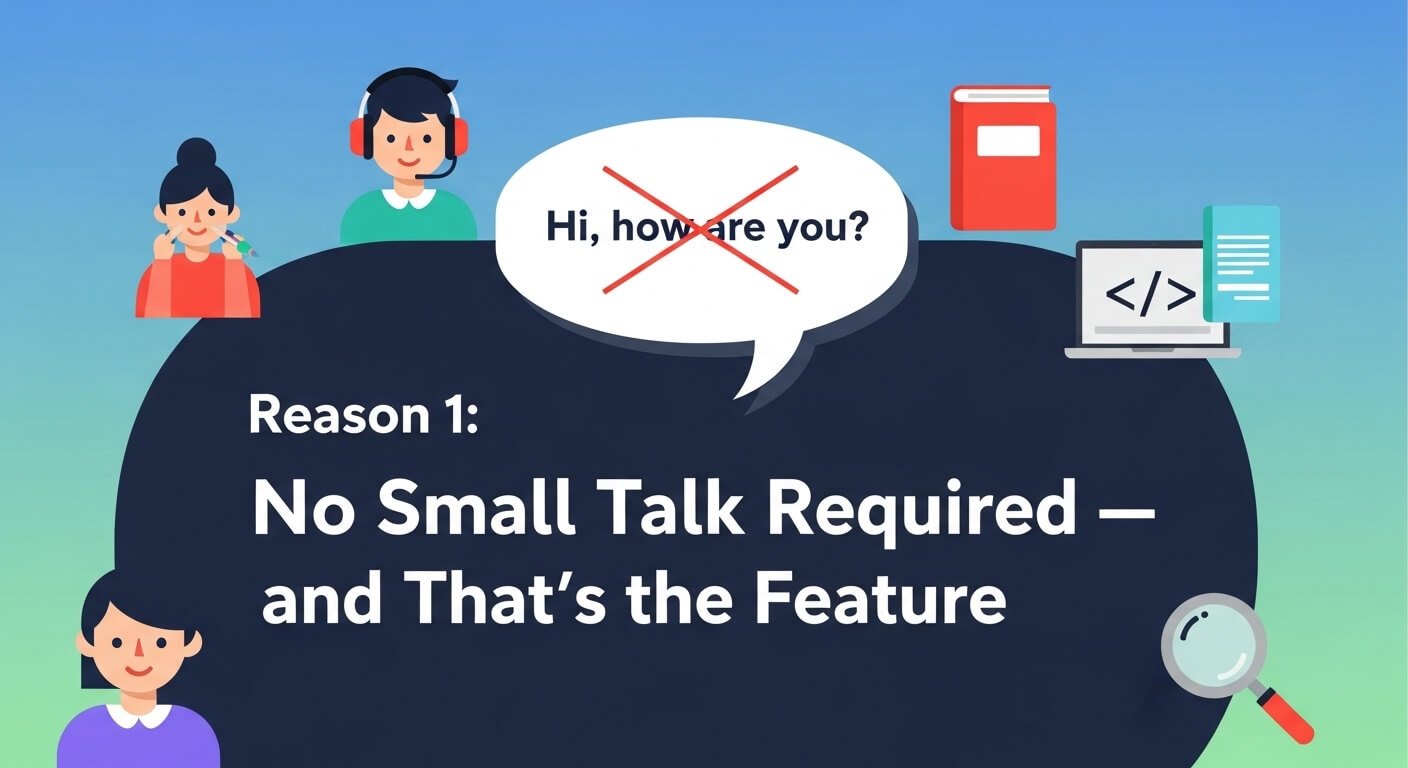
Most social platforms open with an implicit instruction: perform. Post something interesting. Reply within the hour. Comment loudly. Be seen doing it. For extroverts, that’s energizing. For introverts, it’s a job they didn’t apply for.
ConnectionCafe strips that structure out entirely. Conversation prompts on the platform are designed to bypass the surface layer and go straight to topics that actually matter — values, experiences, curiosity, ideas.
The result is that introverts don’t have to warm up for over fifteen minutes of “So, what do you do?” They arrive at depth faster, with less friction, which means they spend energy on connection rather than on getting there.
Why This Matters Neurologically
Research in introvert psychology consistently shows that shallow social interaction consumes more cognitive energy for introverts than meaningful conversation does. A five-minute genuine exchange is less draining than a thirty-minute surface chat. ConnectionCafe’s structure reflects this — intentionally or not, it mirrors how introverts actually prefer to connect.
Reason 2: You Control the Pace Entirely
The tyranny of the read receipt has ended more friendships than it’s built. When an app tells both parties exactly when a message was seen, it creates an invisible obligation: reply now, or explain yourself. For someone who needs time to think before responding thoughtfully, that pressure is social poison.
ConnectionCafe is asynchronous by design. There is no indicator that broadcasts when you were last active, no badge shame for a delayed reply, no implicit demand to be always-on. You respond when you’re ready to give a real answer.
For introverts, this isn’t just a nice feature — it’s the difference between an app they actually use and one they delete after a week.
Pace Control and Authenticity
When people aren’t rushed, they respond better. The platform’s pacing architecture means that conversations on ConnectionCafe tend to be more considered, more personal, and more durable than those formed under the pressure of real-time demands. The slower rhythm self-selects for users who actually value what introverts have to offer.
Reason 3: The Community Was Built With Depth as the Default

There is a network effect that works against introverts on most platforms: early adopters who are loud and social set the tone, and that culture compounds over time. By the time an introvert arrives, the norms are already extrovert-shaped.
ConnectionCafe launched with a specific audience in mind — people tired of performative connection — and that founding audience shaped the community culture before it scaled. Depth is not a subculture on this app. It is the default expectation.
Users who arrive looking for quick validation and shallow interaction tend not to stay. The platform’s structure naturally filters for people who want the same things introverts want: substance, patience, and real exchange.
The Role of Community Norms in Platform Experience
Platform culture matters more than features. A platform could have a perfect design, but if the community norm is noise and performance, introverts will quietly leave. ConnectionCafe’s community norms work in introverts’ favor — which is rarer than it sounds.
Reason 4: It Treats Introversion as a Strength, Not a Diagnosis
Too many social platforms — even those marketed toward quieter users — frame introversion as a problem to be managed. “Tips for shy people.” “How to come out of your shell.” The framing is well-intentioned and completely wrong.
Introversion is not shyness. It is not social anxiety. It is a preference for depth over breadth, for meaning over volume, for thinking before speaking.
ConnectionCafe doesn’t try to fix introverts. It builds an environment where introvert traits — careful listening, thoughtful replies, preference for one-on-one — are not disadvantages. They are the exact behaviors the platform rewards.
What “Treating Introversion as a Strength” Actually Looks Like
On platforms that reward volume, the introvert who writes one careful message a week is invisible. On ConnectionCafe, that same person is valued. The platform surfaces quality of engagement, not frequency, which means introverts are not constantly penalized for being exactly who they are.
Reason 5: One-on-One Conversations Actually Work Here

Group chats are where introvert voices go to disappear. By the time an introvert has formulated a considered response, the conversation has moved on to four new topics, and their message lands out of context—or not at all.
ConnectionCafe centers one-on-one connections as the primary mode of interaction. Groups exist, but they are not the engine of the platform. The design puts direct, private conversation at the forefront — the exact format where introverts consistently perform best and feel most comfortable.
This isn’t just a preference thing. Research on introvert communication styles shows that one-on-one formats produce significantly more genuine self-disclosure than group settings. ConnectionCafe’s architecture reflects this reality.
Quality Over Quantity — in Practice
The average ConnectionCafe user maintains a smaller number of deeper connections than users on platforms designed for broad social reach. For most introverts, that isn’t a limitation — it’s the entire point. Three people who know you well beat three hundred followers who don’t.
Reason 6: You Don’t Have to Perform to Be Seen
Visibility on most social platforms is earned through output: posts, likes, shares, comments, and frequency. The algorithm rewards activity, and activity rewards extroverts. Introverts who show up less often — or who prefer reading to posting — are systematically invisible.
ConnectionCafe’s discovery mechanism is interest-based and behavior-neutral. You are surfaced to compatible users based on what you care about, not how often you show up. An introvert who logs in once a week and has a single meaningful exchange is not penalized for their usage pattern.
The result is a platform where presence doesn’t require performance. You exist as you actually are — and the right people find you anyway.
The Performance Tax, Explained
On Instagram, LinkedIn, or Twitter, there is an implicit social tax: you must perform visibility to receive connections. For extroverts, this is energizing and natural. For introverts, it is expensive and exhausting — and it means the people who have the most to offer in a real conversation are often the least discoverable. ConnectionCafe removes that tax entirely.
FAQs
Is ConnectionCafe good for people with social anxiety, not just introverts?
Yes — though it’s worth distinguishing the two. Introversion is an energy preference; social anxiety is a clinical condition. ConnectionCafe benefits both, but for different reasons. Introverts benefit from the depth-first design. People with social anxiety benefit from the lack of real-time pressure and the absence of performance metrics. That said, ConnectionCafe is not a therapeutic tool, and anyone experiencing significant social anxiety should also consider speaking with a professional.
How is ConnectionCafe different from Bumble BFF or Meetup?
Bumble BFF and Meetup are built around in-person events and quick connections — formats that heavily favor extroverts. ConnectionCafe focuses on meaningful digital conversation first, letting relationships develop at the user’s own pace. There is no event-attendance pressure, no group chat domination, and no performance-based visibility. The entire structure is inverted from mainstream friend-finding apps.
Do introverts actually make lasting friendships on ConnectionCafe?
The platform’s design strongly supports it. Introvert-compatible features — asynchronous messaging, interest-based matching, one-on-one conversation focus — are exactly the conditions where introverts form their most durable relationships. Surface-level connection rarely survives beyond a few exchanges on ConnectionCafe, which means the friendships that do form tend to be meaningful and lasting.
Can extroverts use ConnectionCafe too?
Absolutely. ConnectionCafe isn’t exclusively for introverts — it’s built around depth, which appeals to anyone tired of hollow social interaction. Many extroverts find it a refreshing change from the performance-oriented platforms they use daily. The key difference is that introverts get the most structural benefit, because the design removes every obstacle that normally works against them on other apps.
What should I say in my first ConnectionCafe message as an introvert?
You don’t have to say much — the platform’s conversation prompts do the work. Answer honestly, engage with the other person’s response, and resist the urge to perform wit or charm. The platform self-selects for users who respond well to genuine answers. Lead with what actually interests you, not what you think sounds impressive.
Is ConnectionCafe available on iOS and Android?
ConnectionCafe is available on both major platforms. Check the official ConnectionCafe site for the most current version information, feature updates, and download links. The mobile experience retains all the design principles that make it introvert-friendly.
Conclusion: The Right Environment Changes Everything
ConnectionCafe works for introverts not because it gives them special treatment, but because it removes the structural disadvantages every other platform imposes. No performance tax. No small talk obligation. No algorithmic punishment for showing up less often but meaning it more.
Three things are worth remembering: depth is built into the design, pace is entirely in your control, and introvert traits are rewarded here — not merely tolerated. That combination is rarer than it should be.
If you’ve been waiting for a social platform that finally works the way you actually work, ConnectionCafe is the place to start. Sign up, answer one prompt honestly, and see what happens.