Do the Driving Modes in the Cadillac Lyriq Offer Different Ranges or Battery Usages? Here’s What Owners Should Know
Introduction
Electric vehicles promise efficiency, yet many owners unknowingly reduce their range through simple settings. Driving mode selection changes how an EV responds to acceleration, traction, and power delivery. Those adjustments directly influence battery usage.
Owners of the Cadillac Lyriq often notice something interesting: switching between Tour, Sport, and Snow/Ice modes changes how the vehicle feels instantly. The real question becomes practical—do the driving modes in Cadillac Lyriq offer different ranges or battery usages?
They do. Each mode modifies power delivery, regenerative braking behavior, and throttle sensitivity. Those adjustments alter how efficiently the battery energy converts into driving distance.
This guide explains how each driving mode affects range, battery consumption, and overall EV efficiency, so Lyriq owners can maximize performance without sacrificing miles.
Understanding Cadillac Lyriq Driving Modes
The Cadillac Lyriq includes multiple driving modes—Tour, Sport, and Snow/Ice—that adjust throttle response, traction control, and power delivery. These settings change how the vehicle uses energy, which directly influences battery efficiency and driving range.
Modern EVs use software to control how power flows from the battery to the wheels. The Lyriq’s Ultium battery platform manages energy distribution dynamically.
Each driving mode modifies three primary systems:
-
Throttle sensitivity
-
Motor power output
-
Traction and stability control
These changes affect how quickly the vehicle draws power from its battery pack.
For context, the Cadillac Lyriq features a battery capacity of approximately 102 kWh, providing an estimated 312-mile EPA range for rear-wheel-drive models.
When software increases responsiveness or performance, energy usage rises.
Do the Driving Modes in Cadillac Lyriq Offer Different Ranges or Battery Usages?
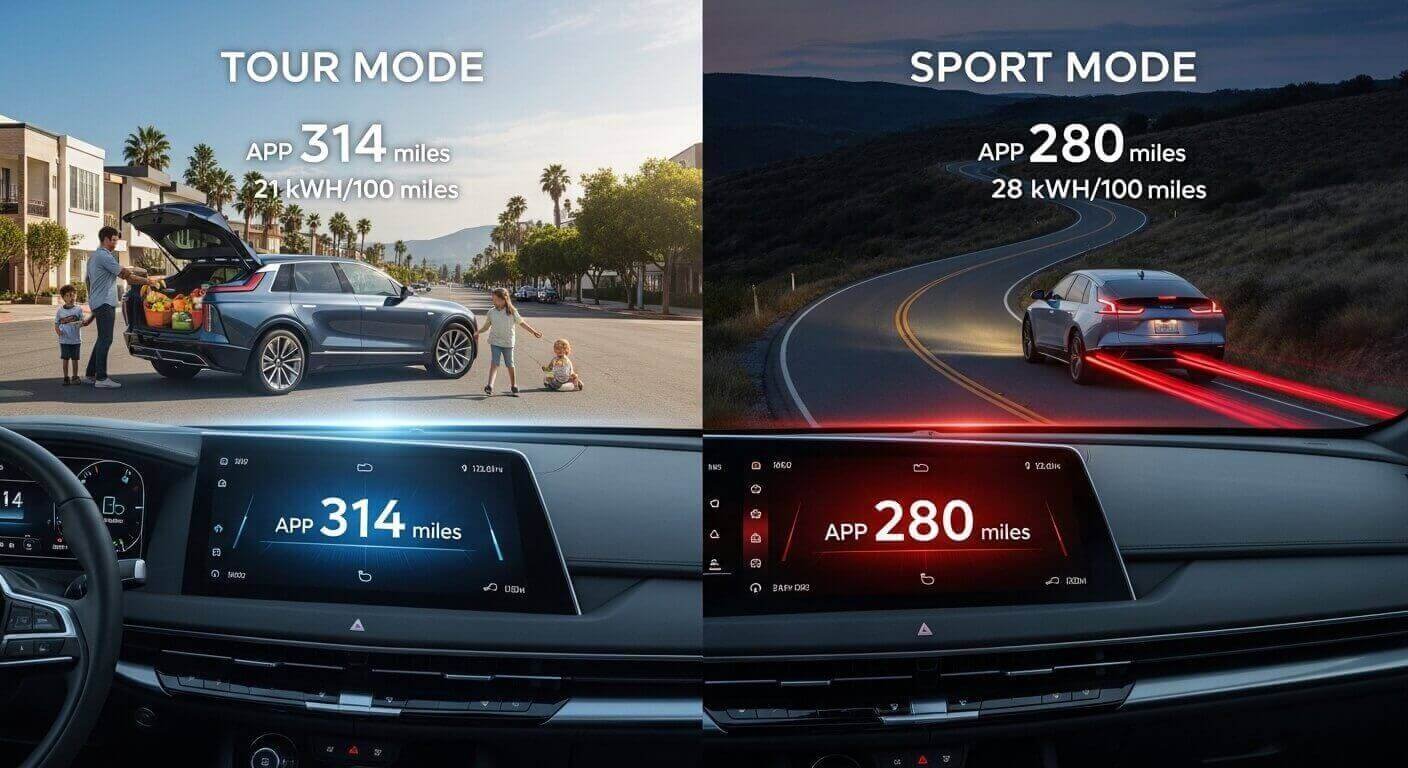
Yes. Driving modes in the Cadillac Lyriq influence battery consumption and total range by altering throttle response, power delivery, and traction control settings. Performance-focused modes use more energy, while efficiency-focused modes extend driving range.
Every electric vehicle faces the same physics principle:
Aggressive acceleration consumes more battery power.
Driving modes control how aggressively the vehicle delivers torque.
For example:
-
Sport mode prioritizes rapid acceleration and responsiveness
-
Tour mode balances comfort and efficiency
-
Snow/Ice mode prioritizes traction and controlled power delivery
These adjustments alter the rate of battery discharge.
Independent EV efficiency testing consistently shows that smooth acceleration and moderated throttle mapping improve energy efficiency by 10–20% in electric vehicles.
The Lyriq follows the same principle.
How Each Driving Mode Impacts Battery Efficiency
Tour mode generally delivers the best energy efficiency, while Sport mode increases battery consumption due to sharper throttle response. Snow/Ice mode focuses on traction control and typically uses moderate energy levels.
Tour Mode (Default Mode)
Tour mode is the most balanced and efficient setting.
Key characteristics:
-
smoother throttle response
-
optimized regenerative braking
-
stable energy consumption
This mode allows the vehicle’s energy management system to maximize range without sacrificing comfort.
For daily commuting, Tour mode consistently provides the closest performance to EPA-rated range.
Sport Mode
Sport mode changes the driving experience dramatically.
Adjustments include:
-
faster acceleration response
-
increased motor torque delivery
-
reduced energy conservation priority
The Lyriq produces up to 500 horsepower in dual-motor configurations, and Sport mode allows quicker access to that power. That performance increase requires more electricity from the battery pack.
In practical terms, drivers using Sport mode frequently may see noticeable reductions in range, especially during city driving with frequent acceleration.
Snow/Ice Mode
Snow/Ice mode prioritizes traction and stability.
Changes include:
-
limited torque output
-
reduced throttle sensitivity
-
enhanced stability control
While not designed for efficiency, Snow/Ice mode often produces moderate energy consumption because acceleration remains controlled.
However, driving in winter conditions reduces EV range due to battery temperature effects and cabin heating demand.
Research shows cold weather alone can reduce EV range 10–30%, depending on temperature.
Which Mode Delivers the Best Range?
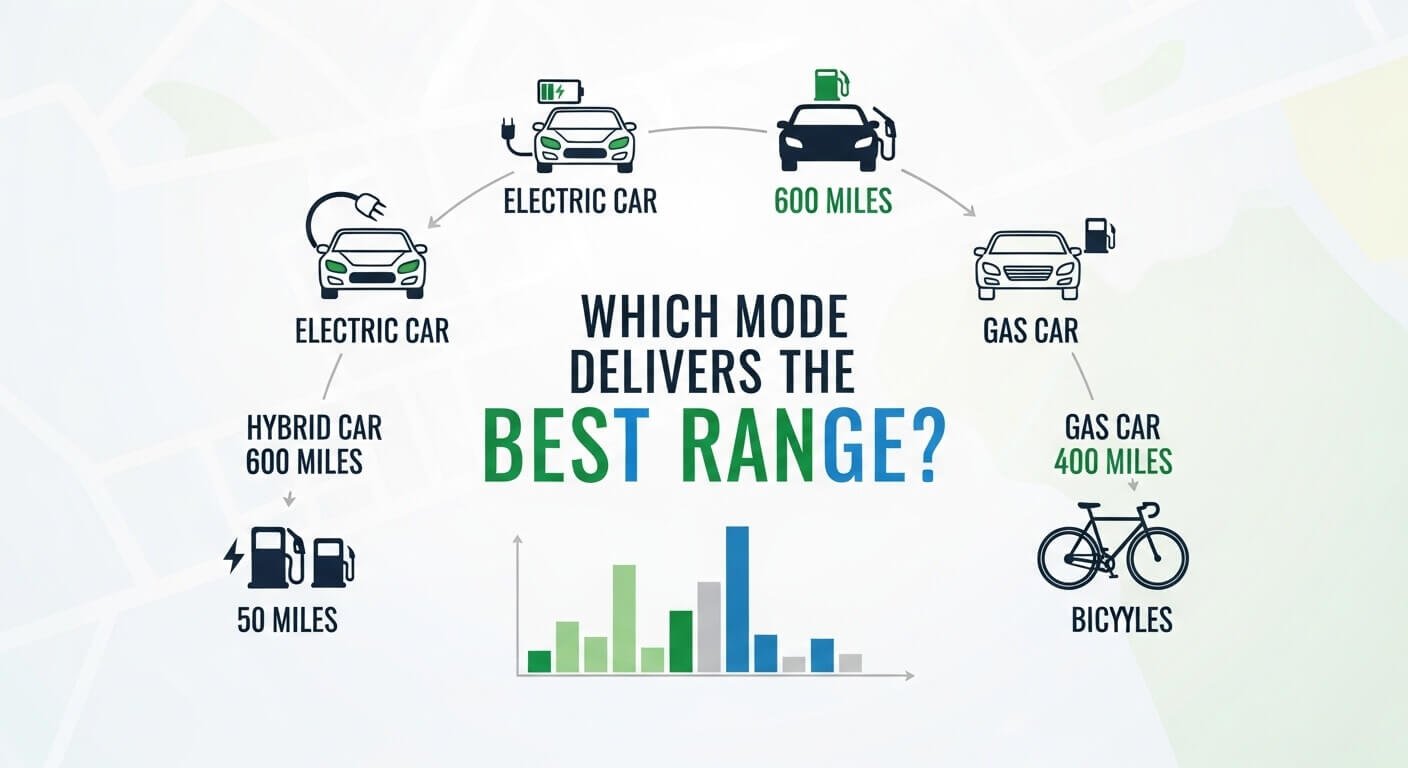
Tour mode typically provides the best driving range in the Cadillac Lyriq because it balances acceleration, regenerative braking, and power management to minimize unnecessary battery drain.
Drivers seeking maximum distance per charge should prioritize:
-
smooth acceleration
-
regenerative braking usage
-
consistent speeds
Tour mode encourages exactly those behaviors.
In contrast, Sport mode increases battery consumption due to its aggressive power delivery.Think of driving modes like gear ratios in traditional vehicles—they influence how efficiently energy converts into motion.
Real-World Factors That Affect Lyriq Range
Driving mode influences range, but several other factors have an equal or larger impact on EV efficiency, including driving speed, weather conditions, terrain, and climate control usage.
Many owners assume driving mode alone determines range.
In reality, these factors often have greater influence:
Speed
Driving above 70 mph significantly increases aerodynamic drag, reducing EV range.
Temperature
Extreme cold reduces battery efficiency and increases heating demands.
Terrain
Hills and elevation changes require more energy.
Climate Control
Air conditioning and cabin heating draw power directly from the battery.
For many drivers, climate control usage reduces range more than driving mode changes.
Tips to Maximize Cadillac Lyriq Battery Efficiency
Maximizing range in the Cadillac Lyriq involves using efficient driving modes, maintaining steady speeds, and leveraging regenerative braking to recover energy during deceleration.
Lyriq owners who want the longest possible range should follow these practices:
-
Use Tour mode for daily driving
-
Avoid aggressive acceleration
-
Enable regenerative braking
-
Maintain steady highway speeds
-
Precondition the cabin while charging
-
Keep tires properly inflated
These habits dramatically improve efficiency.
Real-world EV efficiency tests show driving style alone can change range by up to 30%.
That difference equals nearly 100 miles of range in some scenarios.
How Regenerative Braking Influences Battery Usage in the Cadillac Lyriq
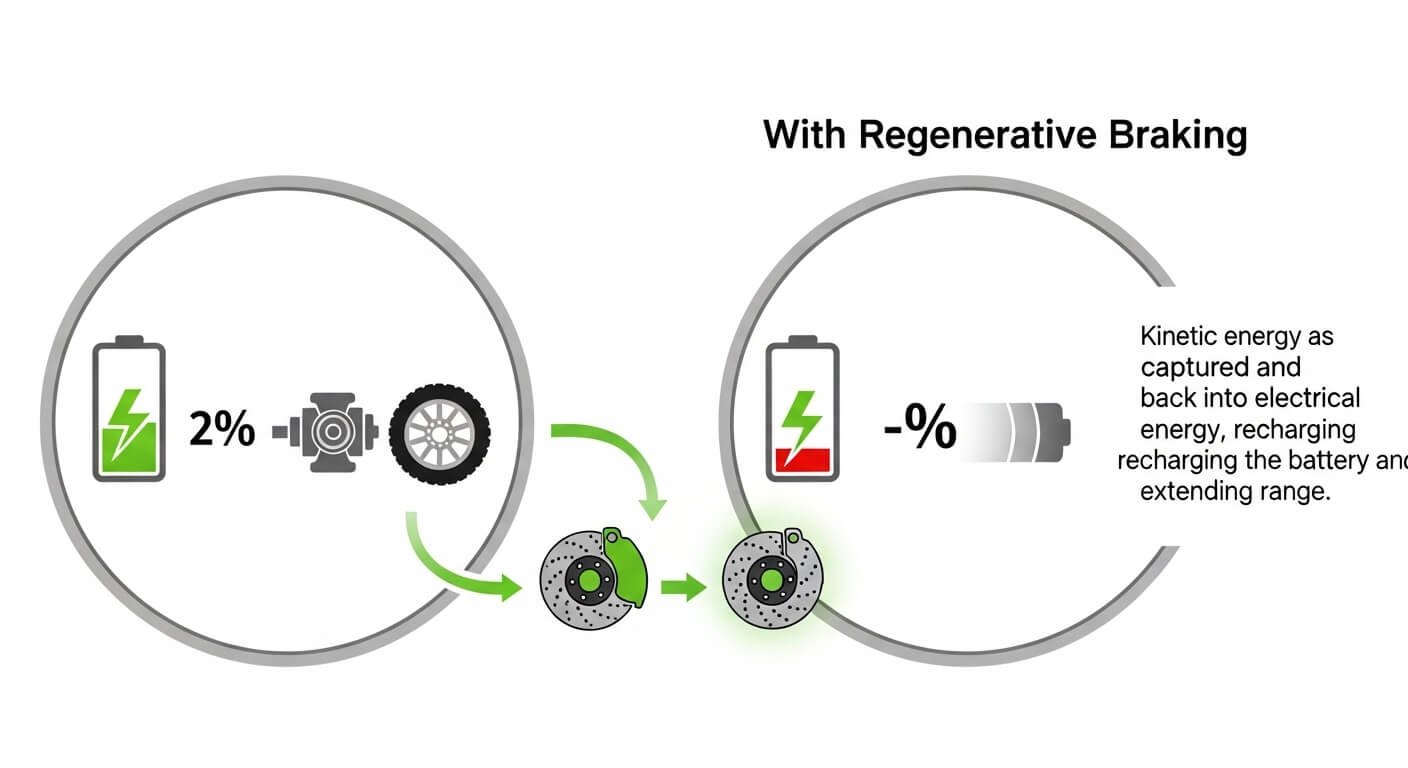
Regenerative braking in the Cadillac Lyriq converts kinetic energy back into stored battery power during deceleration. This system improves overall efficiency and helps extend driving range, especially in stop-and-go traffic or urban environments where frequent braking occurs.
One of the biggest advantages electric vehicles have over gasoline cars is energy recovery.
When a traditional vehicle brakes, kinetic energy converts into heat and disappears. EVs use regenerative braking to capture part of that energy and send it back into the battery.
The Cadillac Lyriq integrates a sophisticated regenerative braking system that works seamlessly with its driving modes.
Here’s how it helps efficiency:
-
When you lift your foot off the accelerator, the electric motor reverses function.
-
Instead of consuming power, the motor generates electricity.
-
That electricity flows back into the battery.
According to EV efficiency studies, regenerative braking can recover between 10% and 30% of energy normally lost during braking.
This means driving styles that involve frequent deceleration—such as city driving—benefit the most from regenerative systems.
Driving modes influence how strongly this regeneration occurs. Tour mode typically provides the most balanced regenerative behavior, while performance-oriented settings emphasize responsiveness.
Do Driving Modes Change Acceleration and Power Delivery?
Yes. Driving modes in the Cadillac Lyriq adjust acceleration sensitivity and torque delivery. Sport mode delivers instant torque for faster acceleration, while Tour mode moderates throttle response to improve efficiency and battery usage.
Electric motors produce torque instantly. This creates an exciting driving experience, but it also means power delivery must be carefully managed to avoid unnecessary battery drain.
Driving modes control this balance.
Sport Mode Power Characteristics
Sport mode unleashes the full performance capability of the Lyriq.
Changes include:
-
quicker throttle mapping
-
stronger acceleration response
-
higher power output availability
Dual-motor versions of the Lyriq generate up to 500 horsepower and 450 lb-ft of torque. Accessing that power quickly requires significant battery energy. Think of it like opening a water faucet fully instead of halfway—the flow increases immediately.
Tour Mode Power Characteristics
Tour mode deliberately smooths power delivery.
This produces several advantages:
-
smoother acceleration
-
improved battery efficiency
-
more predictable handling
Because acceleration remains controlled, the battery discharges more gradually.
For daily commuting or long-distance travel, Tour mode creates the most efficient energy profile.
How Weather and Climate Control Impact Lyriq Battery Usage
Weather conditions and climate control systems significantly affect battery usage in the Cadillac Lyriq. Cold temperatures reduce battery efficiency, while heating or cooling the cabin draws additional power, reducing overall driving range.
Driving modes matter, but environmental conditions often have an even larger impact on range.
Electric vehicle batteries operate best within specific temperature ranges.
When temperatures drop, chemical reactions inside lithium-ion cells slow down. This reduces energy output and increases internal resistance.
Research shows EV range can drop 20% or more in freezing conditions. <<CITE: AAA Electric Vehicle Winter Study>>
The Cadillac Lyriq addresses this challenge with thermal battery management.
The system:
-
regulates battery temperature
-
protects battery health
-
optimizes charging performance
However, maintaining battery temperature requires energy.
Climate control systems also draw power.
For example:
-
Cabin heating in winter consumes battery energy.
-
Air conditioning in hot climates requires an electrical load.
Many EV owners discover that running cabin heating can reduce range more than switching driving modes.
The most efficient approach is preconditioning the vehicle while it remains plugged in. This warms or cools the cabin before driving, preserving battery energy.
Cadillac Lyriq Battery Technology and Efficiency
The Cadillac Lyriq uses General Motors’ Ultium battery platform, designed to improve energy density, thermal management, and charging efficiency. This advanced battery architecture supports a longer driving range and more efficient energy usage.
Battery design plays a critical role in EV efficiency.
The Lyriq runs on GM’s Ultium battery platform, which represents a major shift in electric vehicle engineering.
Key features include:
-
large-format pouch cells
-
modular battery structure
-
advanced thermal management
These improvements allow the battery to deliver high capacity without excessive weight.The Lyriq’s battery pack stores roughly 102 kWh of usable energy, which enables its 300+ mile driving range.
Another advantage is fast charging capability.
Using a DC fast charger, the Lyriq can add about 76 miles of range in roughly 10 minutes under optimal conditions.An efficient battery architecture allows driving modes to operate effectively without compromising long-term battery health.
Comparing Cadillac Lyriq Driving Modes With Other Electric Vehicles
Driving modes in the Cadillac Lyriq operate similarly to those found in other premium electric vehicles. Most EV manufacturers use software-based modes that adjust power delivery, throttle response, and regenerative braking to balance performance and efficiency.
Nearly every modern EV includes multiple driving modes.
For example:
-
Tesla Model Y offers Chill and Standard acceleration modes.
-
Ford Mustang Mach‑E includes Whisper, Engage, and Unbridled modes.
-
Hyundai Ioniq 5 offers Eco, Normal, and Sport modes.
The purpose remains the same across manufacturers:
Allow drivers to choose between performance and efficiency.
What makes the Lyriq unique is its luxury-oriented tuning.
Even Sport mode maintains a smooth, refined driving experience rather than aggressive performance alone.
That design philosophy aligns with Cadillac’s focus on premium comfort and quiet electric mobility.
Real-World Range Example: City vs Highway Driving
Real-world range varies depending on driving conditions. City driving often benefits from regenerative braking and produces better efficiency, while highway driving consumes more energy due to aerodynamic drag and sustained high speeds.
Many new EV owners expect the EPA range estimate to match every driving situation.
In reality, the range fluctuates significantly depending on how and where you drive.
City Driving
City conditions often produce excellent EV efficiency.
Why?
-
frequent regenerative braking
-
moderate speeds
-
smoother acceleration
Because energy is constantly recovered during braking, range often exceeds highway estimates.
Highway Driving
Highway driving introduces two challenges:
-
aerodynamic drag
-
sustained energy consumption
Once speeds exceed 65–70 mph, aerodynamic resistance rises rapidly.
This forces the electric motor to use more power to maintain speed.
As a result, the highway range often drops compared with city driving.
Driving modes play a smaller role here than vehicle speed and wind resistance.
Should Lyriq Owners Change Driving Modes Frequently?
Most Cadillac Lyriq owners do not need to change driving modes frequently. Tour mode provides the best balance for everyday driving, while Sport and Snow/Ice modes serve specific conditions such as performance driving or slippery roads.
Some drivers constantly switch driving modes, expecting large efficiency gains.
In practice, the benefit is modest.
Cadillac designed Tour mode as the default everyday setting.
Drivers generally switch modes only when needed:
-
Sport mode for spirited acceleration
-
Snow/Ice mode for winter driving
-
Tour mode for daily commuting
Frequent switching offers little advantage.
Instead, consistent driving habits and moderate speeds deliver the biggest efficiency improvements.
Final Thoughts on Cadillac Lyriq Driving Modes and Range
Electric vehicles rely heavily on software to manage energy flow. The Cadillac Lyriq demonstrates how intelligent driving modes can balance performance, efficiency, and comfort.
Understanding how these modes work helps drivers make smarter decisions behind the wheel.
Three insights stand out:
-
Driving modes do influence battery usage and range.
-
Tour mode provides the most consistent efficiency for everyday driving.
-
External factors like speed, temperature, and driving style often influence range even more.
For most Lyriq owners, the winning formula is simple:
Use Tour mode, drive smoothly, and let regenerative braking do the rest.
Those habits unlock the full efficiency potential of Cadillac’s luxury electric SUV.