How Many Cups in a Gallon: The #1 Complete Guide to Volume Measurements
Inrtoduction
How Many Cups in a Gallon: Understanding how many cups are in a gallon is essential for cooking, baking, and everyday measurements. Whether you’re scaling a recipe, mixing drinks, or just trying to figure out how much water you should drink daily, knowing this conversion can make your life much easier. Let’s dive into everything you need to know about llongas, cups, and volume measurements.
The Basic Answer: How Many Cups in a Gallon
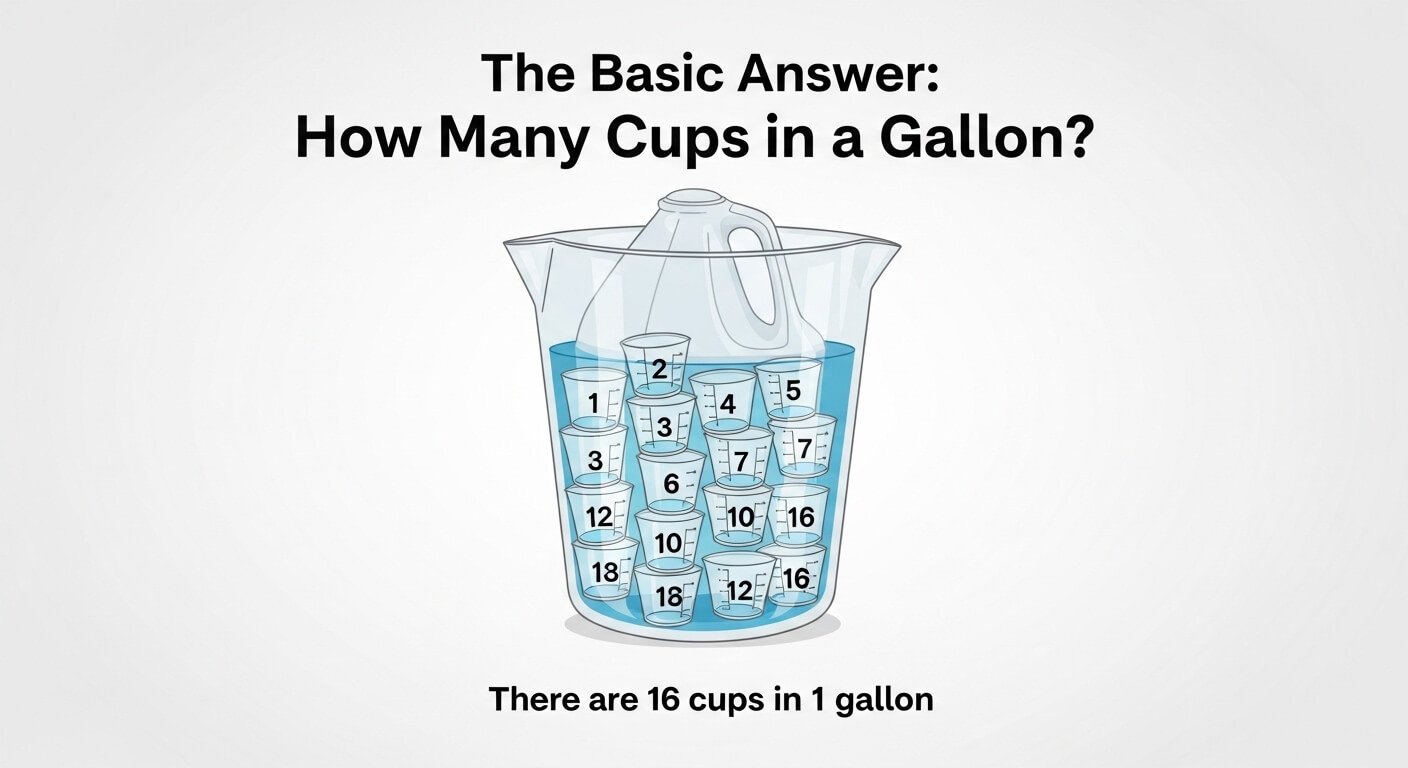
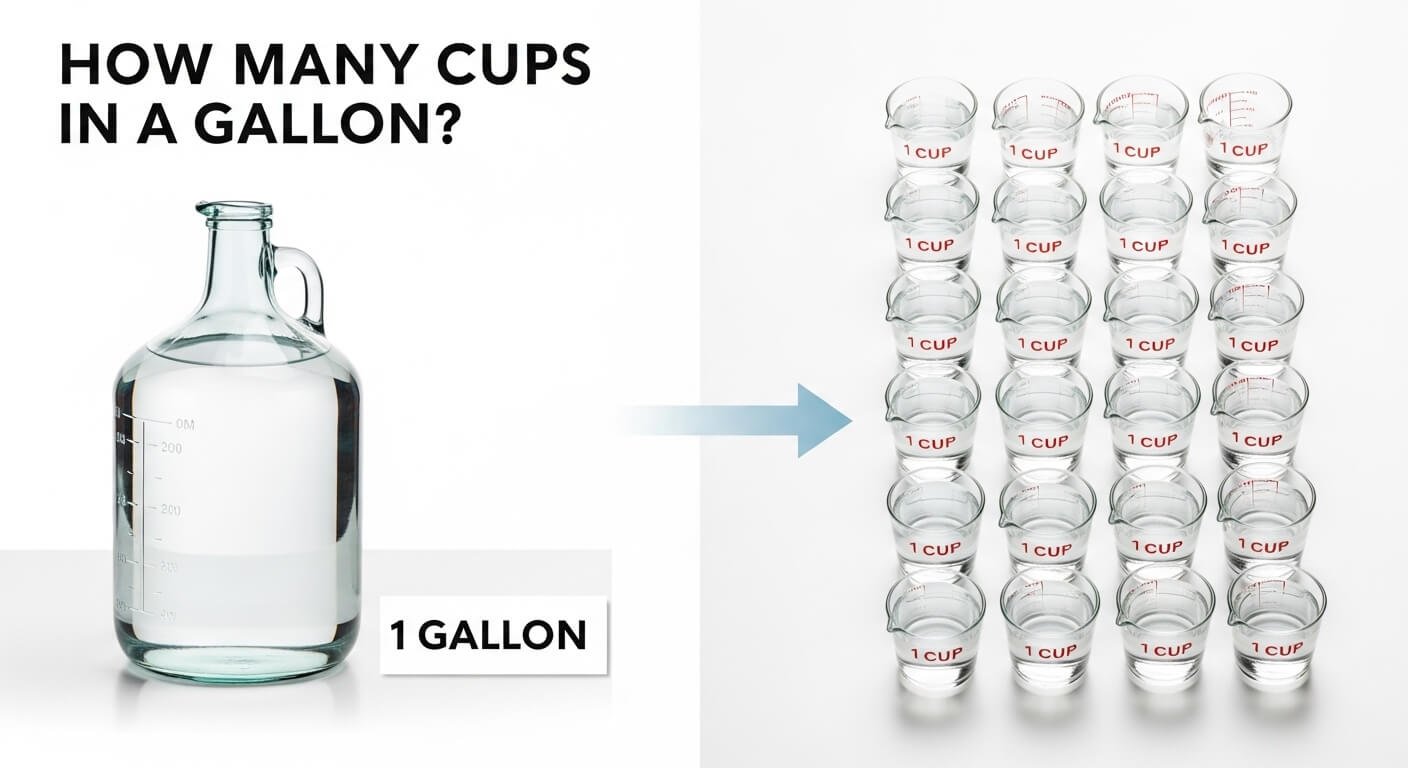
There are 16 cups in a gallon. This is the standard conversion in the U.S. customary system of measurement. To break it down further:
- 1 gallon = 16 cups
- 1 gallon = 8 pints
- 1 gallon = 4 quarts
- 1 gallon = 128 fluid ounces
This conversion works for all liquids, whether you’re measuring water, milk, juice, or any other fluid ingredient in your recipes.
Understanding the U.S. Customary System
The U.S. customary system uses gallons as a primary unit for measuring larger volumes of liquid. The system is hierarchical, with each larger unit containing a specific number of smaller units:
The Measurement Hierarchy
- 1 gallon contains 4 quarts
- 1 quart contains 2 pints
- 1 pint contains 2 cups
- 1 cup contains 8 fluid ounces
So when you multiply: 4 quarts × 2 pints × 2 cups = 16 cups per gallon
Why This Conversion Matters in Daily Life
Knowing how many cups are in a gallon has practical applications in many situations:
Cooking and Baking
When you’re preparing large batches of food or drinks, converting between gallons and cups helps you scale recipes accurately. For example, if a punch recipe serves 20 people and calls for 1 gallon of liquid, you’ll know you need 16 cups of your chosen beverage.
Hydration Tracking
Health experts often recommend drinking a certain number of gallons of water per day. If your goal is to drink half a gallon of water daily, you now know that equals 8 cups – a much more manageable measurement to track throughout the day.
Home Projects
From mixing cleaning solutions to filling a fish tank, understanding volume conversions helps you measure liquids accurately for various household tasks.
U.S. vs. Imperial Gallons: An Important Distinction
It’s worth noting that there are different types of gallons used around the world:
U.S. Gallon
- Equals 3.785 liters
- Contains 16 U.S. cups
- Used in the United States and some Latin American countries
Imperial Gallon
- Equals 4.546 liters
- Contains 16 imperial cups (larger than U.S. cups)
- Used in the United Kingdom, Canada, and some Caribbean nations
When converting measurements, make sure you know which system you’re working with, especially if you’re following a recipe from another country.
Converting Between Units: Quick Reference Charts
Gallons to Cups Conversion Chart
| Gallons | Cups |
|---|---|
| 1/16 gallon | 1 cup |
| 1/8 gallon | 2 cups |
| 1/4 gallon | 4 cups |
| 1/2 gallon | 8 cups |
| 3/4 gallon | 12 cups |
| 1 gallon | 16 cups |
| 1.5 gallons | 24 cups |
| 2 gallons | 32 cups |
Cups to Gallons Conversion Chart
| Cups | Gallons |
|---|---|
| 1 cup | 1/16 gallon |
| 2 cups | 1/8 gallon |
| 4 cups | 1/4 gallon |
| 8 cups | 1/2 gallon |
| 12 cups | 3/4 gallon |
| 16 cups | 1 gallon |
| 32 cups | 2 gallons |
Practical Examples and Applications
Example 1: Scaling a Recipe
Let’s say you’re making lemonade and your recipe calls for 3 gallons of water, but you only have a measuring cup. How many cups do you need?
Solution: 3 gallons × 16 cups per gallon = 48 cups
Example 2: Daily Water Intake
If a nutritionist recommends drinking 1 gallon of water per day, how many 8-ounce glasses should you drink?
Solution: 1 gallon = 16 cups, and 1 cup = 8 ounces, so 16 cups × 8 ounces = 128 ounces total. That’s 16 eight-ounce glasses.
Example 3: Container Capacity
You have a 5-gallon water cooler. How many 16-ounce bottles can you fill from it?
Solution: 5 gallons = 80 cups (5 × 16). Since 16 ounces = 2 cups, 80 cups ÷ 2 cups per bottle = 40 bottles.
Common Mistakes to Avoid
When working with gallon and cup measurements, watch out for these common errors:
Confusing Fluid Ounces with Weight Ounces
Remember that fluid ounces measure volume, while ounces can also measure weight. A cup of feathers and a cup of lead both occupy the same volume but have very different weights.
Mixing Measurement Systems
Don’t confuse U.S. customary measurements with metric measurements. A liter is not the same as a quart, and a gram is not the same as an ounce.
Forgetting to Convert
When doubling or halving recipes, remember to convert all measurements, not just some of them. It’s easy to overlook this step when you’re in the middle of cooking.
Historical Context of the Gallon
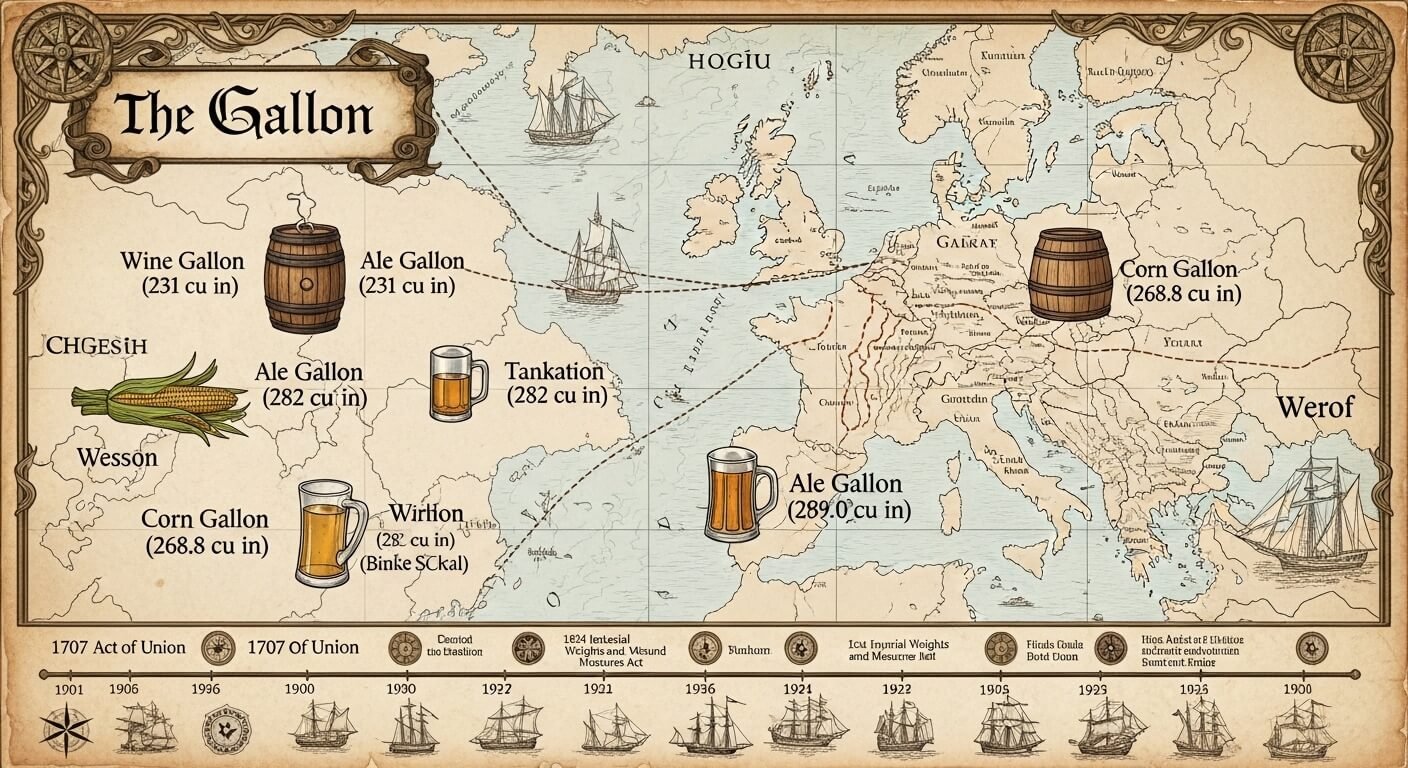
The gallon has an interesting history that dates back centuries:
- The word “gallon” comes from the Old Northern French “galon,” meaning a liquid measure
- In medieval England, gallons were used to measure wine and ale
- The U.S. gallon is based on the wine gallon used in Britain before 1824
- The imperial gallon was later standardized to the volume of 10 pounds of water at a specific temperature
Tips for Accurate Measuring
To ensure you’re getting accurate measurements when converting between gallons and cups:
- Use proper measuring tools: Use clear measuring cups with marked increments for liquids
- Check at eye level: When measuring liquids, place the measuring cup on a flat surface and check the measurement at eye level
- Use the right cup: Use liquid measuring cups for fluids and dry measuring cups for solids
- Be precise: When baking, precision matters more than when cooking savory dishes
Metric System Comparison
For those who use the metric system, here’s how gallons and cups compare:
- 1 U.S. gallon ≈ 3.785 liters
- 1 liter ≈ 4.227 cups
- 1 cup ≈ 236.6 milliliters
Memory Tricks and Mnemonics
To help remember that there are 16 cups in a gallon, try these memory aids:
- “Gallon Man”: Draw a stick figure where the body represents a gallon, each arm and leg represents a quart, each finger represents a cup
- The “Big G” method: Write a large G (gallon), inside it write 4 Q’s (quarts), inside each Q write 2 P’s (pints), inside each P write 2 C’s (cups)
- Simple rhyme: “A gallon’s might, holds sixteen cups tight”
When Precision Matters Most
While knowing that there are 16 cups in a gallon is useful for everyday cooking, some situations require even more precision:
- Scientific experiments: May require metric conversions
- Commercial food production: Often uses weight measurements for consistency
- Pharmaceutical preparations: Require exact measurements for safety
Conclusion
Understanding how many cups are in a gallon is a fundamental kitchen and life skill. With 16 cups in every gallon, you can confidently scale recipes, track your hydration, and tackle various household projects that involve liquid measurements.