Introduction
Soup has been a comfort food for thousands of years. Every culture has its own traditional recipes, from creamy vegetable soups to spicy broths and hearty stews. While the ingredients have changed over time, one thing has transformed dramatically—the way soup is produced. This transformation is known as soup technology.
Today, soup technology combines food science, automation, artificial intelligence (AI), robotics, and smart manufacturing to create high-quality soups that are safe, nutritious, and consistent. Whether soup is prepared in a home kitchen, a restaurant, or a large food factory, modern technology has made the entire process faster, cleaner, and more efficient.
In this comprehensive guide, you’ll learn what soup technology is, how it works, its benefits, challenges, and the exciting innovations shaping the future of the soup industry.
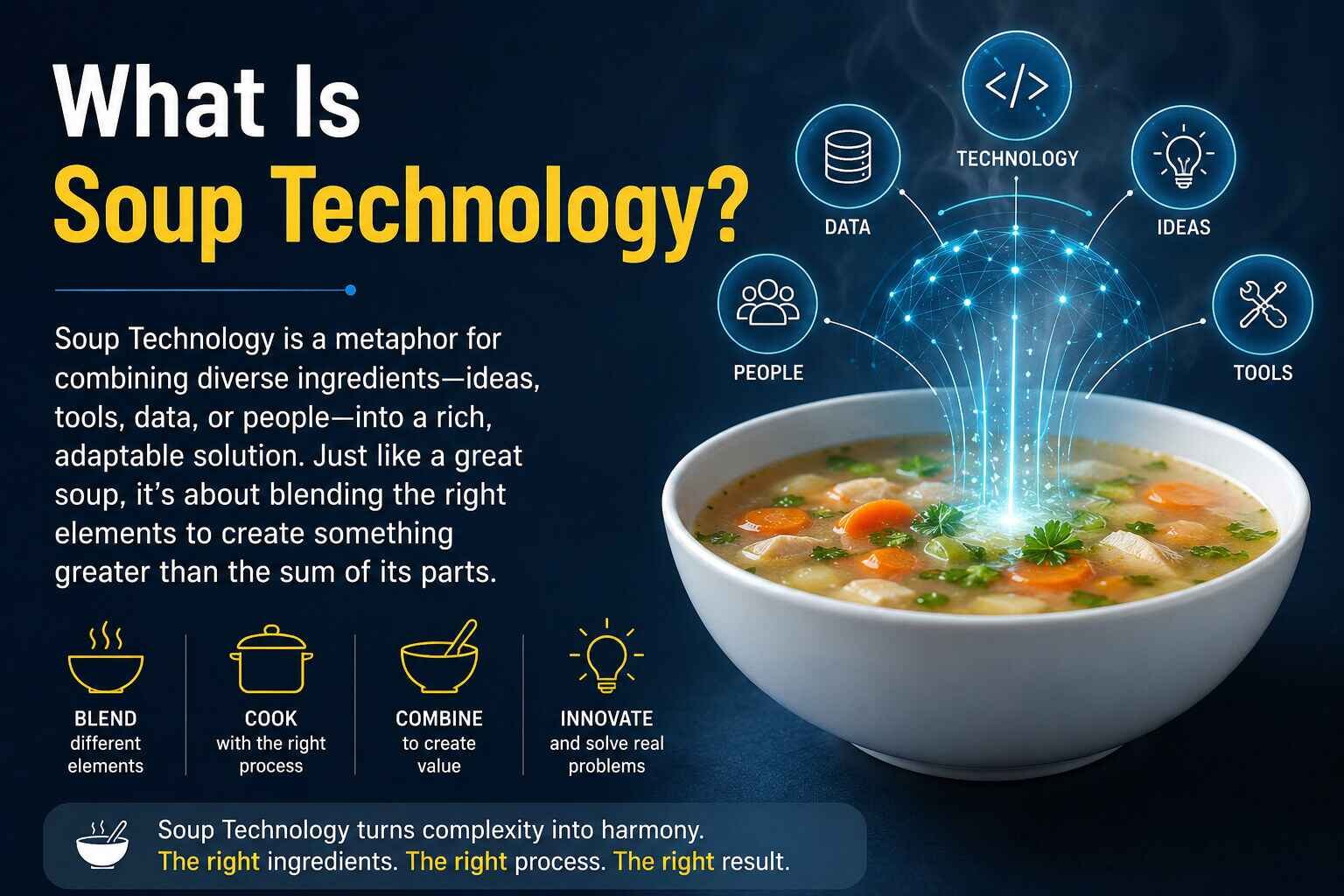
What Is Soup Technology?
Soup technology refers to the modern methods, equipment, and digital systems used to produce, process, package, preserve, and distribute soup products efficiently while maintaining quality and food safety.
Instead of relying only on manual cooking methods, manufacturers now use advanced technologies such as:
- Automated cooking systems
- AI-powered quality control
- Smart temperature monitoring
- Robotic packaging machines
- IoT (Internet of Things) sensors
- Vacuum sealing technology
- Food preservation systems
These innovations help companies produce thousands of liters of soup every day with consistent taste and nutritional value.
Why Soup Technology Is Important
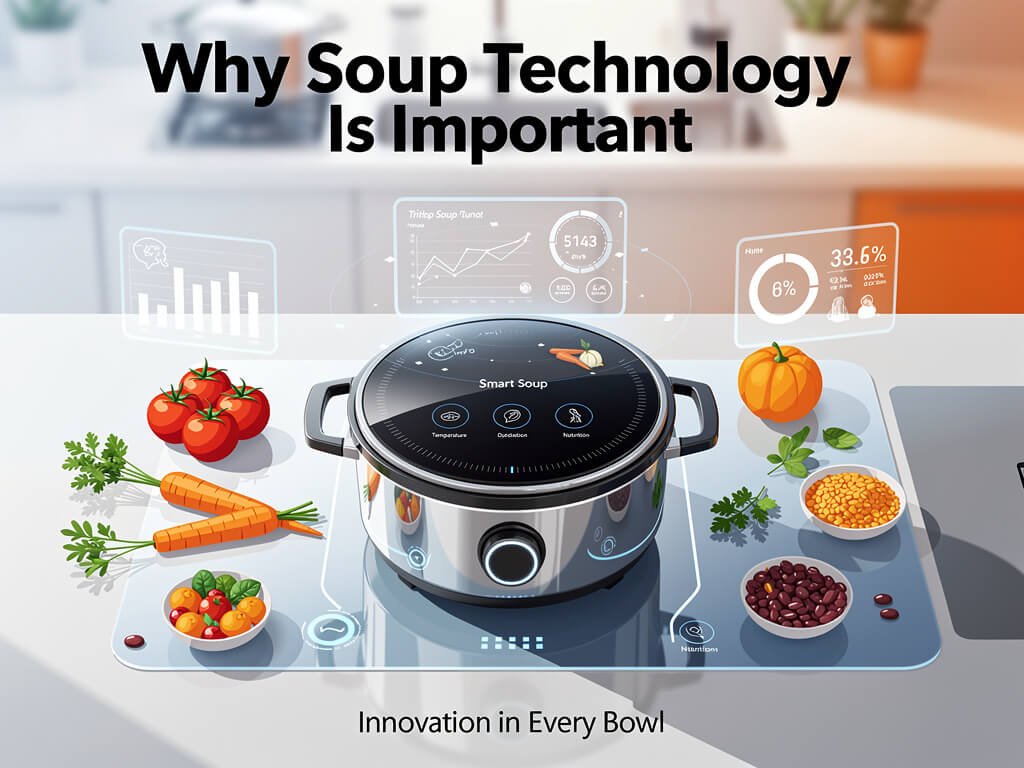
The global demand for ready-to-eat meals continues to grow. Busy lifestyles have increased the popularity of packaged soups because they are convenient, affordable, and quick to prepare.
Soup technology helps manufacturers meet this demand by improving:
- Production speed
- Product consistency
- Food safety
- Shelf life
- Energy efficiency
- Waste reduction
Without modern soup technology, producing millions of soup packages every day would be difficult.
The Evolution of Soup Technology
Traditional Soup Preparation
For centuries, soup was prepared using simple cooking tools over fire or stoves. Every batch depended on the cook’s skills, making consistency difficult.
Traditional methods included:
- Hand-chopping vegetables
- Manual stirring
- Long cooking times
- Small batch production
Although these methods produced delicious soups, they were slow and difficult to scale.
Modern Soup Technology
Today’s soup factories use highly automated production lines that can produce thousands of servings per hour.
Modern systems feature:
- Computer-controlled cooking
- Automated ingredient mixing
- Digital quality inspection
- Robotic filling machines
- Sterile packaging
This reduces human error while ensuring every package meets strict quality standards.
How Soup Technology Works
Modern soup production follows several carefully controlled steps.
1. Ingredient Selection
High-quality ingredients are the foundation of excellent soup.
Manufacturers carefully inspect:
- Fresh vegetables
- Meat
- Poultry
- Seafood
- Herbs
- Spices
- Dairy products
Many companies now use AI-based vision systems that automatically detect damaged or low-quality ingredients before production begins.
2. Cleaning and Preparation
Before cooking, ingredients pass through automated cleaning systems.
Machines perform tasks such as:
- Washing vegetables
- Peeling potatoes
- Cutting carrots
- Slicing onions
- Removing unwanted materials
Automation saves labor while improving hygiene.
3. Smart Cooking Systems
One of the biggest innovations in soup technology is intelligent cooking equipment.
Smart kettles automatically control:
- Temperature
- Pressure
- Cooking time
- Stirring speed
- Steam levels
These systems ensure every batch tastes the same.
4. Quality Control
Modern factories use advanced sensors that monitor:
- Thickness
- Salt levels
- Acidity (pH)
- Color
- Texture
- Temperature
If any measurement falls outside the desired range, the system immediately alerts operators.
5. Packaging
Packaging is another essential part of soup technology.
Popular packaging options include:
- Cans
- Pouches
- Glass jars
- Plastic containers
- Cartons
Automated filling machines ensure accurate portions while minimizing contamination.
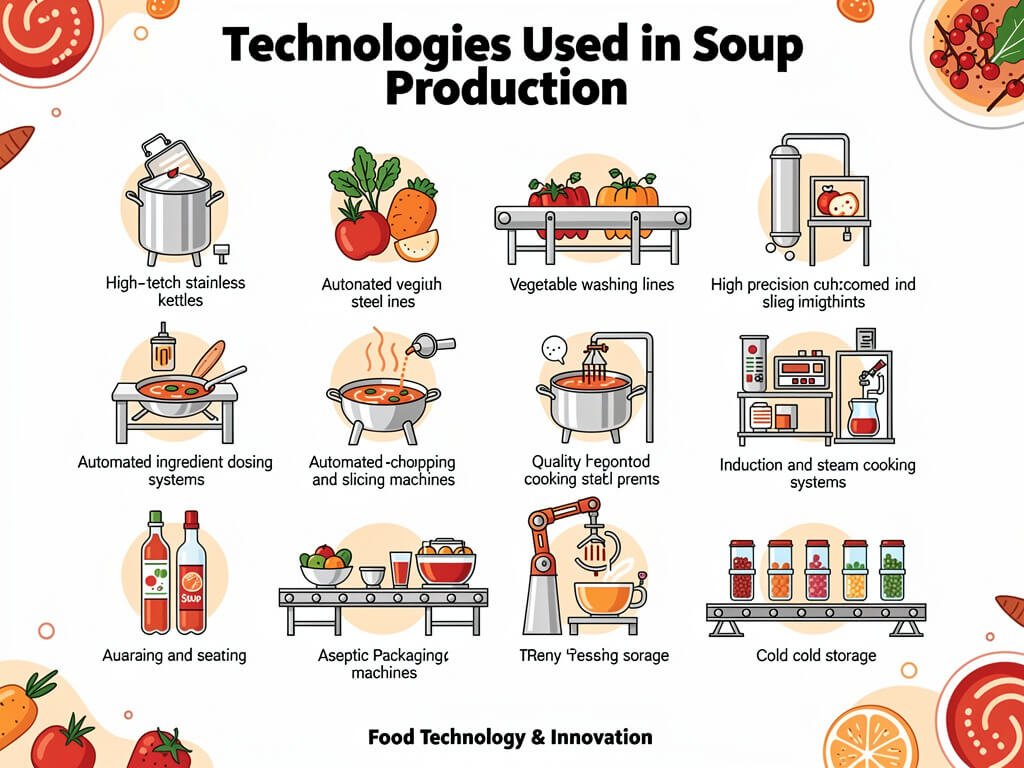
Technologies Used in Soup Production
Artificial Intelligence (AI)
Artificial intelligence helps manufacturers optimize production.
AI can:
- Predict equipment failures
- Improve recipes
- Reduce waste
- Monitor quality
- Increase efficiency
Some factories use machine learning to analyze thousands of production records and recommend improvements.
Internet of Things (IoT)
IoT connects machines using smart sensors.
Benefits include:
- Real-time monitoring
- Remote equipment management
- Temperature tracking
- Predictive maintenance
- Lower operating costs
Managers can monitor production from smartphones or computers.
Robotics
Robots are becoming common in soup factories.
They perform repetitive tasks such as:
- Packaging
- Labeling
- Sorting
- Palletizing
- Moving containers
Robots work continuously with high precision, reducing labor costs and improving productivity.
Automation
Automation combines machines and software to reduce manual work.
Examples include:
- Automatic ingredient dispensing
- Conveyor systems
- Mixing equipment
- Cooking control
- Packaging lines
Automation also helps maintain consistent product quality.
Benefits of Soup Technology
Modern soup technology provides many advantages.
Improved Food Safety
Food safety is one of the biggest priorities in soup production.
Technology reduces contamination through:
- Sterile equipment
- Automated handling
- Continuous monitoring
- Digital sanitation records
These systems help manufacturers meet international food safety standards.
Better Product Quality
Consumers expect every package to taste the same.
Soup technology ensures consistency by controlling:
- Ingredients
- Cooking time
- Temperature
- Texture
- Flavor
This builds customer trust and brand loyalty.
Increased Production Speed
Modern factories can produce thousands of soup packages every hour.
Automation dramatically reduces production time compared to traditional cooking methods.
Reduced Food Waste
Smart production systems minimize waste by measuring ingredients accurately.
Benefits include:
- Lower costs
- Improved sustainability
- Better inventory management
- Reduced environmental impact
Energy Efficiency
Today’s cooking equipment uses less energy than older systems.
Energy-saving technologies include:
- Heat recovery systems
- Efficient steam boilers
- Smart temperature control
- Automated shutdown features
These improvements lower operating costs while reducing carbon emissions.
Real-World Applications of Soup Technology
Soup technology is used in many industries, including:
Food Manufacturing
Large companies produce canned, frozen, and packaged soups using automated production lines.
Restaurants
Commercial kitchens use smart cooking equipment for consistent quality and faster service.
Hospitals
Hospitals rely on soup technology to prepare nutritious meals while meeting strict hygiene standards.
Hotels
Hotels use advanced kitchen equipment to serve large numbers of guests efficiently.
Airlines
Pre-packaged soups are prepared using modern preservation technology to maintain freshness during transportation.