Introduction
Running a successful business means managing more than just products and services. Every company also needs a reliable way to store inventory, equipment, documents, furniture, and digital assets. Choosing the right business storage solution can improve organization, reduce costs, protect valuable resources, and support future growth.
Whether you operate a small startup, an online store, or a large corporation, understanding your storage options helps you make better business decisions.
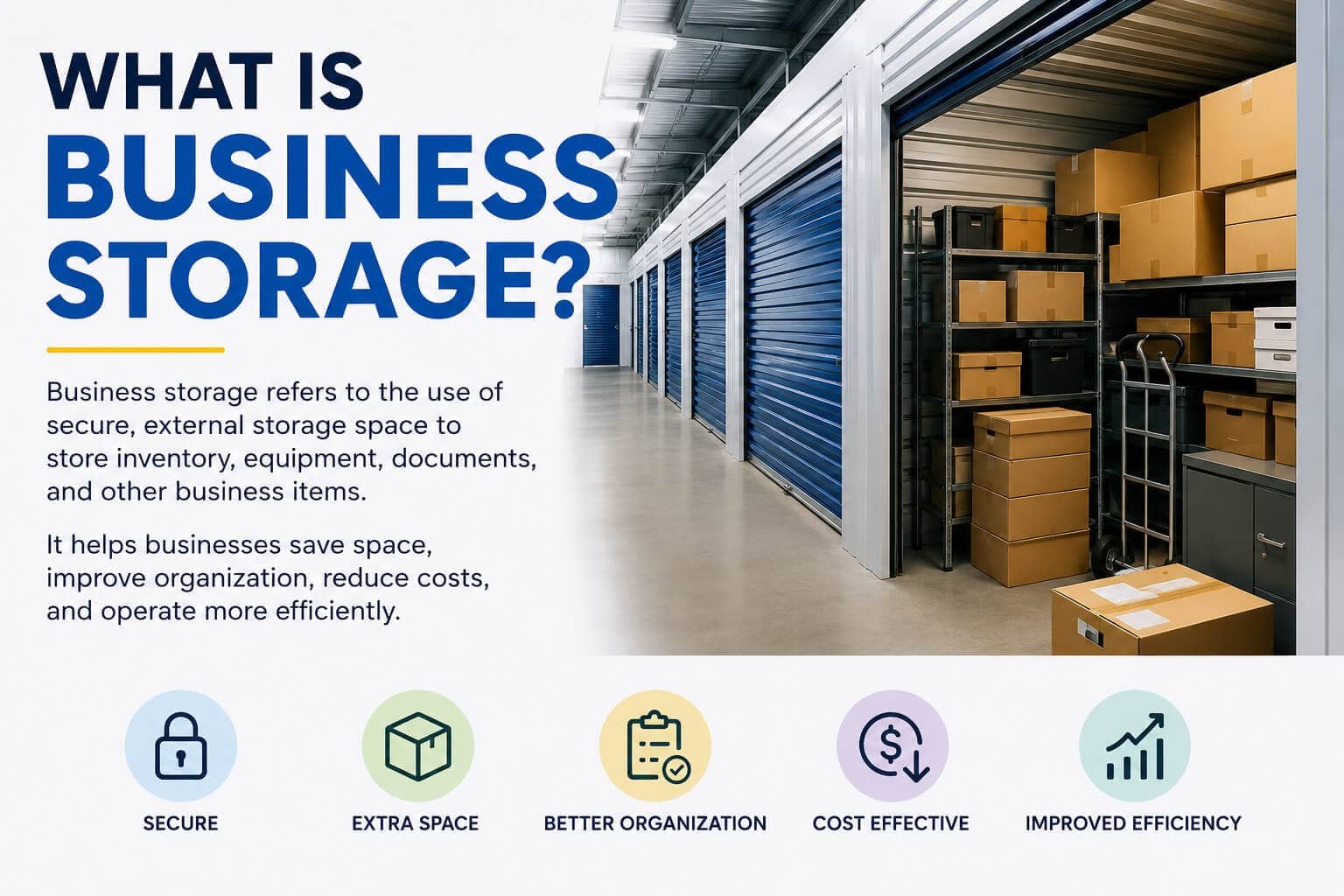
Business storage refers to secure spaces and systems used by companies to store inventory, equipment, documents, furniture, seasonal items, and digital files. The right storage solution improves organization, protects valuable assets, saves office space, lowers operating costs, and helps businesses scale efficiently without unnecessary expenses.
What Is Business Storage?
Business storage is any solution that allows companies to safely organize and store physical or digital business assets.
Unlike residential storage, business storage is designed for commercial needs. It often includes enhanced security, larger storage units, flexible rental agreements, inventory management features, and easier access for business operations.
Business storage can include:
- Self-storage units
- Warehouse storage
- Climate-controlled storage
- Document storage
- Inventory storage
- Equipment storage
- Cloud storage for digital files
Each solution serves a different purpose depending on the size and type of business.
Why Business Storage Matters
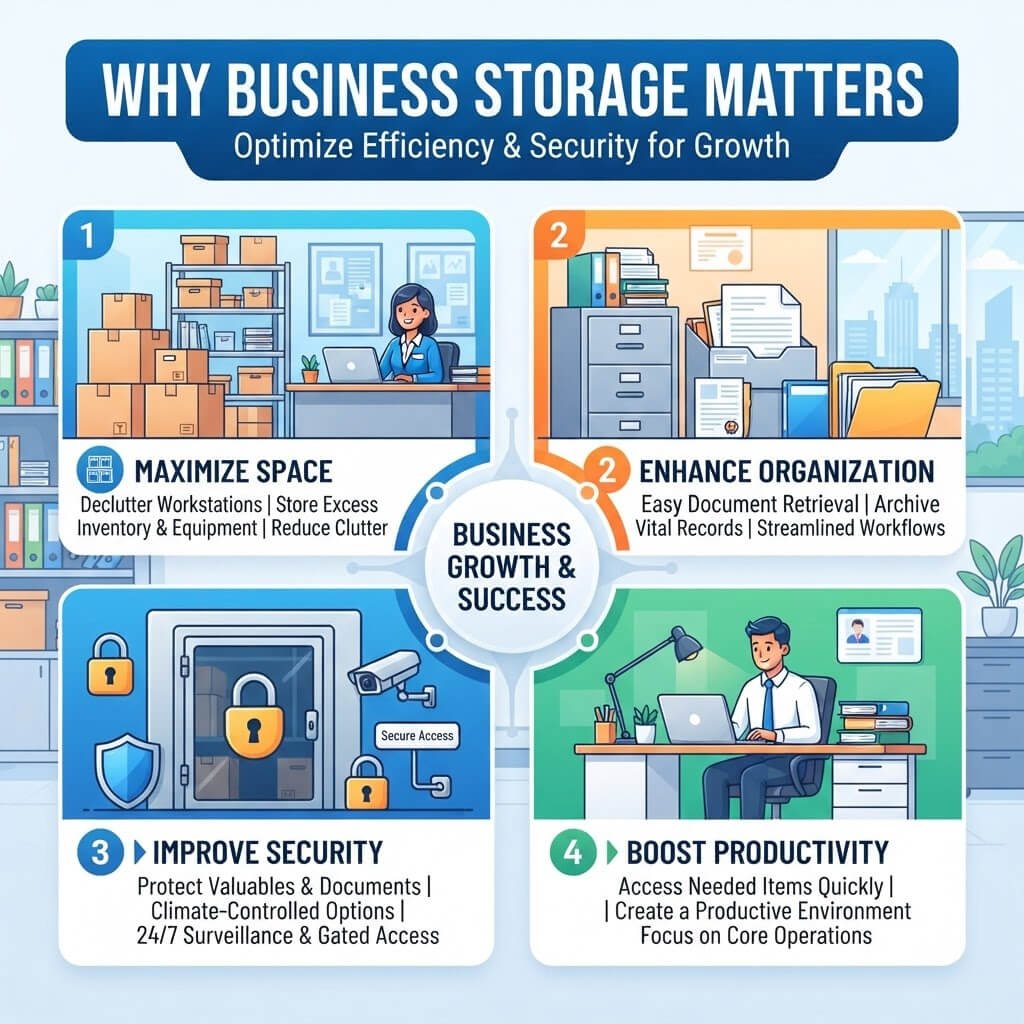
Many businesses outgrow their available office or retail space long before they can afford to move into a larger building.
Instead of relocating, companies often use storage facilities to keep their operations organized while reducing overhead costs.
Some common reasons businesses use storage include:
- Managing excess inventory
- Protecting important documents
- Storing office furniture
- Keeping seasonal products
- Housing marketing materials
- Safely storing tools and equipment
- Supporting business expansion
Business storage also creates a cleaner workspace, making employees more productive.
Types of Business Storage
Self-Storage Units
Self-storage is one of the most popular solutions for small businesses.
Companies rent individual units and access them whenever needed.
Best for:
- Small retailers
- Freelancers
- Contractors
- Local service businesses
- Online sellers
Advantages include:
- Affordable pricing
- Flexible rental terms
- Easy accessibility
- Multiple unit sizes
Warehouse Storage
Warehouse storage is designed for businesses with large inventories.
These facilities often include:
- Shelving systems
- Loading docks
- Inventory management
- Shipping support
Warehouse storage is ideal for:
- Manufacturers
- Wholesalers
- E-commerce businesses
- Distribution companies
Climate-Controlled Storage
Some business items require stable temperatures and humidity levels.
Climate-controlled units protect:
- Electronics
- Medical equipment
- Paper records
- Artwork
- Wood furniture
- Sensitive inventory
These units reduce the risk of mold, moisture, and heat damage.
Document Storage
Many businesses still maintain physical records.
Professional document storage facilities provide:
- Secure filing
- Fire protection
- Organized retrieval
- Long-term archiving
- Confidential destruction services
Industries using document storage include:
- Healthcare
- Legal firms
- Financial institutions
- Government offices
Equipment Storage
Construction companies, event planners, photographers, landscapers, and contractors often own expensive equipment that cannot remain on-site.
Business storage protects:
- Heavy machinery
- Power tools
- Event equipment
- Cameras
- Office technology
Cloud Storage
Business storage isn’t limited to physical assets.
Cloud storage allows companies to securely store digital files online.
Popular uses include:
- Backing up business data
- Team collaboration
- File sharing
- Disaster recovery
Cloud storage has become essential for remote and hybrid work environments.
Benefits of Business Storage
Saves Office Space
Office space is expensive.
Instead of paying for larger offices, businesses can store rarely used items elsewhere while keeping work areas clean and efficient.
Improves Organization
A dedicated storage solution helps businesses organize inventory, paperwork, equipment, and supplies.
Employees spend less time searching for items and more time focusing on productive work.
Reduces Business Costs
Renting additional office or retail space can cost significantly more than using commercial storage.
Businesses only pay for the storage space they actually need.
This makes budgeting easier.
Protects Valuable Assets
Modern storage facilities offer multiple security features, including:
- Video surveillance
- Individual locks
- Access control
- Alarm systems
- Security patrols
- Fire protection
These features reduce the risk of theft or damage.
Supports Business Growth
Growing businesses often experience temporary inventory increases.
Storage provides flexibility without requiring immediate investment in larger commercial property.
Companies can expand at their own pace.
Who Needs Business Storage?
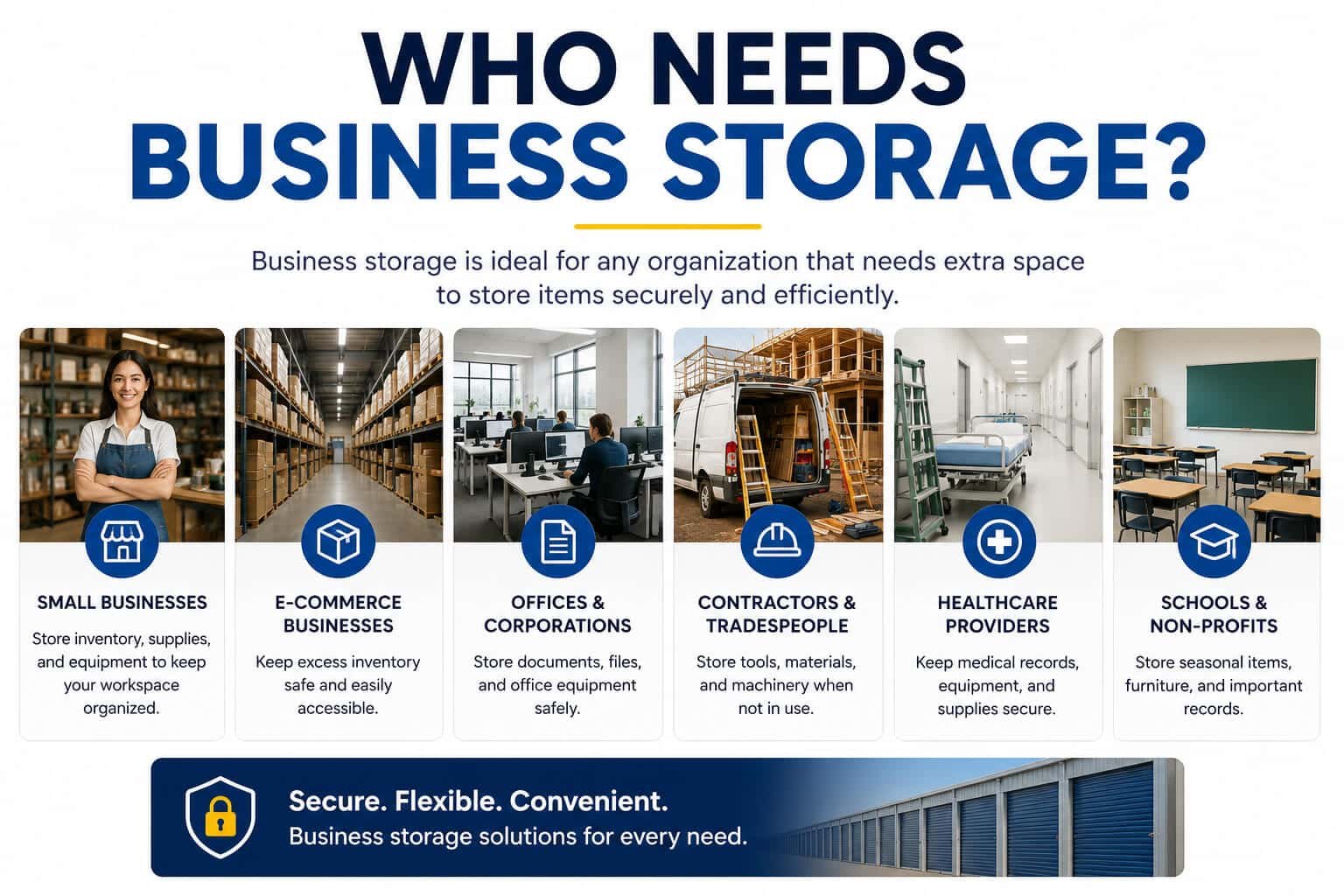
Almost every industry benefits from business storage.
Examples include:
Retail Stores
Retailers use storage for:
- Seasonal inventory
- Promotional displays
- Overstock products
E-commerce Businesses
Online stores often experience inventory fluctuations.
Storage facilities provide extra space without leasing expensive warehouses.
Construction Companies
Construction businesses frequently store:
- Building materials
- Machinery
- Safety equipment
- Vehicles
- Spare parts
Medical Offices
Healthcare providers securely store:
- Archived patient records
- Medical equipment
- Backup supplies
Law Firms
Legal offices often maintain records for years due to regulatory requirements.
Secure document storage protects confidential information.
Marketing Agencies
Creative agencies store:
- Event materials
- Promotional displays
- Photography equipment
- Printed advertising
Business Storage vs Warehouse: What’s the Difference?
Although the terms are sometimes used interchangeably, they serve different purposes.
| Business Storage | Warehouse |
|---|---|
| Smaller rental spaces | Large commercial facilities |
| Flexible rental | Long-term commercial contracts |
| Self-service access | Staff-assisted operations |
| Lower costs | Higher operational capacity |
| Best for small businesses | Best for large inventory management |
Choosing between the two depends on inventory volume and business operations.
How to Choose the Right Business Storage Solution
Selecting the right storage requires careful planning.
Consider the following factors.
1. Understand Your Storage Needs
Ask yourself:
- What are you storing?
- How often will you need access?
- How much space is required?
- Is climate control necessary?
These answers narrow your options.
2. Prioritize Security
Look for facilities offering:
- CCTV monitoring
- Gated access
- Individual alarms
- Strong lighting
- Secure locks
- Staff on-site
Security should never be compromised.
3. Consider Accessibility
Some businesses require daily access.
Others only visit storage monthly.
Choose a facility with access hours matching your operational needs.
4. Compare Pricing
Don’t automatically choose the cheapest option.
Evaluate:
- Security
- Insurance
- Accessibility
- Climate control
- Hidden fees
Overall value matters more than the monthly price alone.
5. Think About Future Growth
Businesses grow.
Choose storage that allows easy upgrades without moving to another provider.
Scalable storage saves time and money.
Business Storage Best Practices
Using storage efficiently requires good organization.
Follow these tips.
Label Everything
Every box should include:
- Contents
- Department
- Date stored
- Priority level
Proper labeling speeds up retrieval.
Create an Inventory List
Maintain a digital inventory that tracks:
- Box numbers
- Product quantities
- Equipment locations
- Access history
This prevents misplaced items.
Use Shelving
Avoid stacking boxes directly on the floor.
Shelving:
- Saves space
- Prevents damage
- Improves visibility
- Makes retrieval easier
Rotate Inventory
Businesses storing products should follow inventory rotation methods such as FIFO (First In, First Out).
This reduces waste and keeps stock fresh.
Schedule Regular Audits
Inspect stored items regularly.
Audits help identify:
- Damaged inventory
- Missing equipment
- Expired products
- Storage inefficiencies
Common Mistakes Businesses Make
Many companies waste money through poor storage planning.
Avoid these mistakes.
Renting Too Much Space
Bigger isn’t always better.
Pay only for the storage capacity you currently need.
Ignoring Climate Control
Heat and humidity can destroy valuable inventory.
Sensitive products should always be stored appropriately.
Poor Inventory Tracking
Without accurate records, businesses lose valuable time searching for products.
Inventory software greatly improves efficiency.
Weak Security
Choosing storage based only on price can expose valuable assets to unnecessary risks.
Security should always be a priority.
Real-World Examples
Online Clothing Store
A growing clothing retailer stored seasonal inventory in a nearby business storage unit.
Instead of moving to a larger warehouse, the company reduced overhead while maintaining fast order fulfillment.
Construction Contractor
A local contractor rented commercial storage for expensive power tools and machinery.
This reduced theft at job sites and extended equipment lifespan.
Accounting Firm
After switching archived tax records to secure document storage, an accounting firm freed valuable office space for additional employees without relocating.
Business Storage Trends in 2026

Business storage continues to evolve alongside changing work environments.
Current trends include:
- Smart storage with digital access management
- Cloud-connected inventory tracking
- Contactless facility access
- Sustainable warehouse practices
- Hybrid physical and digital storage strategies
- Flexible month-to-month commercial rentals
Businesses increasingly combine physical storage with cloud-based systems for better operational efficiency.
Business Storage Statistics
Several industry facts highlight the growing importance of storage solutions.
- The global self-storage market was valued at more than $58 billion in 2024 and is projected to continue growing due to increasing demand from businesses and individuals.
- According to the National Association of Productivity & Organizing Professionals (NAPO), employees spend significant time searching for misplaced information and supplies, showing how organization directly impacts productivity.
- Research from IBM has consistently shown that the average cost of a data breach reaches millions of dollars globally, making secure digital storage and backups essential for modern businesses.
These trends demonstrate that secure storage is no longer optional—it is part of effective business management.
Frequently Asked Questions
What is business storage?
Business storage is a commercial solution that allows companies to securely store inventory, equipment, documents, furniture, and digital files outside their primary workspace. It helps save space, improve organization, and protect valuable assets.
Is business storage tax deductible?
In many countries, business storage expenses may qualify as legitimate operating expenses if they are directly related to business activities. Tax rules vary by location, so businesses should consult a qualified accountant or tax professional.
How much business storage space do I need?
The amount depends on what you plan to store, how often you need access, and future growth. Start with your current inventory and choose a facility that allows you to upgrade if your storage needs increase.
Is climate-controlled business storage worth it?
Yes, if you’re storing electronics, important documents, pharmaceuticals, artwork, wooden furniture, or other temperature-sensitive items. Climate control helps prevent moisture, mold, and heat damage.
Can small businesses benefit from business storage?
Absolutely. Small businesses often use business storage to reduce office clutter, manage seasonal inventory, protect equipment, and avoid the higher cost of moving into larger commercial spaces before it’s necessary.
Final Thoughts
Business storage is much more than extra space. It is a practical investment that helps companies stay organized, protect valuable assets, improve productivity, and grow without taking on unnecessary property costs.
Whether you need a compact self-storage unit for seasonal inventory, a secure document archive, climate-controlled protection for sensitive equipment, or a large warehouse for expanding operations, choosing the right storage solution can simplify daily work and support long-term success. By evaluating your business needs, prioritizing security, and maintaining an organized inventory system, you can turn storage into a strategic advantage rather than just a place to keep extra items.