Introduction
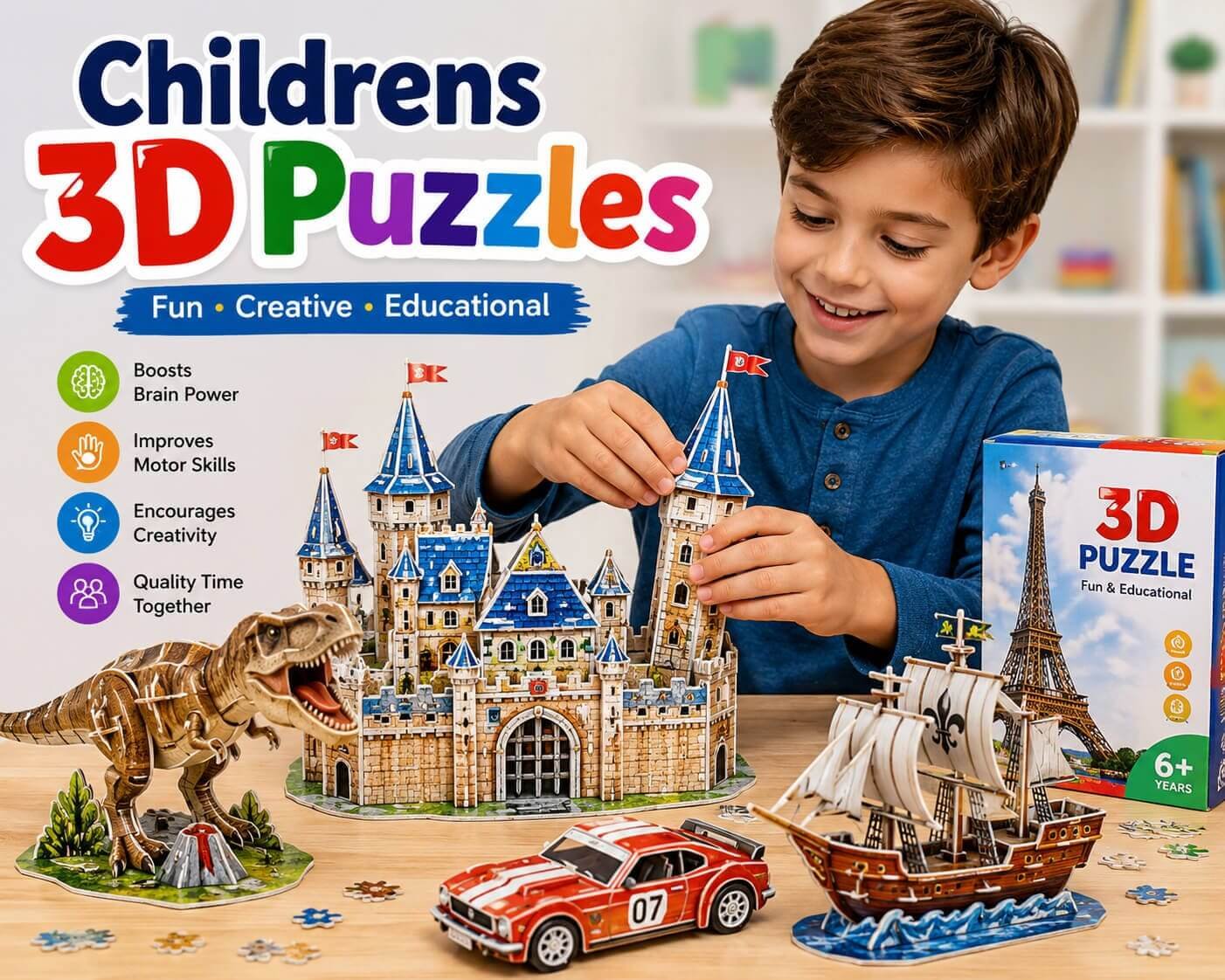
In today’s digital age, parents are constantly seeking innovative ways to keep children entertained while also helping them learn. One activity that perfectly combines fun, education, and creativity is children’s 3D puzzles. These exciting puzzles are more than just toys. They challenge young minds, improve problem-solving skills, and encourage hands-on learning.
Unlike traditional flat puzzles, 3D puzzles allow children to build real structures, animals, vehicles, landmarks, and fantasy creations. Kids can hold, examine, and admire their finished creations from every angle. This interactive experience makes learning far more exciting and memorable.
Over the past few years, the popularity of children’s 3D puzzles has increased rapidly. According to toy industry reports, educational and STEM-based toys have become one of the fastest-growing categories worldwide. Parents and teachers now recognize the importance of toys that develop cognitive skills while reducing screen time.
This guide explains everything you need to know about children’s 3D puzzles, including their benefits, types, educational value, age recommendations, and tips for choosing the best puzzle for your child.
What Are Children’s 3D Puzzles?
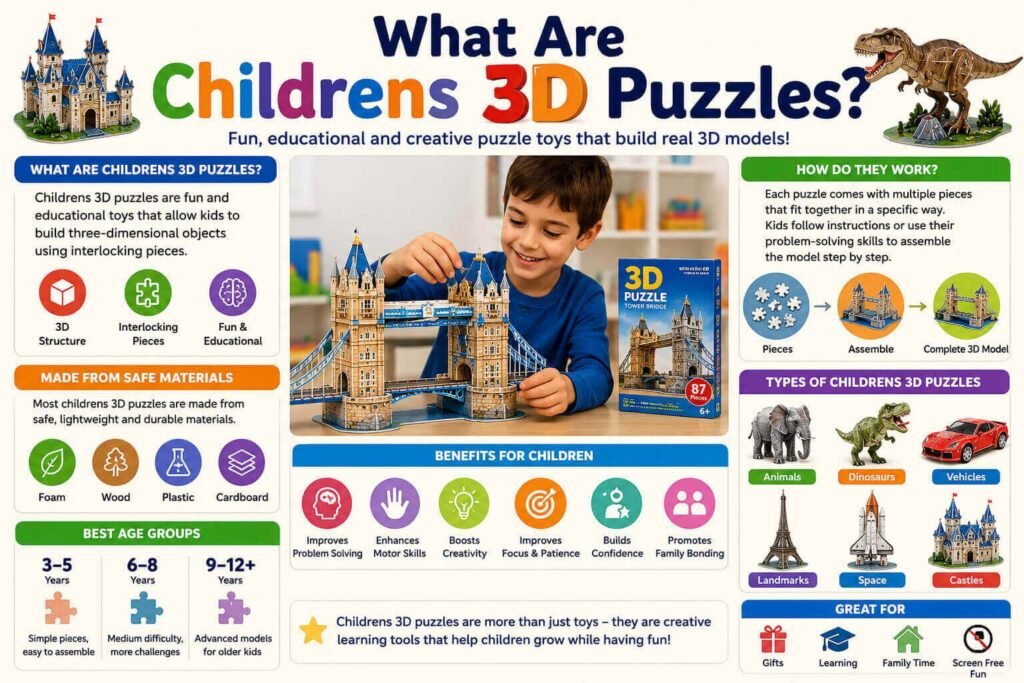
Children’s 3D puzzles are three-dimensional construction puzzles designed specifically for kids. Instead of assembling flat images like traditional jigsaw puzzles, children build objects with height, depth, and structure.
These puzzles can include:
- Buildings
- Animals
- Cars and trains
- Space models
- Dinosaurs
- Castles
- Cartoon characters
- Famous landmarks
The pieces fit together to create a complete 3D object that children can display or play with after completion.
Some puzzles are made from:
- Foam
- Plastic
- Wood
- Cardboard
- Magnetic materials
The goal is not only to finish the puzzle but also to understand shapes, balance, and spatial relationships.
Why Children’s 3D Puzzles Are So Popular
The popularity of children’s 3D puzzles continues to grow because they combine learning and entertainment in one activity.
1. They Reduce Screen Time
Many parents worry about excessive phone, tablet, and TV use. 3D puzzles provide a healthy alternative that keeps children engaged for hours without screens.
2. They Encourage Creative Thinking
Children learn how pieces connect and how structures are formed. This boosts imagination and creativity.
3. They Support STEM Learning
STEM stands for Science, Technology, Engineering, and Mathematics. Many children’s 3D puzzles naturally introduce engineering and design concepts in a fun way.
4. They Offer Family Bonding Time
Parents and children can work together on puzzles, creating valuable memories and fostering teamwork opportunities.
Benefits of Children’s 3D Puzzles
One of the biggest reasons parents love children’s 3D puzzles is the wide range of developmental benefits they offer.
Improved Problem-Solving Skills
Children must figure out:
- Which pieces connect
- How shapes align
- What order to build in
This process strengthens logical thinking and reasoning skills.
Better Hand-Eye Coordination
Picking up pieces and placing them correctly helps children improve fine motor skills and coordination.
Stronger Memory Skills
Children remember patterns, shapes, and assembly steps while solving puzzles.
Increased Patience and Focus
Completing a 3D puzzle takes concentration and persistence. Kids learn the value of patience and determination.
Boosted Confidence
Finishing a challenging puzzle gives children a sense of achievement and pride.
Types of Children’s 3D Puzzles
There are many types of children’s 3D puzzles available today. Choosing the right one depends on your child’s age and interests.
Animal 3D Puzzles
These puzzles let kids build animals such as:
- Lions
- Dinosaurs
- Elephants
- Sharks
- Birds
Animal puzzles are excellent for younger children who enjoy wildlife and nature.
Building and Landmark Puzzles
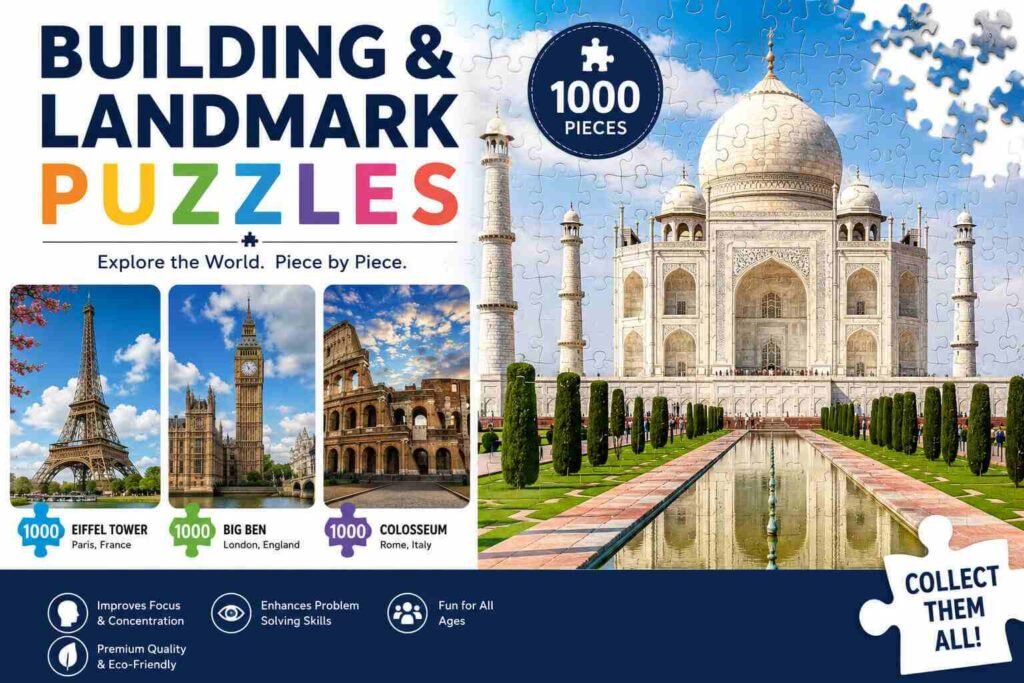
Children can construct famous landmarks like:
- Eiffel Tower
- Big Ben
- Taj Mahal
- Pyramids
These puzzles introduce geography and world history.
Vehicle 3D Puzzles
Popular vehicle puzzles include:
- Cars
- Airplanes
- Ships
- Trains
- Fire trucks
They are ideal for children interested in transportation and machines.
Space-Themed Puzzles
Space puzzles feature:
- Rockets
- Planets
- Space stations
- Satellites
These encourage curiosity about astronomy and science.
Educational STEM Puzzles
Some children’s 3D puzzles are designed specifically for educational purposes and include mechanical or engineering elements.
Best Age Groups for Children’s 3D Puzzles
Different puzzles are designed for different age levels.
Ages 3–5
Young children need simple puzzles with:
- Large pieces
- Bright colors
- Easy connections
Foam or wooden puzzles work best for this age group.
Ages 6–8
Children in this age range can handle:
- More detailed designs
- Medium piece counts
- Basic construction challenges
Animal and vehicle puzzles are very popular here.
Ages 9–12
Older children enjoy advanced puzzles with:
- Complex structures
- Smaller pieces
- Detailed instructions
Landmark and STEM puzzles are ideal.
Teenagers
Teens often prefer realistic or mechanical 3D puzzles that require advanced problem-solving skills.
Educational Value of Children’s 3D Puzzles
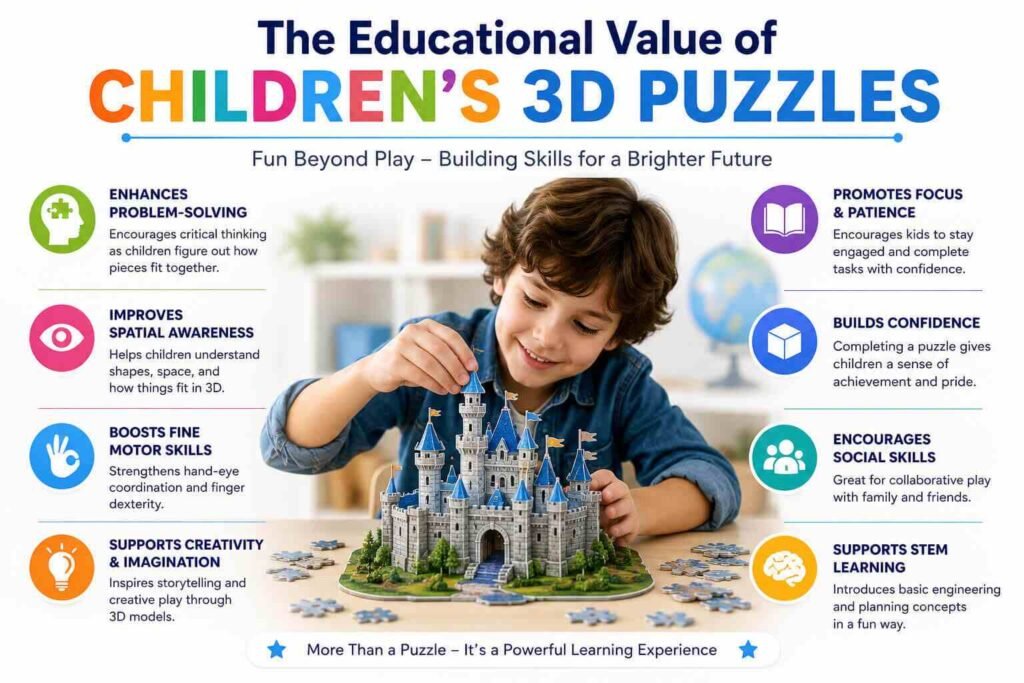
Parents often ask whether puzzles are truly educational. The answer is yes.
Learning Through Play
Experts agree that children learn best through play-based activities. 3D puzzles help children absorb information naturally while having fun.
Math Skills Development
Puzzles teach children about:
- Shapes
- Measurements
- Symmetry
- Spatial awareness
These are important mathematical concepts.
Science and Engineering Concepts
Building structures helps children understand balance, support, and design.
Language Development
Parents and teachers can introduce new vocabulary during puzzle activities, such as:
- Edges
- Corners
- Rotate
- Assemble
- Connect
How Children’s 3D Puzzles Help Brain Development
Studies show that puzzle-solving activates multiple areas of the brain simultaneously.
Critical Thinking
Children analyze problems and develop strategies for solving them.
Spatial Intelligence
3D puzzles improve the ability to visualize objects in space.
Creativity
Kids often imagine stories and scenarios around their completed puzzle creations.
Concentration Skills
Puzzle activities train children to focus on one task for extended periods.
Materials Used in Children’s 3D Puzzles
Different materials provide different experiences.
Wooden 3D Puzzles
Advantages:
- Durable
- Eco-friendly
- Safe for young children
Foam Puzzles
Advantages:
- Lightweight
- Easy to assemble
- Colorful and soft
Plastic Puzzles
Advantages:
- Detailed designs
- Strong construction
- Long-lasting
Cardboard Puzzles
Advantages:
- Affordable
- Lightweight
- Widely available
How to Choose the Best Children’s 3D Puzzles
Choosing the right puzzle can make a huge difference in your child’s experience.
Consider Age Appropriateness
Always check the recommended age on the packaging.
Match Your Child’s Interests
Choose themes your child already enjoys.
For example:
- Dinosaur lovers → dinosaur puzzles
- Space fans → rocket puzzles
- Animal lovers → zoo puzzles
Check Piece Count
Too many pieces can frustrate younger children.
Look for Safe Materials
Ensure the puzzle uses non-toxic materials and smooth edges.
Read Reviews
Customer reviews help identify durable and enjoyable puzzles.
Tips for Parents Using Children’s 3D Puzzles
Parents can make puzzle time even more beneficial.
Create a Comfortable Puzzle Space
Use a clean table with enough lighting.
Encourage Without Taking Over
Let children solve challenges independently when possible.
Praise Effort, Not Just Results
Celebrate persistence and creativity.
Use Puzzles as Learning Opportunities
Discuss colors, shapes, animals, or geography while building.
Children’s 3D Puzzles in Schools and Classrooms
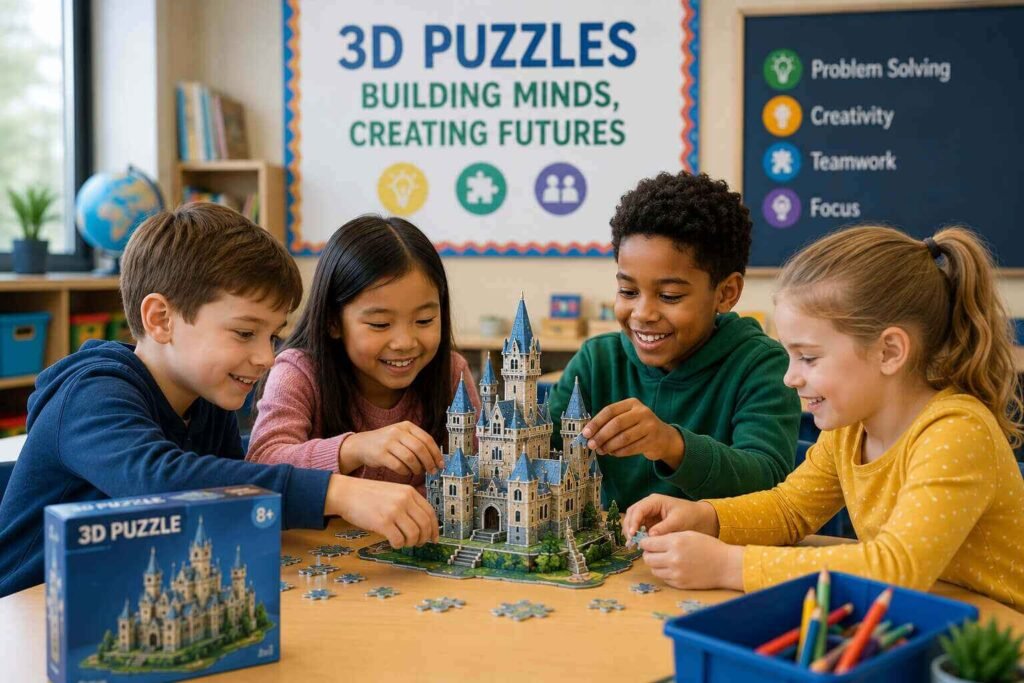
Teachers increasingly use children’s 3D puzzles as educational tools.
Classroom Benefits
Puzzles help students develop:
- Teamwork
- Communication
- Problem-solving
- Creativity
STEM Activities
Many schools use 3D puzzles during STEM projects and science lessons.
Group Learning
Children learn collaboration by working together on large puzzles.
Popular Themes in Children’s 3D Puzzles
Modern puzzles come in countless themes.
Dinosaur Puzzles
Dinosaurs remain one of the most popular puzzle themes for children.
Fantasy Castles
Castle puzzles inspire imagination and storytelling.
Underwater Worlds
Ocean-themed puzzles introduce marine life concepts.
Famous Buildings
Landmark puzzles help children explore world cultures.
Robots and Machines
Tech-themed puzzles encourage engineering interest.
Digital vs Physical Children’s 3D Puzzles
Some companies now offer digital puzzle games, but physical puzzles still provide unique advantages.
Physical Puzzles
Benefits include:
- Hands-on learning
- Better motor skill development
- Reduced screen exposure
Digital Puzzle Games
Benefits include:
- Interactive animations
- Portable entertainment
However, physical children’s 3D puzzles usually offer stronger educational and developmental benefits.
Safety Tips for Children’s 3D Puzzles
Safety should always come first.
Avoid Small Pieces for Toddlers
Small pieces may create choking hazards.
Choose Non-Toxic Materials
Look for child-safe certifications.
Supervise Young Children
Adult supervision is recommended for younger age groups.
DIY Children’s 3D Puzzles
Parents can also create homemade 3D puzzles.
Simple DIY Ideas
- Cardboard castles
- Foam animal shapes
- Paper building kits
DIY puzzles encourage creativity and save money.
Environmental Benefits of Reusable Puzzles
Unlike disposable toys, puzzles can be reused many times.
Eco-Friendly Learning
Wooden and recyclable puzzles reduce waste and encourage sustainable play.
Long-Term Value
Quality puzzles can be passed down to siblings or donated to schools.
How Children’s 3D Puzzles Support Emotional Growth
Puzzle-solving also helps emotional development.
Handling Frustration
Children learn to stay calm and keep trying.
Building Confidence
Every completed puzzle boosts self-esteem.
Encouraging Independence
Children gain confidence solving problems on their own.
Best Occasions to Gift Children’s 3D Puzzles
3D puzzles make excellent gifts for many occasions.
Popular Gift Events
- Birthdays
- Christmas
- Eid celebrations
- School achievements
- Family game nights
They combine fun and education, making them parent-approved gifts.
Future Trends in Children’s 3D Puzzles
The future of children’s 3D puzzles looks exciting.
Interactive Technology
Some puzzles now include:
- Augmented reality
- Sound effects
- Light-up features
Educational Integration
More puzzle brands are creating STEM-focused products for schools and homeschooling.
Sustainable Materials
Eco-friendly materials are becoming more common.
Common Mistakes Parents Make When Buying 3D Puzzles
Avoid these common issues.
Choosing Puzzles That Are Too Difficult
This can frustrate children and reduce interest.
Ignoring Safety Labels
Always check age recommendations and safety certifications.
Focusing Only on Price
Cheap puzzles may break easily or contain poor-quality materials.
Why Children’s 3D Puzzles Are Worth the Investment
Many parents see puzzles as simple toys, but they are much more valuable than that.
Children’s 3D puzzles:
- Improve brain development
- Encourage creativity
- Build patience
- Support STEM learning
- Reduce screen time
- Promote family bonding
A good puzzle can entertain and educate a child for years.
Final Thoughts
Children’s 3D puzzles are one of the best educational toys available today. They combine entertainment, creativity, and learning in a way that keeps children engaged while supporting healthy brain development.
Whether your child loves dinosaurs, castles, animals, space, or famous buildings, there is a perfect 3D puzzle waiting for them. These puzzles help children develop important life skills such as patience, focus, problem-solving, and teamwork.
As parents continue searching for meaningful alternatives to excessive screen time, children’s 3D puzzles remain a smart and rewarding choice. They are fun, educational, reusable, and suitable for nearly every age group.