Introduction
Cuban food is a delicious blend of Spanish, African, Caribbean, and Indigenous influences that has developed over centuries. Known for its rich flavors, hearty meals, and simple cooking techniques, Cuban cuisine reflects the island’s diverse history and vibrant culture.
Unlike extremely spicy cuisines, Cuban food focuses on balanced flavors created with fresh ingredients, aromatic herbs, garlic, onions, citrus fruits, and slow-cooked meats. Rice, beans, pork, chicken, seafood, and tropical fruits are staples found in many traditional recipes.
Whether you’re planning to visit Cuba, cook authentic meals at home, or simply learn about one of the world’s most fascinating cuisines, this guide covers everything you need to know about Cuban food.
Table of Contents
- What Is Cuban Food?
- History of Cuban Cuisine
- Main Characteristics of Cuban Food
- Essential Ingredients
- Traditional Cuban Dishes
- Cuban Street Food
- Cuban Desserts
- Popular Cuban Drinks
- Health Benefits
- Regional Variations
- Cuban Food Around the World
- Cooking Tips
- Frequently Asked Questions
- Conclusion
What Is Cuban Food?
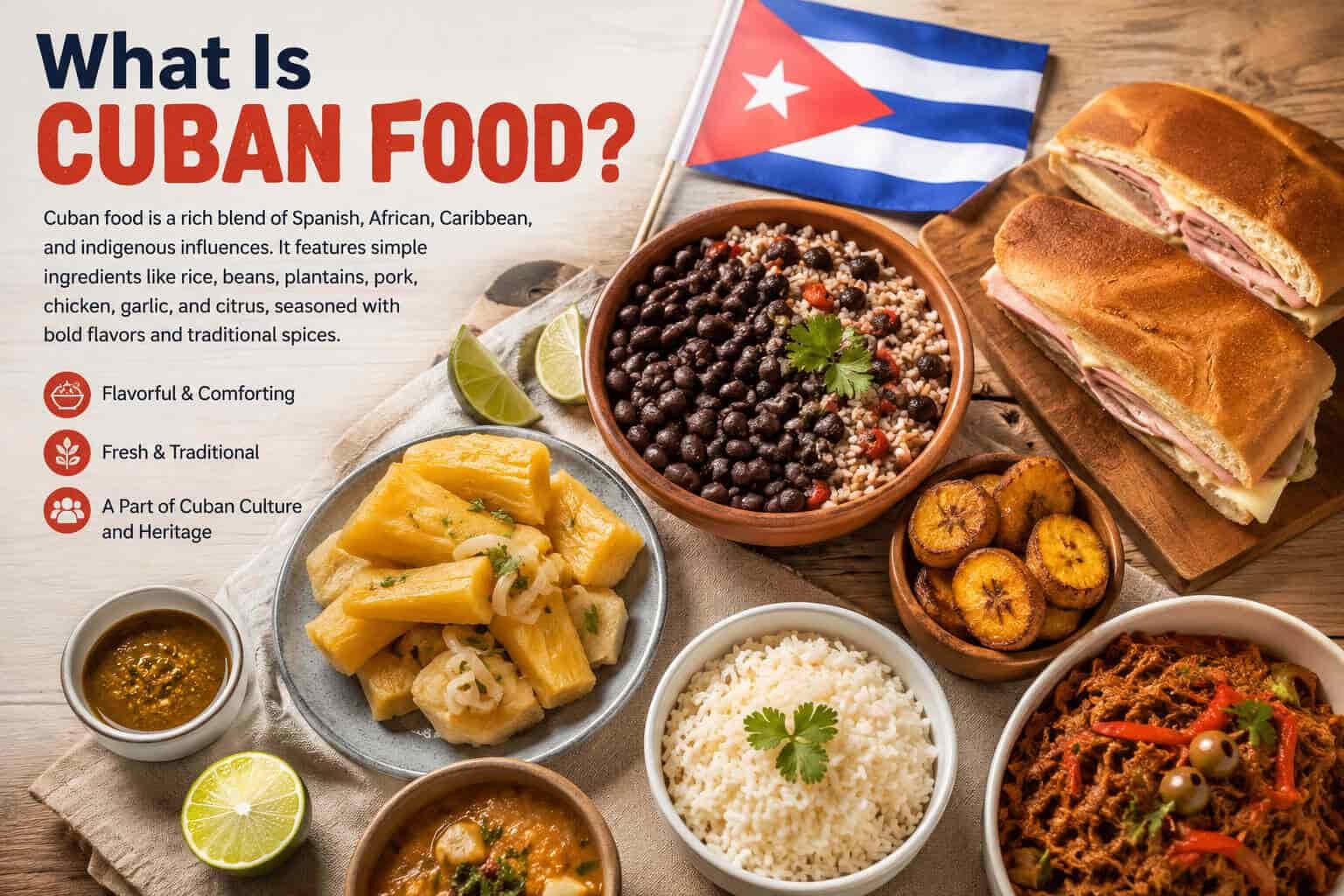
Cuban food is the traditional cuisine of Cuba that combines flavors from Europe, Africa, and the Caribbean. It is famous for comfort foods prepared using simple ingredients that create deep, satisfying flavors.
The cuisine relies heavily on:
- Rice
- Black beans
- Pork
- Chicken
- Beef
- Seafood
- Plantains
- Yucca
- Garlic
- Citrus
- Onions
- Bell peppers
- Olive oil
Many Cuban recipes are slow-cooked, allowing spices and seasonings to fully develop without becoming overly spicy.
History of Cuban Food
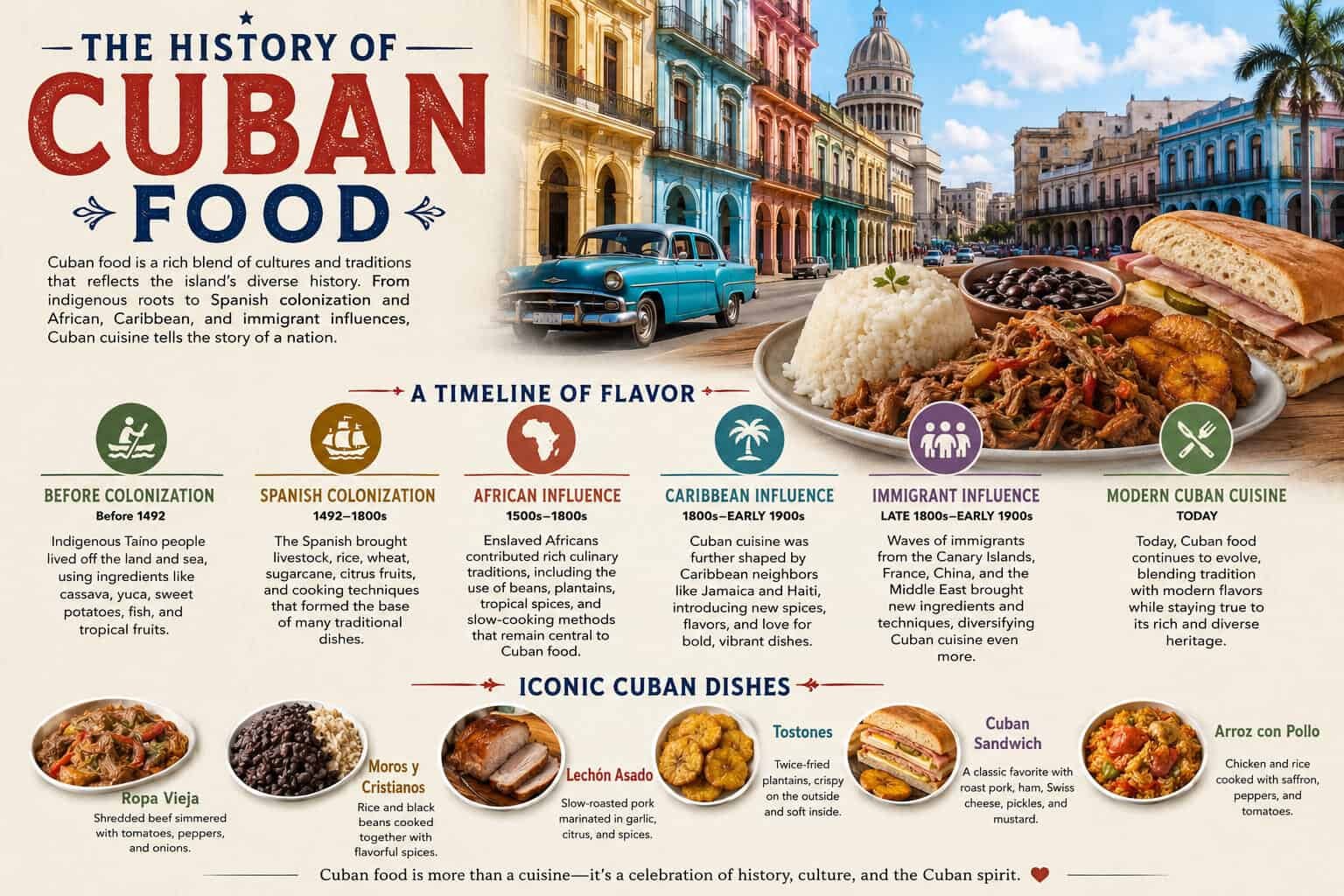
Understanding Cuban food means understanding Cuba’s history.
Indigenous Influence
Before European settlers arrived, Indigenous communities relied on:
- Cassava (yucca)
- Sweet potatoes
- Corn
- Tropical fruits
- Fish
These ingredients still appear in many Cuban dishes today.
Spanish Influence
Spanish colonists introduced:
- Rice
- Pork
- Olive oil
- Garlic
- Onions
- Beef
- Citrus fruits
Spanish cooking methods became the foundation of modern Cuban cuisine.
African Influence
African traditions contributed:
- Plantains
- Root vegetables
- Slow-cooked stews
- Flavorful seasoning methods
Many beloved Cuban comfort foods have African roots.
Caribbean Influence
Neighboring Caribbean islands inspired the use of:
- Coconut
- Seafood
- Tropical fruits
- Fresh herbs
Together, these cultural influences created the unique identity of Cuban food.
Main Characteristics of Cuban Food
Cuban cuisine is known for several defining features.
Mild but Flavorful
Instead of hot spices, Cuban recipes rely on:
- Garlic
- Cumin
- Oregano
- Bay leaves
- Citrus juice
Slow Cooking
Many traditional meals simmer for hours to create tender meat and rich flavors.
Family-Style Meals
Large portions are commonly shared among family and friends, making meals an important social tradition.
Fresh Ingredients
Whenever possible, Cuban cooks use fresh vegetables, herbs, and fruits rather than processed ingredients.
Essential Ingredients Used in Cuban Food
The ingredients below appear in countless authentic Cuban recipes.
Rice
Rice is served almost every day and forms the base of many meals.
Black Beans
Black beans are nutritious, affordable, and pair perfectly with rice.
Pork
Roasted pork is considered Cuba’s signature meat.
Plantains
Plantains can be:
- Fried
- Boiled
- Mashed
- Baked
They are one of the country’s most popular side dishes.
Garlic
Garlic provides much of Cuban cuisine’s distinctive flavor.
Citrus
Lime and sour orange juice are commonly used in marinades.
Olive Oil
Many dishes begin with olive oil sautéed with onions and garlic.
Traditional Cuban Dishes
Ropa Vieja
Ropa Vieja is Cuba’s national dish.
It consists of shredded beef cooked slowly in tomato sauce with onions, peppers, and spices. It is usually served with white rice and black beans.
Moros y Cristianos
This famous rice dish combines:
- White rice
- Black beans
- Garlic
- Onion
- Spices
The name means “Moors and Christians,” symbolizing the contrast between the black beans and white rice.
Lechón Asado
Roasted pork marinated with garlic and citrus is a centerpiece during celebrations and holidays.
Arroz con Pollo
This comforting chicken and rice dish is packed with vegetables and aromatic seasonings.
Picadillo
Ground beef cooked with:
- Tomatoes
- Raisins
- Olives
- Garlic
- Onion
It creates a delicious balance of sweet and savory flavors.
Yuca con Mojo
Boiled cassava topped with a garlic-citrus sauce is a favorite Cuban side dish.
Cuban Street Food
Street food is an important part of Cuban culinary culture.
Popular choices include:
- Cuban sandwiches
- Meat pastries
- Fried plantains
- Croquettes
- Empanadas
- Pizza slices
- Churros
These affordable snacks are enjoyed throughout the day.
Cuban Desserts
No Cuban meal is complete without dessert.
Popular sweets include:
- Flan
- Arroz con Leche (rice pudding)
- Tres Leches Cake
- Guava pastries
- Coconut candy
- Bread pudding
Many desserts use milk, sugar, vanilla, cinnamon, coconut, and tropical fruits.
Popular Cuban Drinks
Traditional beverages include:
- Cuban coffee
- Fresh sugarcane juice
- Tropical fruit juices
- Coconut water
- Mojito
- Daiquiri
Cuban coffee is especially famous for its strong flavor and sweet taste.
Health Benefits of Cuban Food
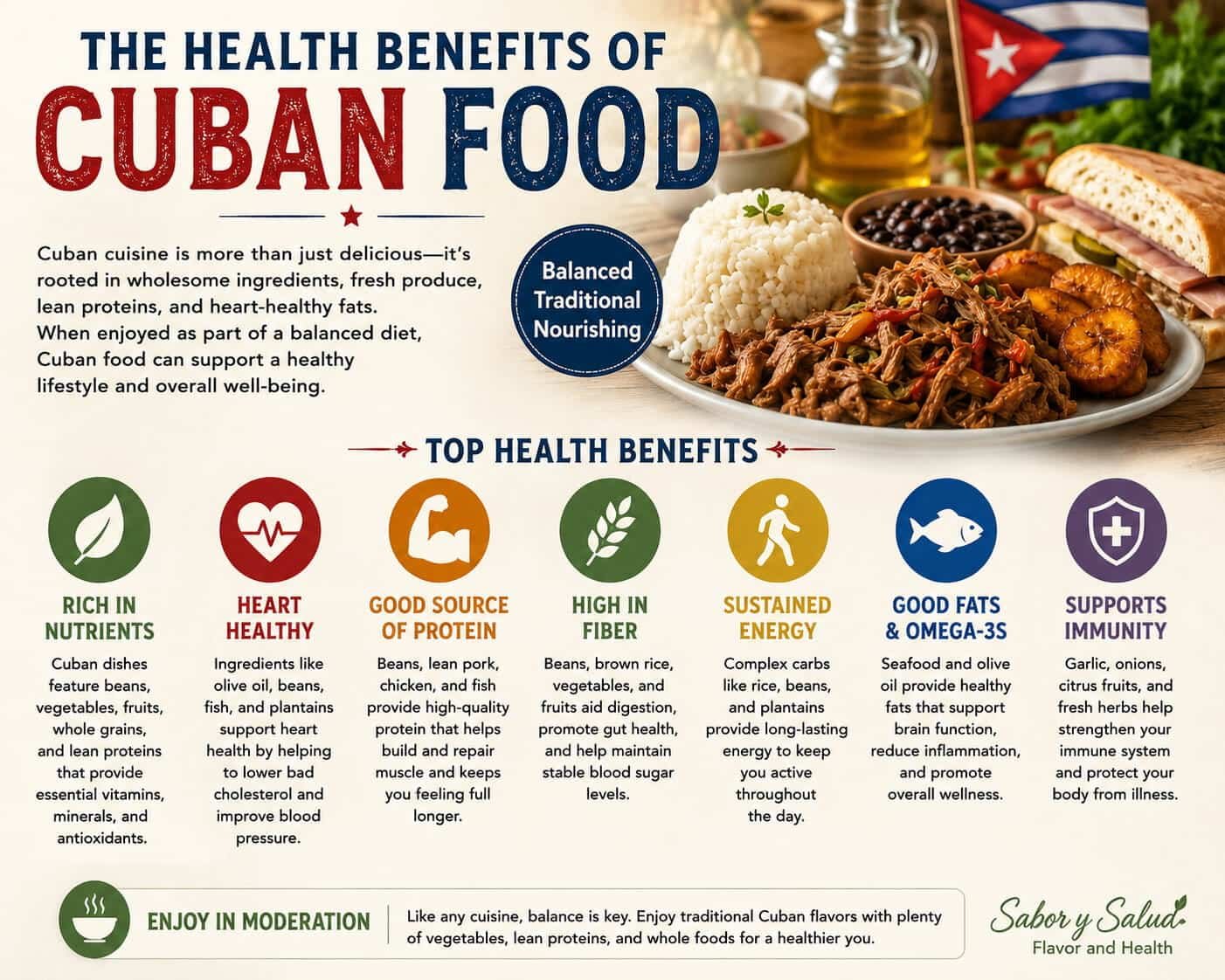
Many Cuban meals offer excellent nutritional value.
Benefits include:
- High protein from beans and lean meats
- Fiber from vegetables and legumes
- Vitamins from tropical fruits
- Healthy fats from olive oil
- Balanced carbohydrates from rice and root vegetables
Healthier versions can be prepared by grilling meats and reducing added salt and oil.
Regional Variations
Different regions of Cuba have unique specialties.
Coastal communities often prepare more seafood, while inland areas rely on pork, beef, beans, and rice. Eastern Cuba uses more tropical ingredients, while western regions feature stronger Spanish influences.
Cuban Food Around the World
Today, Cuban restaurants can be found across North America, Europe, and Latin America. Cities with large Cuban communities have helped introduce authentic Cuban recipes to international audiences.
Many people first discover Cuban cuisine through the famous Cuban sandwich, but the country’s culinary traditions extend far beyond this iconic dish.
Tips for Cooking Cuban Food at Home
Follow these simple tips for authentic results:
- Use fresh garlic and onions.
- Marinate meats overnight.
- Cook beans slowly.
- Don’t overuse spicy peppers.
- Use fresh citrus juice whenever possible.
- Let stews simmer for deeper flavor.
- Serve rice fresh.
Frequently Asked Questions
What is the most famous Cuban food?
Ropa Vieja is widely considered Cuba’s national dish.
Is Cuban food spicy?
No. Cuban cuisine is generally mild and focuses on herbs, garlic, and citrus instead of hot peppers.
What meat is most common?
Pork is the most popular meat in traditional Cuban cooking.
What is a typical Cuban side dish?
Rice, black beans, fried plantains, and yuca are common accompaniments.
Is Cuban food healthy?
Yes. Many traditional meals include lean proteins, vegetables, beans, and healthy fats, making them nutritious when prepared with moderate amounts of oil and salt.
Conclusion
Cuban food is much more than delicious meals—it is a reflection of Cuba’s history, culture, and family traditions. From hearty classics like Ropa Vieja and Lechón Asado to comforting rice and beans, sweet desserts, and world-famous coffee, Cuban cuisine offers something for every palate.
Whether you’re exploring new cuisines or recreating authentic recipes at home, Cuban food delivers rich flavors, wholesome ingredients, and unforgettable dining experiences. Its combination of simplicity, freshness, and cultural heritage continues to make it one of the most beloved cuisines in the Caribbean and beyond.