Introduction
Cambodian food is one of Southeast Asia’s hidden culinary treasures. While Thai and Vietnamese cuisines often receive more international attention, Cambodian food offers its own unique flavors, cooking techniques, and cultural traditions. Known for its fresh herbs, fragrant spices, freshwater fish, tropical fruits, and balanced flavors, Cambodian cuisine has evolved over centuries through local traditions and influences from neighboring countries.
Whether you’re planning a trip to Cambodia, exploring world cuisines, or simply looking for new dishes to cook at home, this guide will introduce you to everything you need to know about Cambodian food.
What Is Cambodian Food?
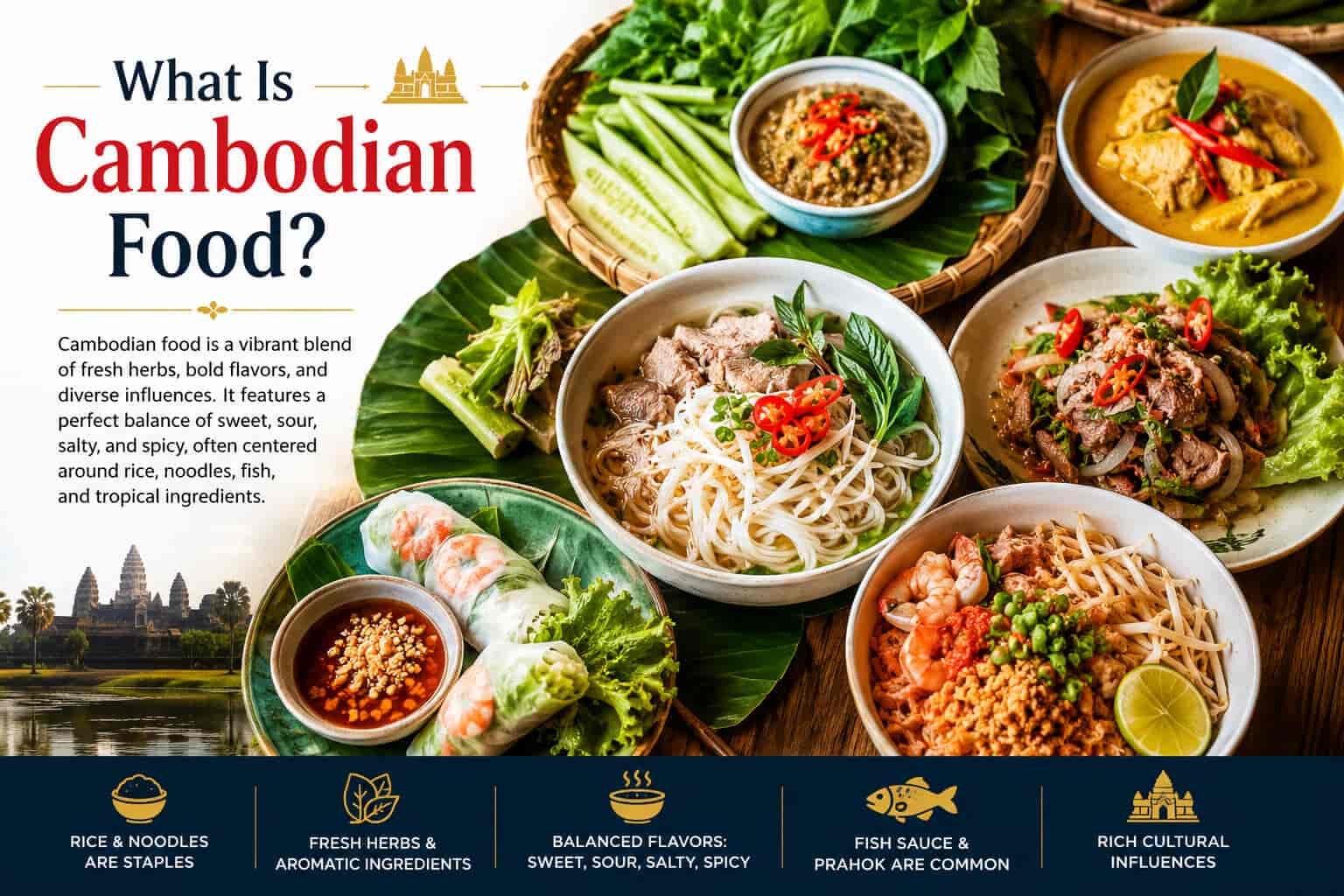
Cambodian food refers to the traditional cuisine of Cambodia, often called Khmer cuisine. It combines sweet, sour, salty, bitter, and savory flavors without overpowering any single taste.
Rice is the foundation of almost every meal, accompanied by soups, curries, vegetables, seafood, fish, poultry, or beef.
Common characteristics include:
- Fresh herbs
- Lemongrass
- Kaffir lime leaves
- Galangal
- Turmeric
- Coconut milk
- Fermented fish paste (Prahok)
- Seasonal vegetables
Meals are usually shared family-style, encouraging everyone to enjoy multiple dishes together.
History of Cambodian Food
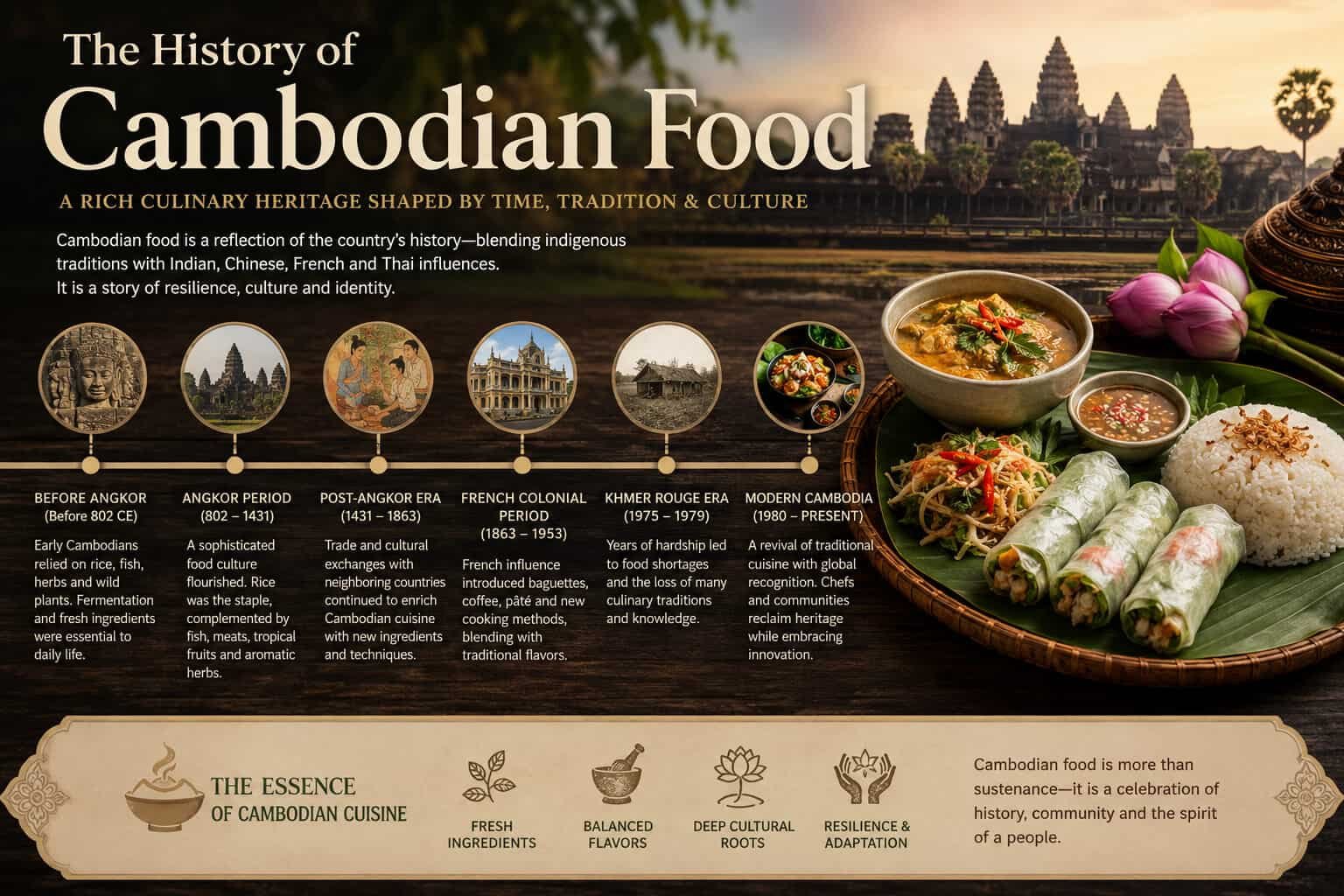
Cambodian food has a history spanning more than 1,000 years.
Ancient Khmer civilization developed sophisticated farming systems that produced abundant rice and freshwater fish.
Throughout history, Cambodian cuisine has been influenced by:
- India
- China
- Thailand
- Vietnam
- France
French colonial rule introduced baguettes, coffee, pâté, and certain baking techniques that remain popular today.
Despite outside influences, Cambodian cuisine has preserved its own distinctive identity.
Characteristics of Cambodian Food
Several features make Cambodian food unique:
Fresh Ingredients
Local markets offer vegetables, herbs, spices, fish, and tropical fruits harvested daily.
Balanced Flavors
Unlike very spicy cuisines, Cambodian dishes aim for harmony.
Rice-Based Meals
Rice accompanies nearly every lunch and dinner.
Freshwater Fish
Cambodia’s Tonlé Sap Lake supplies a significant portion of the country’s fish, making seafood central to the national diet.
Essential Ingredients Used in Cambodian Food
Rice
Rice is the country’s staple food.
Prahok
Fermented fish paste is used for depth of flavor.
Lemongrass
Adds citrus aroma.
Galangal
Provides earthy spice.
Turmeric
Used in curries and marinades.
Coconut Milk
Creates creamy soups and curries.
Palm Sugar
Adds natural sweetness.
Fish Sauce
Enhances savory flavor.
Kaffir Lime Leaves
Offer a fragrant citrus note.
Fresh Herbs
Common herbs include basil, mint, coriander, and sawtooth herb.
Most Popular Cambodian Food Dishes
1. Fish Amok
Cambodia’s national dish.
A fragrant fish curry steamed in banana leaves with coconut milk and kroeung spice paste.
2. Beef Lok Lak
Tender beef stir-fried with onions and served alongside rice, fresh vegetables, and pepper-lime dipping sauce.
3. Nom Banh Chok
Often called Khmer noodles.
Rice noodles served with green fish curry gravy and fresh herbs.
4. Samlor Korko
A traditional vegetable soup packed with seasonal vegetables and minced meat.
5. Bai Sach Chrouk
Grilled pork served over steamed rice, usually eaten for breakfast.
6. Kuy Teav
A flavorful noodle soup is commonly enjoyed in the morning.
7. Kampot Pepper Crab
Fresh crab cooked with world-famous Kampot pepper.
8. Prahok Ktis
Creamy minced pork dip flavored with fermented fish paste.
Regional Cambodian Food
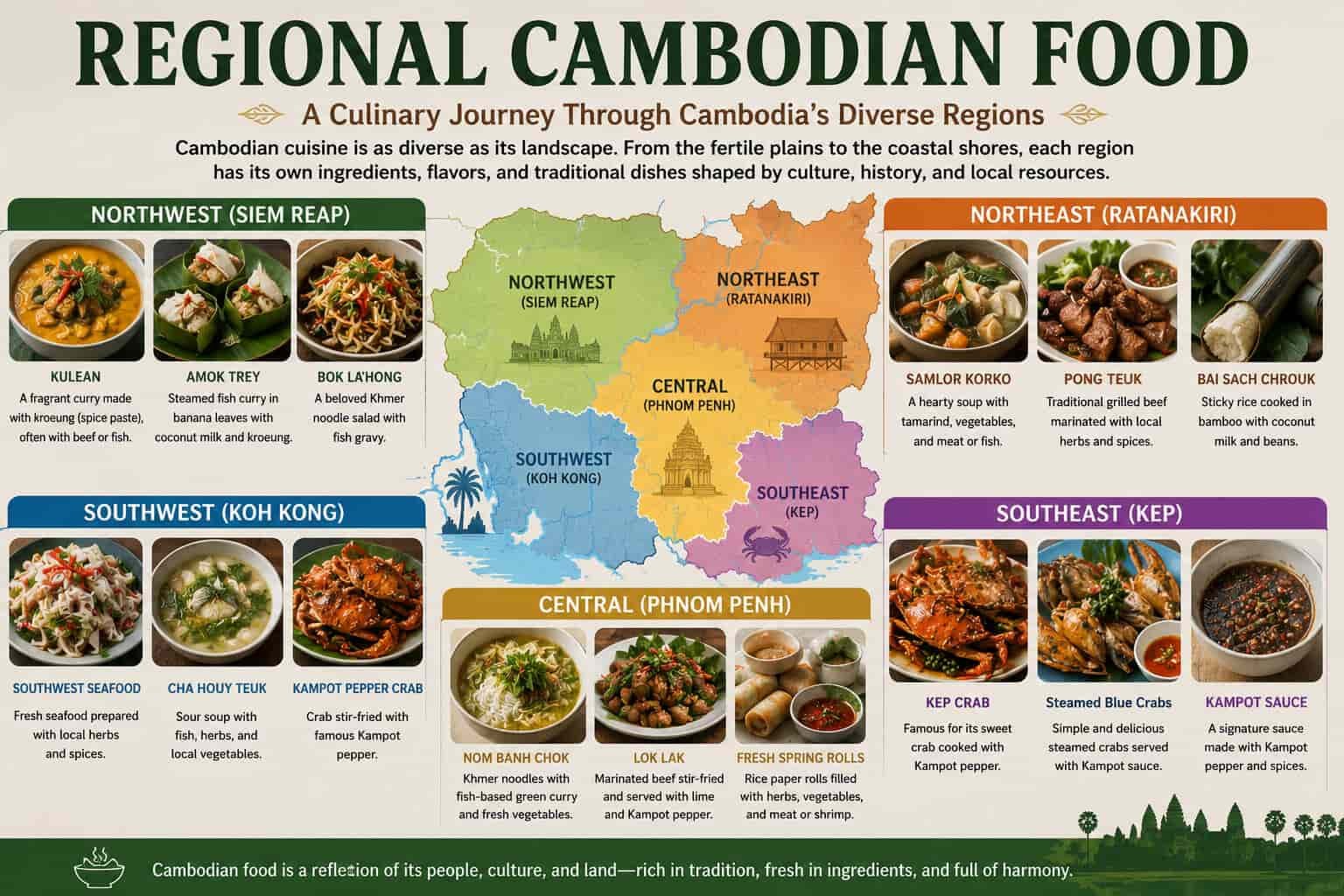
Phnom Penh
Known for noodle soups and street food.
Siem Reap
Offers traditional Khmer cuisine popular with tourists.
Coastal Areas
Fresh seafood dominates local menus.
Rural Villages
Meals rely heavily on locally grown vegetables and freshwater fish.
Cambodian Street Food
Popular street foods include:
- Grilled skewers
- Rice cakes
- Fried bananas
- Fresh fruit
- Sweet sticky rice
- Noodle soups
- Sugarcane juice
Street food is affordable and reflects local daily life.
Cambodian Desserts
Popular sweets include:
- Sticky rice with mango
- Coconut pudding
- Pumpkin custard
- Banana in coconut milk
- Palm sugar cakes
Most desserts use coconut milk, rice, bananas, and palm sugar.
Drinks in Cambodian Cuisine
Traditional beverages include:
- Fresh coconut water
- Sugarcane juice
- Lotus tea
- Khmer iced coffee
- Fresh fruit smoothies
Health Benefits of Cambodian Food
Many Cambodian dishes emphasize fresh ingredients and balanced nutrition.
Benefits include:
- High vegetable intake
- Lean proteins
- Fresh herbs rich in antioxidants
- Healthy spices such as turmeric
- Moderate use of oil
- Naturally gluten-free rice dishes
Cambodian Food vs Thai Food
Although they share ingredients, they differ in flavor.
| Cambodian Food | Thai Food |
|---|---|
| Mild spices | Hotter spices |
| Balanced flavors | Strong sweet-spicy balance |
| Prahok widely used | Shrimp paste common |
| Gentle curries | Richer curries |
Cambodian Food vs Vietnamese Food
Cambodian cuisine is generally richer due to coconut milk and fermented ingredients, while Vietnamese cuisine often emphasizes lighter broths and fresh herbs.
How Cambodian Food Is Traditionally Served
Meals are communal.
A typical table includes:
- Rice
- Soup
- Vegetable dish
- Fish or meat
- Dipping sauces
Everyone shares from the same dishes.
Cooking Techniques
Common methods include:
- Steaming
- Stir-frying
- Boiling
- Grilling
- Slow simmering
- Banana leaf cooking
Tips for Cooking Cambodian Food at Home
- Use fresh herbs.
- Choose quality fish sauce.
- Don’t overcook vegetables.
- Balance sweet, sour, salty, and savory flavors.
- Cook rice properly.
Interesting Facts About Cambodian Food
- Cambodia produces millions of tons of rice annually.
- Fish provides a large share of the country’s animal protein.
- Fish Amok is considered Cambodia’s national dish.
- Kampot pepper is internationally renowned for its quality.
- Rice is eaten at nearly every meal.
Why Tourists Love Cambodian Food
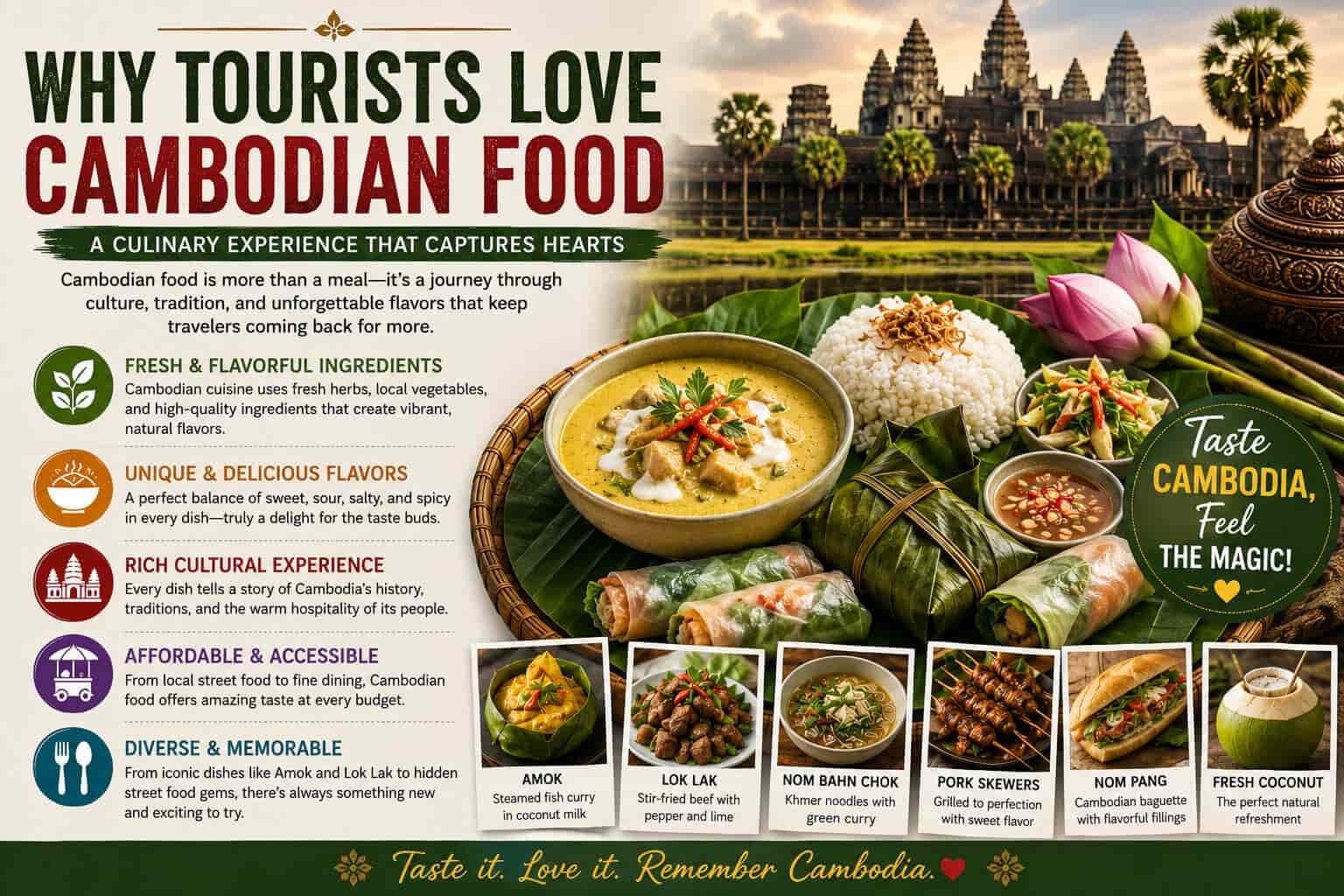
Visitors appreciate:
- Affordable prices
- Fresh ingredients
- Authentic flavors
- Friendly local restaurants
- Diverse street food
- Healthy meal options
Frequently Asked Questions
Is Cambodian food spicy?
Generally, Cambodian food is milder than Thai cuisine. Chili is often served separately so diners can adjust the heat to their preference.
What is Cambodia’s national dish?
Fish Amok is widely regarded as Cambodia’s national dish.
Is Cambodian food healthy?
Yes. Many dishes include fresh vegetables, herbs, lean proteins, and steamed or grilled cooking methods.
What do Cambodians eat for breakfast?
Popular breakfast choices include Bai Sach Chrouk (grilled pork with rice) and Kuy Teav noodle soup.
Is Cambodian food vegetarian-friendly?
Yes. Many restaurants offer vegetable curries, stir-fries, soups, and rice dishes suitable for vegetarians.
Conclusion
Cambodian food is a flavorful reflection of the country’s rich history, fertile landscapes, and vibrant culture. Built around fresh ingredients, aromatic herbs, rice, and freshwater fish, Khmer cuisine delivers balanced flavors that are both comforting and distinctive. From the creamy elegance of Fish Amok to the simplicity of Bai Sach Chrouk and the lively atmosphere of Cambodia’s street-food markets, every dish tells a story of tradition and community.
Whether you’re tasting Cambodian food for the first time or recreating classic recipes at home, you’ll discover a cuisine that is delicious, diverse, and deeply rooted in centuries of culinary heritage. Adding Cambodian food to your culinary adventures is a wonderful way to experience one of Southeast Asia’s most underrated food traditions.