Picture puzzles have become one of the most enjoyable and beneficial activities for people of all ages. Whether you are a child learning problem-solving skills, an adult looking to unwind after a busy day, or a senior trying to keep your mind active, a picture puzzle offers both entertainment and mental exercise.
From classic jigsaw puzzles to digital puzzle games, the popularity of picture puzzles continues to grow worldwide. They are easy to access, fun to solve, and packed with educational and cognitive benefits.
In this complete guide, you will learn everything about picture puzzles, including their types, benefits, history, tips for solving them, and why they remain one of the most loved brain games today.
What Is a Picture Puzzle?
A picture puzzle is a type of puzzle that involves arranging, matching, or identifying images to complete a challenge. The goal is typically to recreate a complete picture, uncover hidden objects, or solve a visual puzzle.
Picture puzzles can be physical or digital. Some common examples include:
- Jigsaw puzzles
- Spot-the-difference puzzles
- Hidden object puzzles
- Sliding picture puzzles
- Picture logic games
- Crossword puzzles with images
- Online puzzle games
These puzzles test observation, patience, memory, and problem-solving skills.
The History of Picture Puzzles
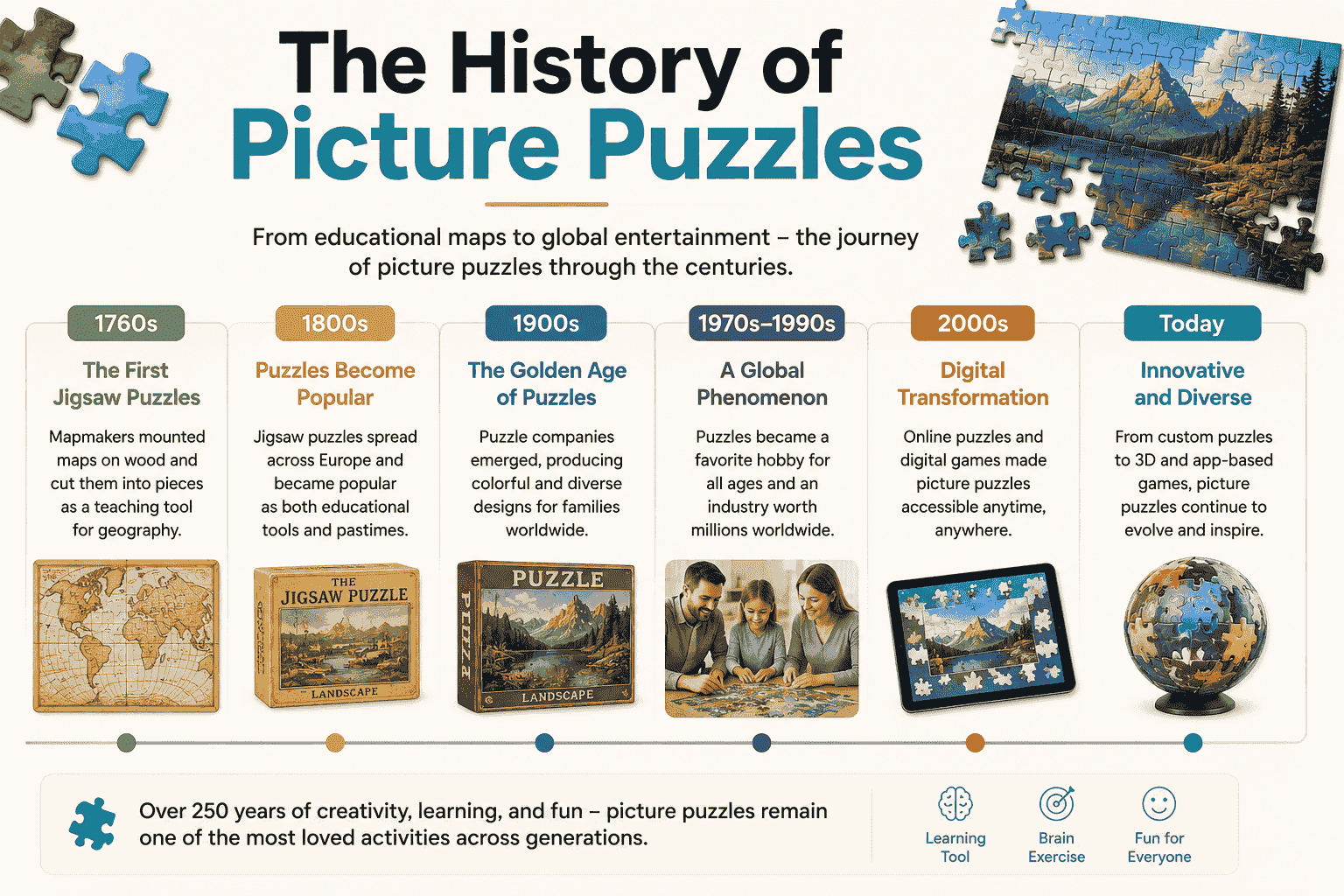
Picture puzzles have existed for centuries. The earliest jigsaw puzzles appeared in the 1760s when mapmakers mounted maps onto wood and cut them into pieces for educational purposes.
Over time, picture puzzles evolved into entertainment products enjoyed by families around the world. By the 20th century, puzzle companies started producing colorful puzzle designs featuring:
- Nature scenes
- Famous landmarks
- Animals
- Artwork
- Cartoons
- Movie characters
Today, digital technology has transformed the picture puzzle industry. Mobile apps and online games enable people to solve puzzles at any time and from anywhere.
Why Picture Puzzles Are So Popular
The popularity of picture puzzles comes from their perfect mix of fun and challenge. They are simple to start but rewarding to complete.
Main Reasons People Love Picture Puzzles
1. Relaxation and Stress Relief
Solving a picture puzzle helps calm the mind. Many people use puzzles to reduce stress and anxiety after work or school.
2. Brain Exercise
Picture puzzles stimulate the brain by improving:
- Memory
- Focus
- Pattern recognition
- Logical thinking
3. Family Entertainment
Puzzles bring families together. Parents and children often solve puzzles as a team activity.
4. Screen-Free Fun
Traditional picture puzzles entertain without excessive screen time.
5. Sense of Achievement
Completing a difficult puzzle creates satisfaction and boosts confidence.
Types of Picture Puzzles
There are many kinds of picture puzzles available today. Each type offers a different challenge and experience.
Jigsaw Picture Puzzle
The jigsaw puzzle is the most famous type of picture puzzle. Players connect interlocking pieces to recreate an image.
Common Jigsaw Puzzle Sizes
| Puzzle Size | Difficulty Level |
|---|---|
| 50 pieces | Very Easy |
| 100 pieces | Easy |
| 500 pieces | Medium |
| 1000 pieces | Challenging |
| 5000+ pieces | Expert |
Jigsaw puzzles are available in themes like:
- Landscapes
- Animals
- Space
- Fantasy art
- Cities
- Historical scenes
Hidden Picture Puzzle
A hidden picture puzzle challenges players to find objects hidden inside a larger image.
These puzzles improve:
- Observation skills
- Attention to detail
- Visual memory
They are especially popular among children and seniors.
Spot-the-Difference Puzzle
In this type of picture puzzle, two similar images contain small differences.
The player must identify all changes between the pictures.
This puzzle helps improve:
- Concentration
- Visual scanning
- Patience
Sliding Picture Puzzle
Sliding puzzles involve moving image pieces inside a frame until the picture becomes complete.
This classic brain teaser develops:
- Strategic thinking
- Planning skills
- Logic
Digital Picture Puzzle Games
Modern technology has created thousands of online picture puzzle games.
Popular formats include:
- Mobile puzzle apps
- Browser games
- Multiplayer puzzle challenges
- AI-generated puzzle games
Digital puzzles are convenient and often include adjustable difficulty levels.
Benefits of Solving Picture Puzzles
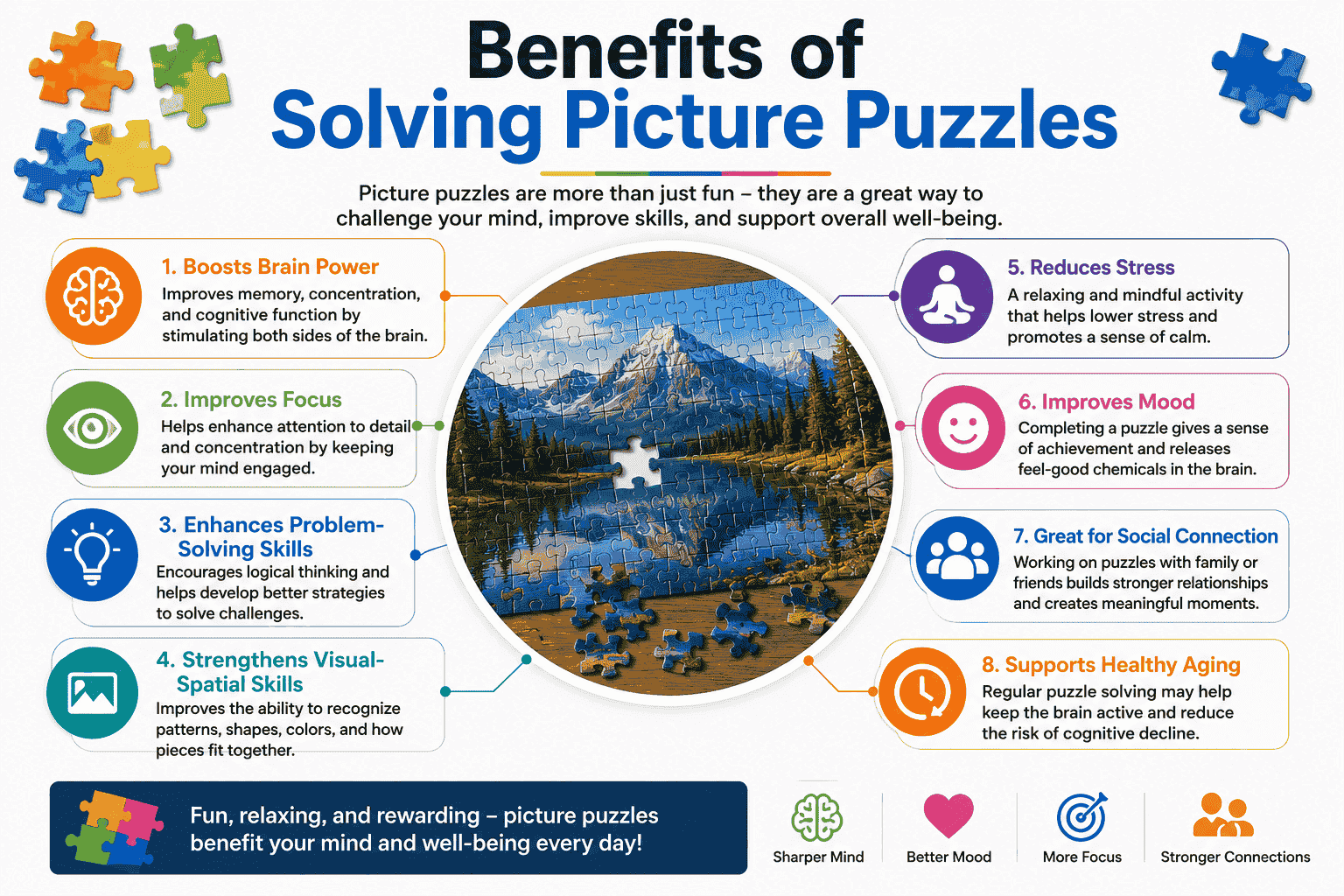
Picture puzzles are not only entertaining but also highly beneficial for mental health and cognitive development.
Cognitive Benefits
Improved Memory
Solving puzzles strengthens connections between brain cells, improving short-term memory.
Better Concentration
Picture puzzles require focus and attention, helping players improve concentration over time.
Enhanced Problem-Solving Skills
Players learn how to analyze patterns and develop strategies.
Stronger Visual-Spatial Skills
Understanding how puzzle pieces fit together improves spatial reasoning.
Emotional Benefits of Picture Puzzles
Stress Reduction
Studies show that puzzle-solving activities can help lower stress levels by encouraging mindfulness.
Mood Improvement
Completing a puzzle releases dopamine, the brain chemical associated with pleasure and achievement.
Increased Patience
Many picture puzzles take time and persistence to complete.
Educational Benefits for Children
Picture puzzles are excellent learning tools for kids.
Skills Children Learn Through Puzzles
- Hand-eye coordination
- Shape recognition
- Logical thinking
- Vocabulary development
- Teamwork
- Patience
Educational picture puzzles often feature:
- Alphabet learning
- Numbers
- Animals
- Geography
- Science concepts
Benefits of Picture Puzzles for Seniors
Picture puzzles are highly recommended for older adults because they help maintain cognitive activity.
Senior Benefits Include
- Memory support
- Mental stimulation
- Social interaction
- Reduced boredom
- Improved focus
Many healthcare experts encourage seniors to solve puzzles regularly as part of healthy brain activities.
How Picture Puzzles Improve Brain Health
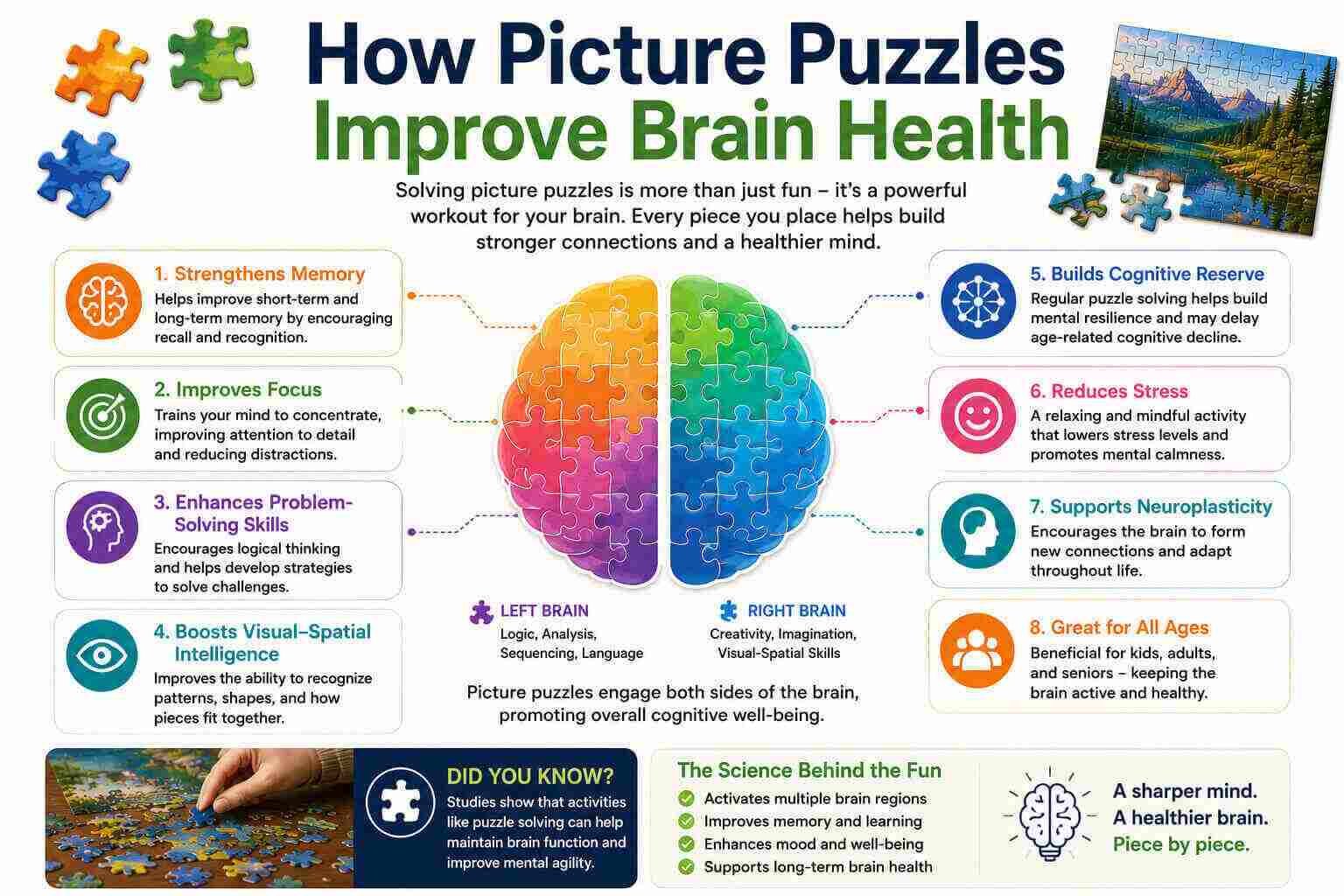
Researchers have found that mentally stimulating activities may help support cognitive function.
Picture puzzles engage both sides of the brain:
- The left side handles logic and analysis.
- The right side processes creativity and visual information.
This full-brain engagement makes picture puzzles excellent mental workouts.
Picture Puzzle Strategies and Tips
Some puzzles can feel difficult at first. Using smart strategies makes them easier and more enjoyable.
Start with the Edges
In jigsaw puzzles, finding the corner and edge pieces creates the puzzle frame first.
Sort Pieces by Color
Grouping similar colors or patterns helps identify matching sections.
Work on Small Sections
Focus on one part of the image at a time.
Use Good Lighting
Bright lighting makes it easier to identify details.
Take Breaks
Stepping away from a puzzle can refresh your perspective.
How to Choose the Right Picture Puzzle
Choosing the right puzzle depends on age, skill level, and personal interests.
For Children
Choose puzzles with:
- Large pieces
- Bright colors
- Simple designs
For Beginners
Try puzzles between 100 and 300 pieces.
For Experienced Players
Complex puzzles with thousands of pieces provide bigger challenges.
For Families
Select themes everyone enjoys, such as:
- Nature
- Animals
- Famous places
- Movies
Best Themes for Picture Puzzles
Picture puzzles come in countless creative themes.
Popular Puzzle Themes
Nature and Landscapes
Beautiful mountains, oceans, and forests remain timeless favorites.
Animals
Animal picture puzzles are especially popular with children.
Art and Paintings
Many puzzles recreate famous artworks.
Fantasy and Space
Fantasy worlds and galaxies provide exciting visual designs.
Travel and Landmarks
World-famous places create educational and visually appealing puzzles.
Digital vs Physical Picture Puzzles
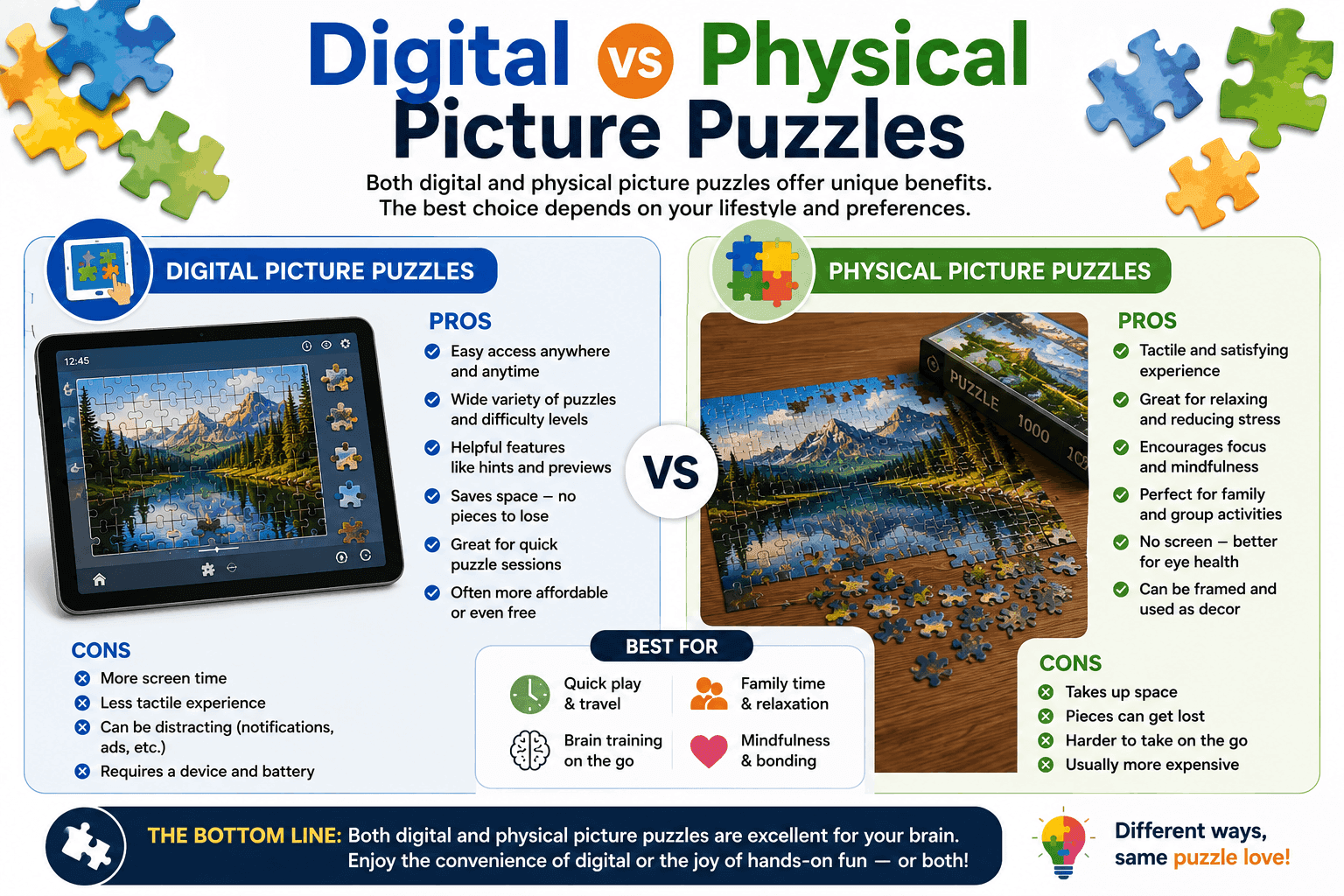
Both digital and traditional picture puzzles have advantages.
Physical Picture Puzzles
Pros
- No screen time
- Tactile experience
- Family-friendly
- Decorative after completion
Cons
- Require storage space
- Pieces can get lost
Digital Picture Puzzle Games
Pros
- Portable
- Easy access
- Adjustable difficulty
- Multiplayer options
Cons
- More screen exposure
- Less tactile satisfaction
Many puzzle lovers enjoy both formats.
The Rise of Online Picture Puzzle Games
Online gaming has changed how people enjoy puzzles.
Modern picture puzzle games now include:
- Daily puzzle challenges
- Multiplayer competitions
- Timed puzzle races
- AI-generated puzzles
- Interactive storytelling
Some websites even allow users to upload personal photos and create custom puzzles.
Custom Picture Puzzles
Personalized picture puzzles have become extremely popular as gifts.
People create custom puzzles using:
- Family photos
- Wedding pictures
- Vacation memories
- Pet photos
- Artwork
These puzzles add emotional value and make unique presents.
Picture Puzzle Competitions
Puzzle competitions are growing worldwide.
Events include:
- Speed jigsaw contests
- Online puzzle tournaments
- Puzzle-solving championships
Competitive puzzling requires:
- Fast thinking
- Excellent observation
- Team coordination
How Teachers Use Picture Puzzles in Education
Teachers often use picture puzzles to make learning interactive and engaging.
Educational Uses Include
Language Learning
Word-picture matching puzzles help vocabulary growth.
Mathematics
Visual puzzle games improve logical thinking.
Geography
Map puzzles teach countries and locations.
Science
Picture puzzles explain concepts in fun ways.
Picture Puzzles and Mental Wellness
Mental wellness has become a major topic in recent years, and picture puzzles play an important role in relaxation and mindfulness.
Why Puzzles Help Mental Health
Picture puzzles encourage:
- Calm focus
- Reduced anxiety
- Positive distraction
- Improved patience
Many therapists recommend puzzle-solving as a healthy hobby.
Fun Facts About Picture Puzzles
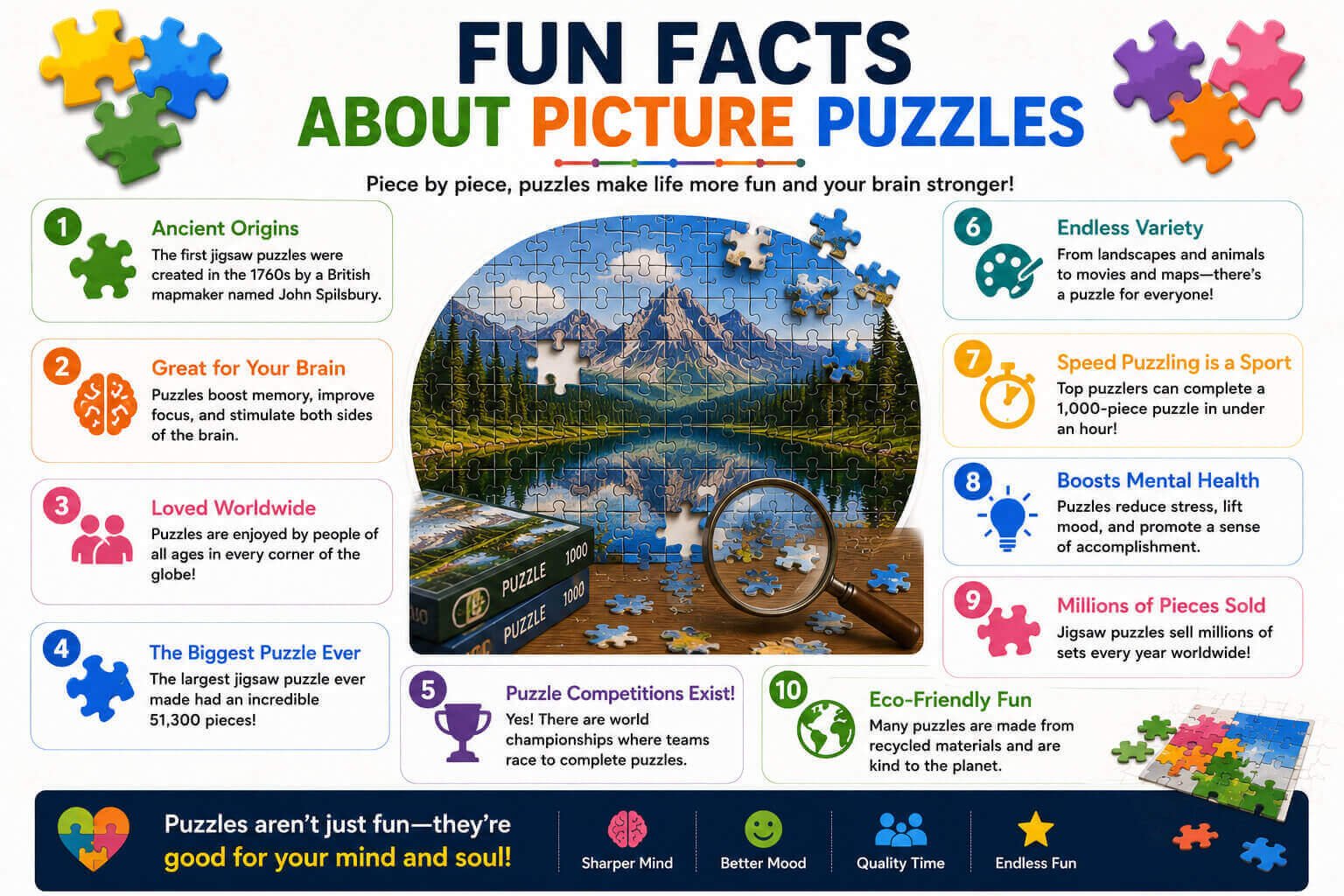
Here are some interesting facts about picture puzzles:
- The world’s largest jigsaw puzzle contains over 50,000 pieces.
- Puzzle-solving activates multiple brain functions simultaneously.
- Some puzzles are made from wood, metal, or even 3D materials.
- Puzzle competitions exist in many countries.
- Digital puzzle apps are downloaded millions of times every year.
Common Mistakes People Make While Solving Puzzles
Avoiding common mistakes can improve your puzzle experience.
Mistake 1: Starting Without Sorting
Organizing pieces first saves time.
Mistake 2: Choosing a Puzzle That Is Too Difficult
Beginners should start with easier puzzles.
Mistake 3: Poor Lighting
Dim lighting makes details harder to see.
Mistake 4: Rushing
Patience is important in puzzle-solving.
Best Places to Buy Picture Puzzles
Picture puzzles are available both online and in physical stores.
Popular Places Include
- Toy stores
- Bookstores
- Online marketplaces
- Puzzle specialty shops
- Mobile app stores
When buying puzzles, consider:
- Piece quality
- Image clarity
- Difficulty level
- Customer reviews
How to Store and Preserve Picture Puzzles
Proper storage helps keep puzzles in good condition.
Storage Tips
- Use puzzle organizers
- Keep pieces in labeled bags
- Store in dry areas
- Use puzzle mats for unfinished puzzles
Many people also frame completed picture puzzles as decorations.
Future Trends in Picture Puzzles
The picture puzzle industry continues to evolve with technology.
Future Innovations May Include
- Augmented reality puzzles
- AI-generated puzzle experiences
- Interactive smart puzzles
- Virtual reality puzzle rooms
- Multiplayer online puzzle communities
These innovations will make puzzles even more immersive and engaging.
Why Picture Puzzles Are Great for All Ages
One of the biggest strengths of picture puzzles is universal appeal.
Children Enjoy
- Learning
- Colors
- Creativity
Adults Enjoy
- Relaxation
- Brain exercise
- Stress relief
Seniors Enjoy
- Memory support
- Entertainment
- Mental stimulation
Very few hobbies can connect generations as effectively as picture puzzles.
How to Make Puzzle Time More Fun
You can make picture puzzle sessions more exciting with simple ideas.
Fun Puzzle Activities
- Host puzzle nights
- Compete with friends
- Listen to music while solving
- Create themed puzzle events
- Try timed challenges
Puzzle-solving becomes even more enjoyable when shared with others.
SEO Benefits of Picture Puzzle Content for Blogs
If you run a gaming or hobby blog, writing about picture puzzles can attract steady search traffic.
Popular Search Terms Include
- Best picture puzzle games
- Online picture puzzle
- Free picture puzzles
- Picture puzzle for kids
- Brain puzzle games
- Jigsaw puzzle tips
- Hidden picture puzzle games
Puzzle-related topics perform well because people constantly search for entertainment and educational activities online.
Conclusion
Picture puzzles remain one of the best forms of entertainment, learning, and brain training available today. They combine creativity, logic, patience, and fun into a single activity that people of all ages can enjoy.
Whether you prefer traditional jigsaw puzzles, hidden picture challenges, or modern online puzzle games, there is a picture puzzle for everyone. They help improve memory, focus, and problem-solving skills while also reducing stress and encouraging relaxation.
As technology continues to evolve, picture puzzles are becoming even more exciting through digital experiences, AI tools, and interactive gaming platforms. Yet the core appeal remains the same: the joy of solving a challenge piece by piece.