In today’s fast-moving digital world, mobile ticketing software has completely changed how people buy, store, and use tickets. Whether it’s concerts, sports events, public transport, or cinemas, everything is shifting from paper tickets to mobile-based solutions. This transformation is not just about convenience—it’s about speed, security, and a smoother customer experience.
From scanning a QR code on your phone to entering a stadium without printing anything, mobile ticketing is now becoming the global standard. Businesses that adopt mobile ticketing software are improving efficiency, reducing operational costs, and offering better customer satisfaction.
In this article, we will explore what mobile ticketing software is, how it works, its features, benefits, real-world use cases, challenges, and future trends. Everything is explained in simple, human-friendly language so you can fully understand how this technology is shaping modern industries.
What is Mobile Ticketing Software?
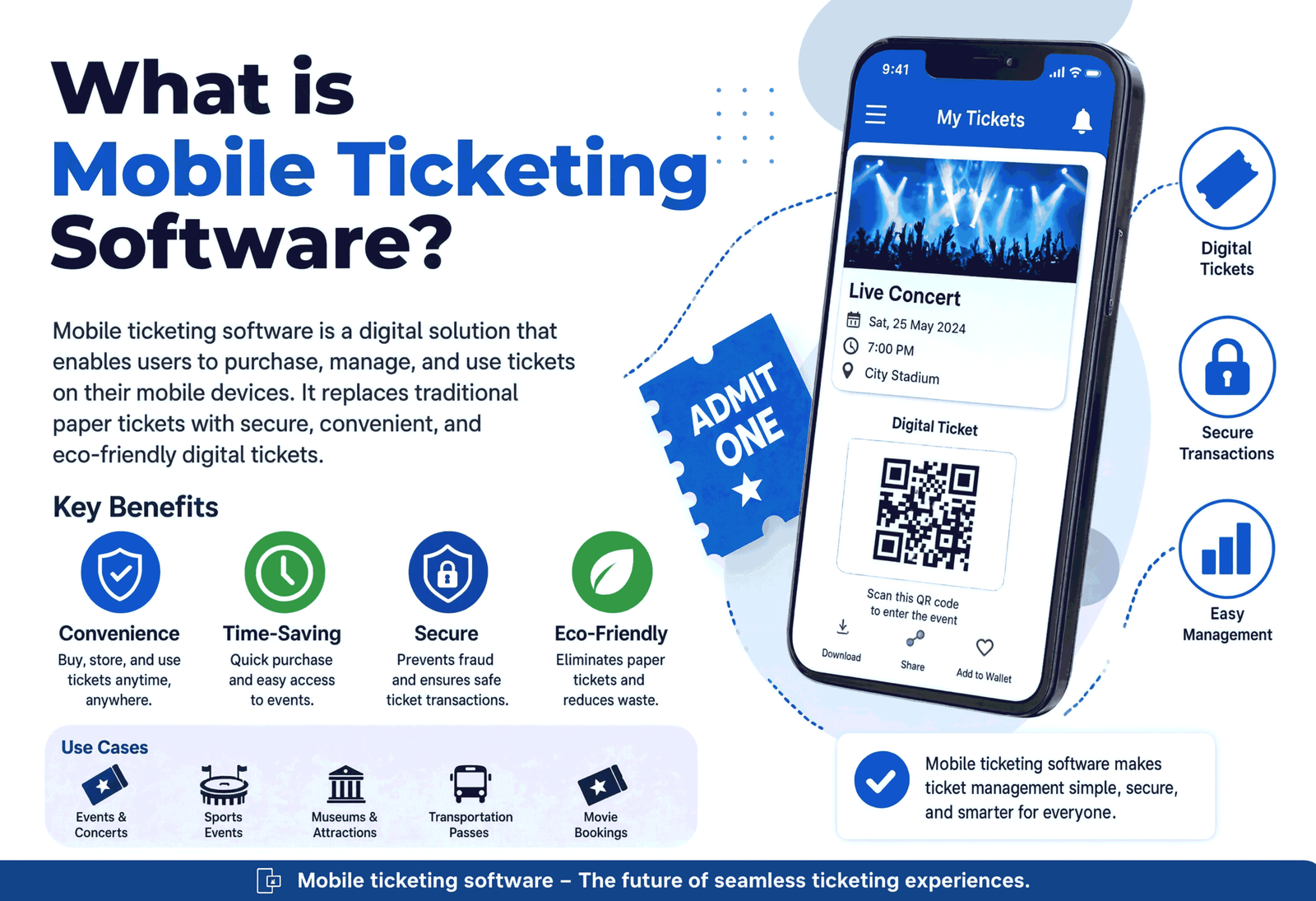
Mobile ticketing software is a digital system that allows users to purchase, store, and validate tickets using a smartphone or mobile device. Instead of paper tickets or physical passes, users receive digital tickets through apps, SMS, email, or mobile wallets.
These tickets often include QR codes, barcodes, or NFC (Near Field Communication) technology that can be scanned at entry points.
In simple words, mobile ticketing software replaces traditional paper-based ticketing systems with a fully digital experience.
Key Idea:
It connects three main parties:
- Customers (ticket buyers)
- Businesses (event organizers, transport operators, cinemas)
- Validation systems (scanners, mobile apps, or gates)
How Mobile Ticketing Software Works
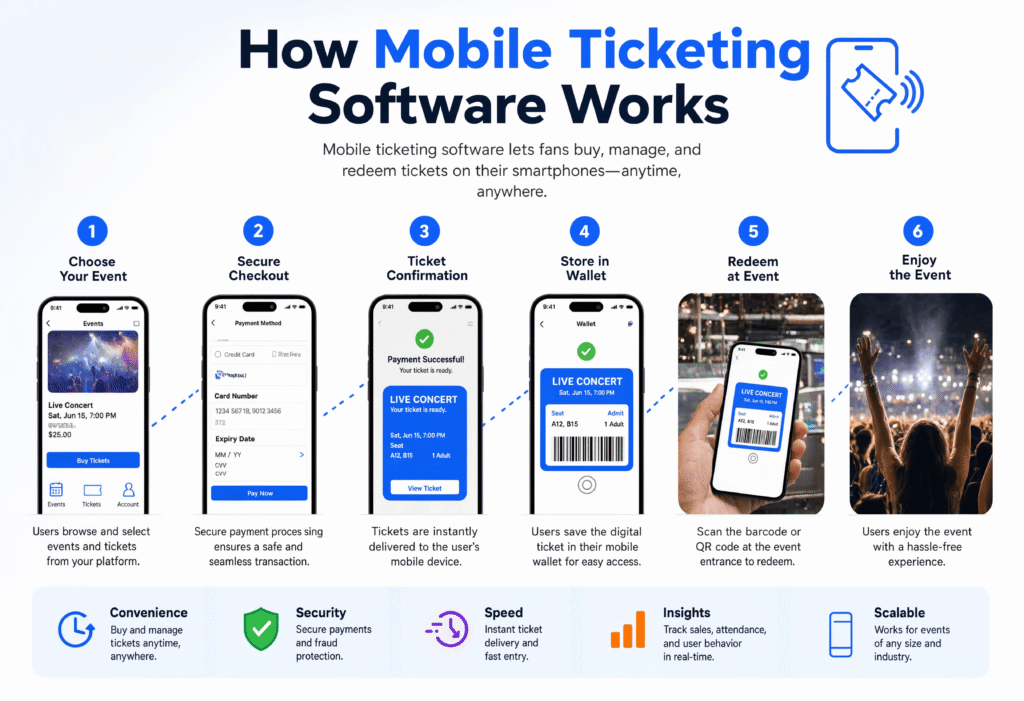
Understanding how mobile ticketing software works is important to see its full value. The process is simple but highly efficient.
1. Ticket Purchase
Users buy tickets through:
- Mobile apps
- Websites
- Third-party platforms
2. Digital Ticket Generation
Once payment is complete, the system generates a digital ticket with:
- QR code
- Barcode
- Unique ticket ID
3. Delivery to Mobile Device
The ticket is sent via:
- Mobile app (e.g., event apps)
- SMS
- Mobile wallets like Apple Wallet
4. Entry Validation
At the venue or transport gate:
- The ticket is scanned
- System verifies authenticity in real time
- Entry is granted or denied
5. Real-Time Tracking
Organizers can track:
- Number of entries
- Ticket usage
- Peak traffic hours
This entire process takes only seconds, making mobile ticketing software extremely efficient for both users and businesses.
Key Features of Mobile Ticketing Software
Modern mobile ticketing software comes with advanced features that improve usability and security.
1. QR Code & Barcode Tickets
Most systems use QR codes that can be scanned quickly at entry points.
2. Contactless Entry
No physical contact is needed, making it hygienic and fast.
3. Real-Time Updates
Users receive updates about:
- Schedule changes
- Gate changes
- Event notifications
4. Secure Authentication
Digital encryption ensures tickets cannot be easily duplicated.
5. Multi-Platform Access
Tickets can be accessed through:
- Android apps
- iOS apps
- Email links
- Wallet apps
6. Analytics Dashboard
Businesses using mobile ticketing software get detailed reports on:
- Sales performance
- Customer behavior
- Attendance rates
7. Integration with Payment Systems
Supports online payments like:
- Credit/debit cards
- Mobile wallets
- Online banking
Benefits of Mobile Ticketing Software
The rise of mobile ticketing software is driven by its powerful benefits for both users and businesses.
1. Convenience for Users
People no longer need to print tickets. Everything is stored on a smartphone.
2. Faster Entry
Scanning a QR code takes just a few seconds, reducing long queues.
3. Reduced Costs
Businesses save money on:
- Paper printing
- Physical distribution
- Manual labor
4. Better Security
Digital tickets are harder to fake compared to paper tickets.
5. Eco-Friendly Solution
It reduces paper waste, supporting environmental sustainability.
6. Real-Time Control
Organizers can manage crowd flow and monitor attendance instantly.
7. Improved Customer Experience
Smooth entry and instant access improve overall satisfaction.
Use Cases of Mobile Ticketing Software
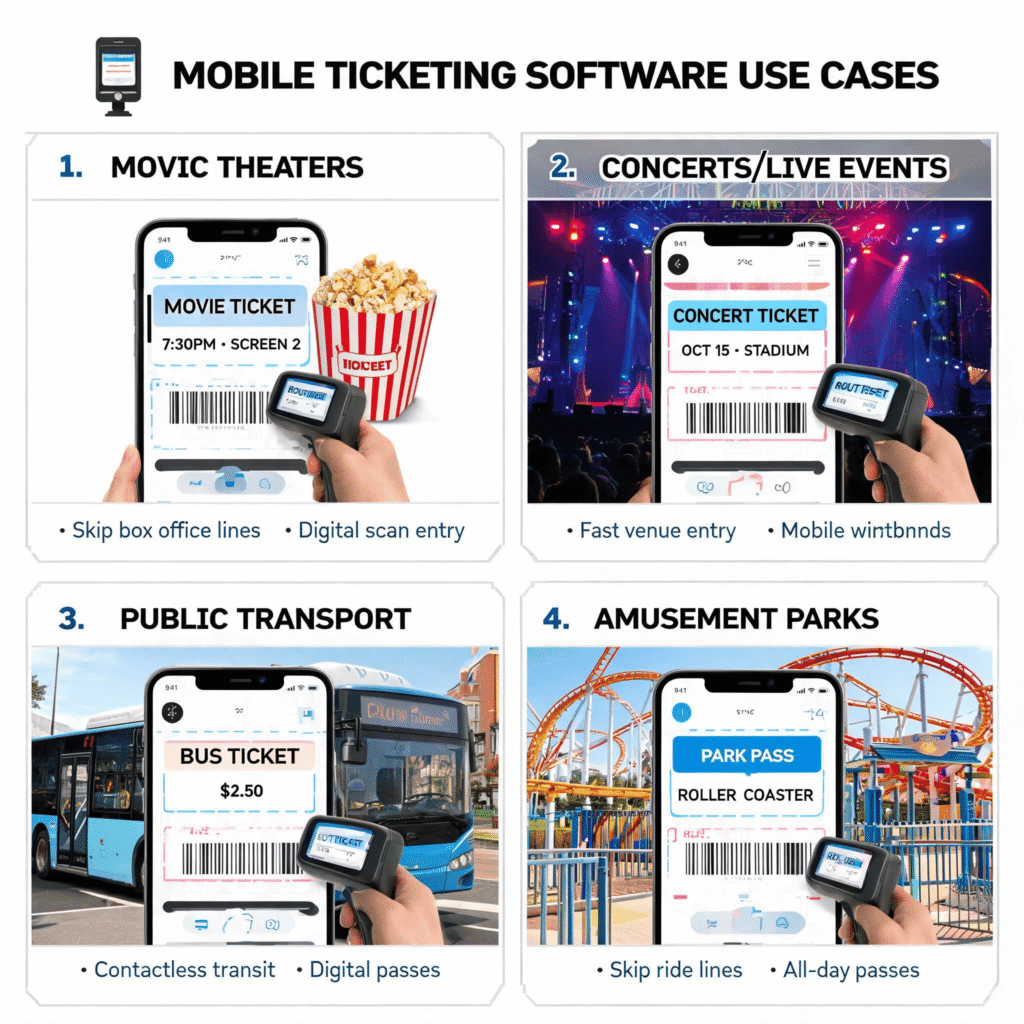
Mobile ticketing software is used across multiple industries. Let’s explore the most common ones.
1. Events and Concerts
Event platforms like Eventbrite and Ticketmaster use mobile ticketing for concerts, festivals, and conferences.
2. Public Transport
Many cities use mobile ticketing for buses, trains, and metro systems, allowing passengers to travel without paper tickets.
3. Sports Stadiums
Football, cricket, and basketball stadiums use mobile ticketing software for fast entry and crowd control.
4. Cinema Industry
Movie theaters issue digital tickets that can be scanned at the entrance.
5. Airlines and Travel
Boarding passes are now commonly stored in mobile wallets instead of printed paper.
Statistics and Industry Growth
The adoption of mobile ticketing software is growing rapidly worldwide. Studies in the digital ticketing industry show:
- A major shift toward paperless ticketing in urban transport systems
- Increasing smartphone usage driving mobile-based services
- Growing demand for contactless solutions after global health concerns
Experts predict that digital and mobile ticketing systems will continue to replace traditional ticketing methods across most industries in the coming years.
Key insights include:
- Higher adoption in developed cities
- Rapid growth in Asia-Pacific markets
- Strong demand from event management companies
This growth shows that mobile ticketing software is not just a trend—it is becoming a long-term standard.
Leading Mobile Ticketing Software Solutions
Several platforms dominate the market by offering reliable and scalable solutions.
1. Ticketmaster
Ticketmaster is one of the largest ticketing platforms in the world, offering advanced mobile ticketing features for events and sports.
2. Eventbrite
Eventbrite allows organizers to create events and distribute mobile tickets easily.
3. Apple Wallet
Apple Wallet stores boarding passes, tickets, and passes in one secure mobile app.
4. Transit Apps
Many public transport systems use custom mobile ticketing applications for daily commuters.
5. Cinema Booking Apps
Movie theaters increasingly rely on mobile ticketing apps for seamless entry and booking.
Each of these platforms demonstrates how mobile ticketing software is shaping modern digital ecosystems.
Challenges of Mobile Ticketing Software
Despite its advantages, mobile ticketing software also comes with certain challenges.
1. Internet Dependency
Most systems require stable internet connectivity.
2. Device Compatibility
Not all users have smartphones capable of supporting advanced apps.
3. Security Risks
Although secure, digital systems can still face hacking attempts if not properly managed.
4. Technical Issues
System downtime or app crashes can disrupt ticket validation.
5. User Adoption Barriers
Some users still prefer traditional paper tickets due to lack of digital literacy.
Businesses must address these challenges to fully maximize the potential of mobile ticketing software.
Future of Mobile Ticketing Software
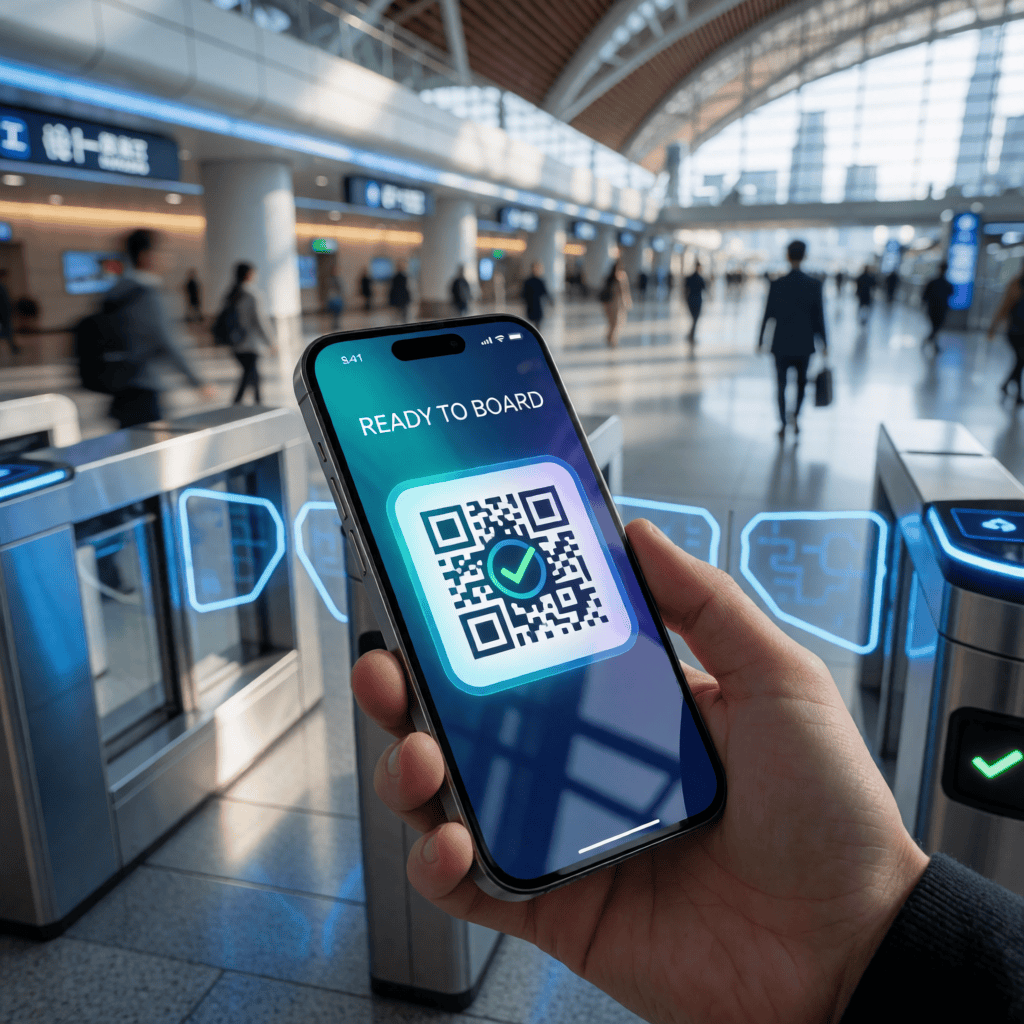
The future of mobile ticketing software looks highly advanced and innovative. Several trends are shaping its evolution.
1. AI Integration
Artificial intelligence will help predict crowd flow, optimize pricing, and improve customer experience.
2. Blockchain Security
Blockchain may be used to prevent ticket fraud and duplication.
3. Biometric Verification
Face recognition and fingerprint scanning could replace QR codes in some systems.
4. Smart City Integration
Public transport systems will fully integrate mobile ticketing into smart city infrastructure.
5. Offline Ticket Access
Future systems may allow offline ticket storage for better accessibility.
As technology advances, mobile ticketing software will become even more secure, intelligent, and user-friendly.
Why Businesses Should Adopt Mobile Ticketing Software
For businesses, adopting mobile ticketing software is no longer optional—it’s essential.
Here’s why:
- Increases operational efficiency
- Reduces manual workload
- Improves data collection and analytics
- Enhances customer experience
- Supports scalability for large events
Companies that adopt digital ticketing early gain a strong competitive advantage in their industry.
Conclusion
Mobile ticketing software has transformed the way we buy and use tickets in almost every industry. From concerts and sports events to public transportation and cinemas, it has replaced traditional paper-based systems with faster, safer, and more convenient digital solutions.
Its benefits—such as convenience, security, cost savings, and environmental sustainability—make it a powerful tool for the modern digital economy. While challenges exist, continuous innovation is rapidly solving these issues.
As we move into a more connected and digital future, mobile ticketing software will continue to play a central role in shaping how people access events, travel, and entertainment.
Businesses that embrace this technology today are not just improving operations—they are preparing for the future of seamless, contactless, and intelligent ticketing systems.