
A puzzle board might look like a simple tool at first glance, but for anyone who enjoys jigsaw puzzles, it quickly becomes essential. Whether you’re a beginner working on your first 500-piece set or an experienced puzzler tackling thousands of pieces, a puzzle board can completely transform the way you play, organize, and enjoy your hobby.
In this in-depth guide, we’ll explore everything you need to know about a puzzle board—what it is, why it matters, how to choose the right one, and how to get the most out of it.
What Is a Puzzle Board?
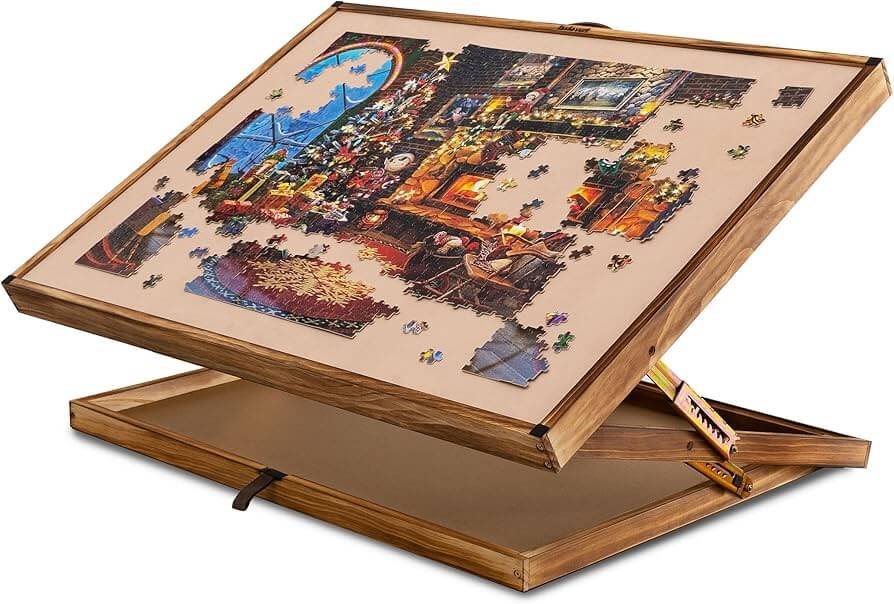
A puzzle board is a flat, stable surface designed specifically for assembling puzzles. Unlike a regular table, it often includes features that help you sort, store, and move puzzle pieces without losing progress.
Key Features of a Puzzle Board
- Smooth working surface
- Raised edges to prevent pieces from falling
- Lightweight and portable design
- Built-in drawers or sorting trays (in advanced models)
- Protective covers for unfinished puzzles
Think of it as your personal puzzle workstation—organized, portable, and designed to enhance your overall experience.
Why a Puzzle Board Is Worth It
Many people start puzzles on a dining table or desk. That works—until it doesn’t. A puzzle board solves common frustrations and adds convenience.
1. Keeps Your Puzzle Safe
One of the biggest advantages is protection. If you have kids, pets, or a busy household, your puzzle can easily get disturbed.
A puzzle board helps by:
- Keeping pieces in one place
- Preventing accidental spills or mix-ups
- Allowing you to pause and resume anytime
2. Improves Organization
Sorting pieces is half the battle in puzzle-solving. A puzzle board makes this easier with compartments or trays.
You can:
- Separate edge pieces
- Group colors and patterns
- Work more efficiently
3. Adds Portability
Unlike a table, a puzzle board can be moved easily.
For example:
- Shift from the living room to your bedroom
- Store it under a bed or sofa
- Take it with you while traveling
4. Enhances Comfort
You don’t always want to sit at a table. A puzzle board allows flexible positioning.
- Use it on your lap
- Place it on a bed
- Adjust angles for better posture
Types of Puzzle Boards
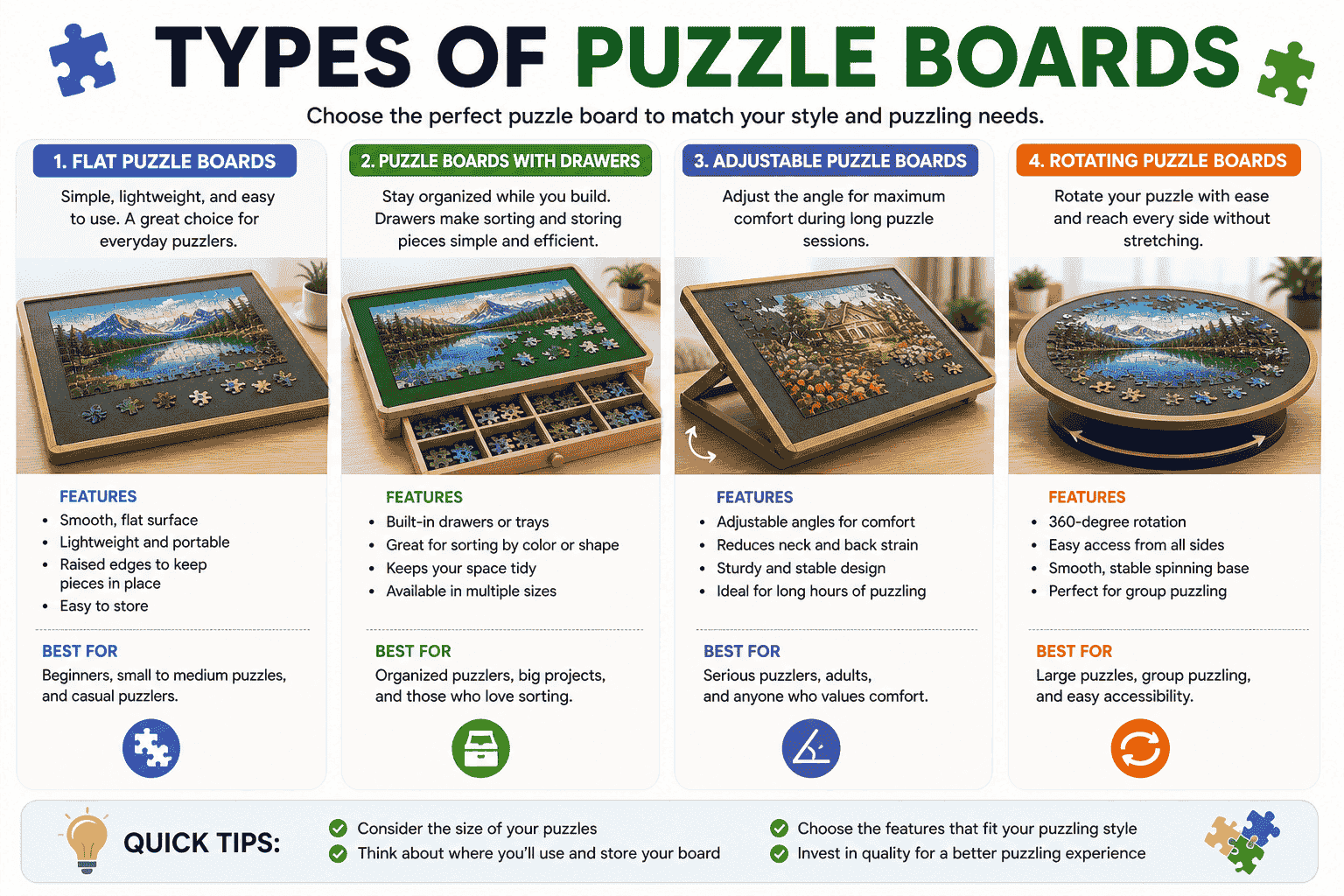
Not all puzzle boards are the same. Choosing the right one depends on your needs and preferences.
1. Flat Puzzle Boards
These are straightforward.
Best for:
- Beginners
- Casual puzzlers
- Small to medium puzzles
Pros:
- Affordable
- Lightweight
- Easy to store
2. Puzzle Boards with Drawers
These come with built-in compartments.
Best for:
- Organized puzzlers
- Larger puzzles
Pros:
- Better sorting
- Less clutter
- Saves time
3. Adjustable Puzzle Boards
These boards can be tilted or adjusted to various angles.
Best for:
- Long puzzle sessions
- Reducing neck and back strain
Pros:
- Comfortable
- Ergonomic
- Ideal for serious hobbyists
4. Rotating Puzzle Boards
These allow you to spin the board for easier access.
Best for:
- Large puzzles
- Shared puzzle sessions
Pros:
- Easy viewing from all sides
- Great for teamwork
How to Choose the Right Puzzle Board

Picking the right puzzle board isn’t complicated, but it does require some thought.
Consider Puzzle Size
Always match your board size to your puzzle.
- 500 pieces → Small board
- 1000 pieces → Medium board
- 1500+ pieces → Large board
Check Material Quality
Common materials include:
- Wood (durable and premium)
- Plastic (lightweight and affordable)
- Foam (soft but less durable)
Look for Extra Features
Some useful add-ons:
- Sorting trays
- Non-slip surface
- Protective cover
- Foldable design
Portability
If you move your puzzle often, choose:
- Lightweight boards
- Boards with handles
- Foldable options
Benefits of Using a Puzzle Board
Let’s break down the real-world benefits in a practical way.
Better Focus and Efficiency
When your pieces are organized, your brain functions more efficiently. You spend less time searching and more time solving.
Stress-Free Experience
Puzzles are meant to relax you. A messy setup does the opposite.
A puzzle board helps:
- Reduce frustration
- Keep everything in order
- Create a calm workspace
Encourages Consistency
You’re more likely to continue your puzzle daily when setup is easy.
How to Use a Puzzle Board Effectively
Having a puzzle board is one thing—using it well is another.
Step-by-Step Setup
- Place the board on a stable surface
- Sort edge pieces first
- Use trays for color grouping
- Start building the border
- Fill in sections gradually
Smart Tips for Better Results
- Work in small sections
- Keep similar colors together
- Take breaks to avoid fatigue
- Use good lighting
Puzzle Board vs Regular Table
You might wonder: why not just use a table?
Here’s a quick comparison:
| Feature | Puzzle Board | Regular Table |
|---|---|---|
| Portability | Yes | No |
| Organization | High | Low |
| Storage | Easy | Difficult |
| Safety | High | Moderate |
| Comfort | Flexible | Fixed |
Clearly, a puzzle board offers more flexibility and control.
Puzzle Board for Kids

A puzzle board is especially useful for children.
Why It Helps Kids
- Keeps pieces organized
- Encourages learning through play
- Improves focus and patience
- Reduces mess
Safety Tips
- Choose boards with smooth edges
- Avoid very small pieces for young kids
- Supervise during use
Puzzle Board for Adults
For adults, puzzles are more than just a pastime—they’re a way to relax and recharge.
Benefits for Adults
- Reduces stress
- Improves memory
- Enhances problem-solving skills
- Provides a screen-free activity
A puzzle board makes the experience smoother and more enjoyable.
Storage and Maintenance
Taking care of your puzzle board ensures long-term use.
Cleaning Tips
- Wipe with a dry or slightly damp cloth
- Avoid harsh chemicals
- Keep away from moisture
Storage Tips
- Store flat to prevent bending
- Use a cover if available
- Keep in a dry place
Common Mistakes to Avoid
Even experienced puzzlers make mistakes.
1. Choosing the Wrong Size
Too small = cramped workspace
Too large = unnecessary space
2. Ignoring Organization
Mixing all pieces slows you down.
3. Poor Lighting
Bad lighting leads to eye strain and mistakes.
Interesting Facts About Puzzle Boards
- Jigsaw puzzles date back to the 1760s
- Puzzle-solving improves short-term memory
- Studies suggest puzzles can delay cognitive decline
- Organized puzzling can reduce solving time by up to 30%
Creative Ways to Use a Puzzle Board
A puzzle board isn’t limited to puzzles.
Alternative Uses
- Craft projects
- Drawing or sketching
- Board games
- Study workspace
This versatility makes it even more valuable.
Is a Puzzle Board Worth Buying?
If you enjoy puzzles regularly, the answer is simple: yes.
It’s Worth It If You:
- Work on puzzles often
- Like staying organized
- Have limited space
- Want a better experience
Final Thoughts
A puzzle board might seem like a small upgrade, but it has a big impact. It brings structure, comfort, and efficiency to your puzzle-solving routine.
Instead of dealing with scattered pieces, limited space, and constant interruptions, you get a clean, organized setup that lets you focus on what matters—solving the puzzle and enjoying the process.
Whether you’re a beginner or an experienced puzzler, investing in a good puzzle board is one of the smartest decisions you can make for your hobby.
Quick Summary
- A puzzle board is a dedicated surface for puzzles
- It improves organization, comfort, and portability
- Available in multiple types and sizes
- Suitable for both kids and adults
- Enhances focus and reduces stress